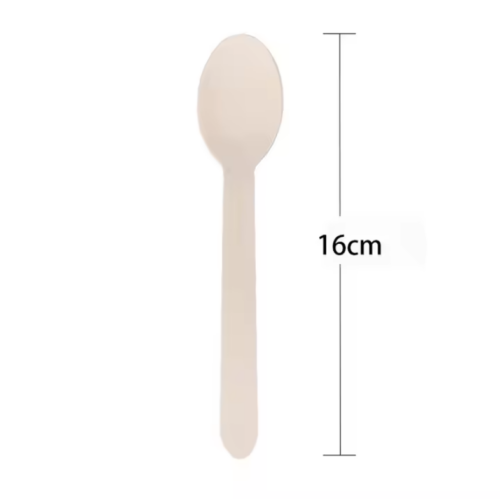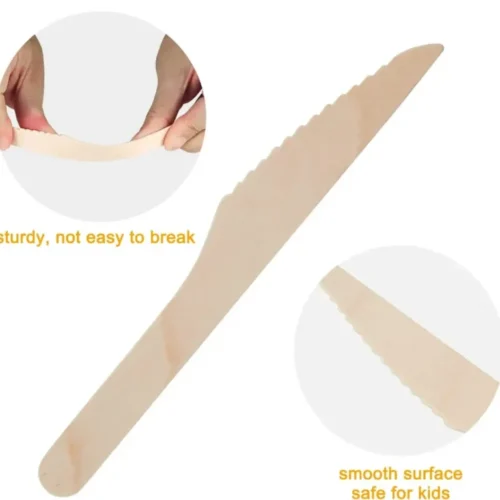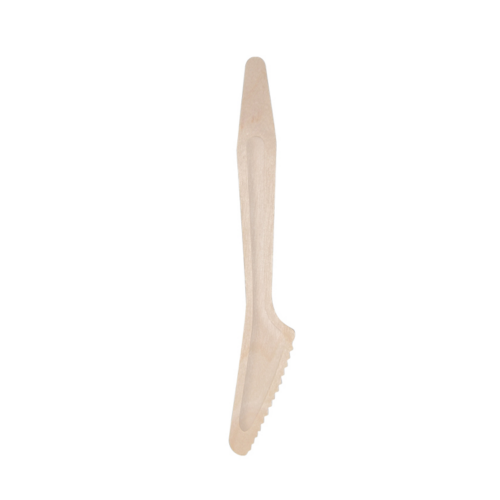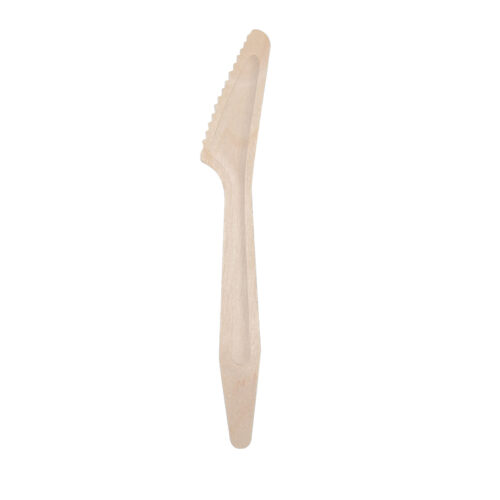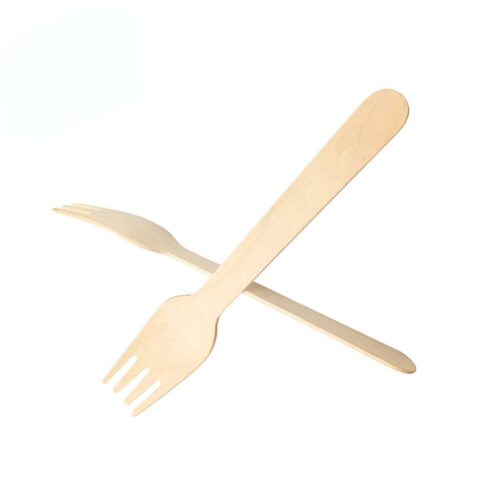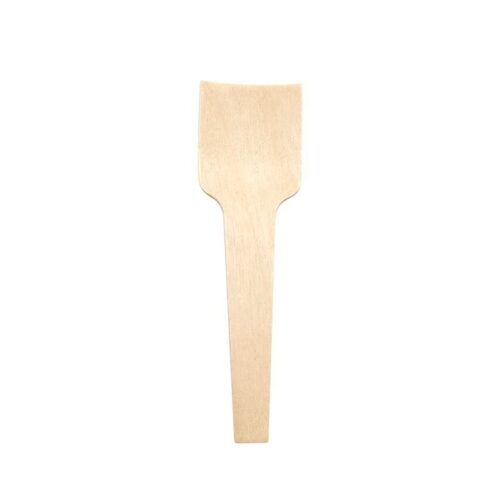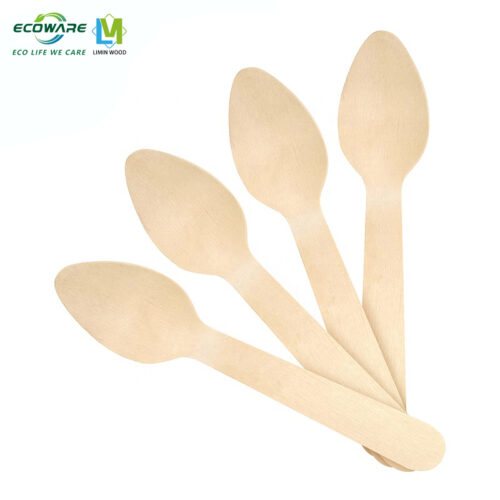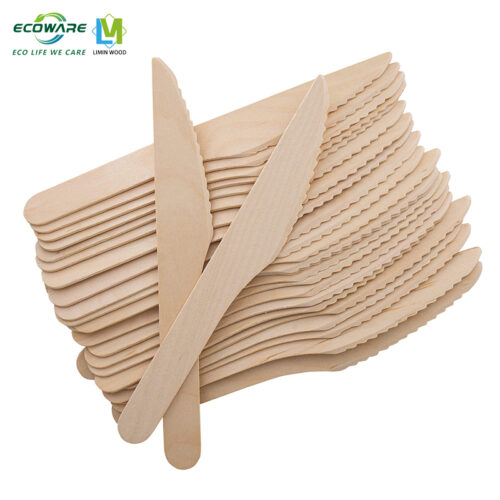
Introduction: Redefining the “Disposable” Standard
When you stir your hot latte with a wooden spoon at a café, have you ever wondered: Why do some wooden spoons feel silky smooth, while others make your tongue sting?
The market is flooded with cheap wooden spoons that break easily, have splinters, and even develop mold. This isn’t just a quality issue—it’s a serious threat to food safety. Industry data shows that approximately 23% of wooden cutlery is returned annually due to quality defects, causing millions of dollars in losses for distributors.
🎯 EcoWareTech’s Brand Position
At EcoWareTech, if we’re going to do it, we do it best in the industry. With our family factory in production since 2008, we don’t just produce cutlery—we create “peace of mind for your palate.”
Our customers span 50+ countries, mainly in North America, Europe and the Middle East. They choose us not because we’re the cheapest, but because our quality is the most consistent.
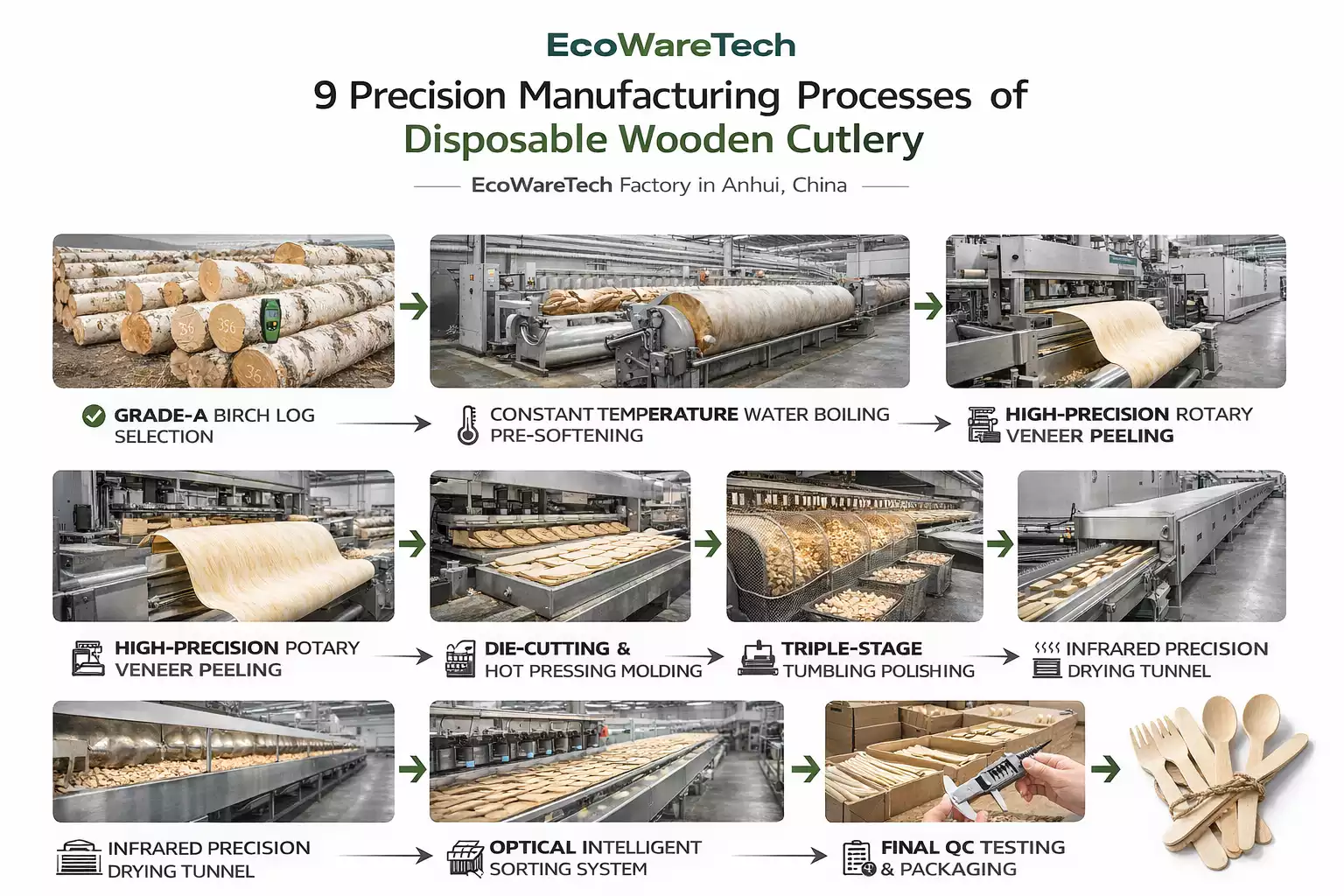
This article will take you inside EcoWareTech’s transparent factory in Shucheng County, Anhui Province, China, showing how we transform a raw log into the perfect spoon in your hand through 9 precision processes. More importantly, we’ll reveal the solutions to three major pain points that have plagued the industry for years:
- Mold Problem: Exclusive infrared moisture control technology, locking moisture content at 11%±1%
- Splinter Problem: Triple-stage tumbling polishing method, creating a silk-like touch
- Breakage Problem: Grade-A raw wood selection standard, with 30% rejection rate
First Line of Defense: EcoWareTech’s “Grade-A Raw Wood” Selection Standard
Everything starts at the source.
Birch and bamboo are mainstream materials for disposable cutlery. But not all birch qualifies as EcoWareTech’s raw material.
Why Is Our Raw Wood Rejection Rate as High as 30%?
At our factory in Anhui Province, every batch of incoming birch logs must pass 5 strict tests:
| Test Item | Industry Standard | EcoWareTech Grade-A Standard | Why Stricter? |
|---|---|---|---|
| Tree Age | ≥ 5 years | ≥ 8 years | Older trees have higher wood fiber density, improving break resistance by 40% |
| Diameter | ≥ 18cm | ≥ 22cm | Thicker logs mean less bark waste, higher yield rate |
| Moisture Content | ≤ 25% | ≤ 18% | Lower initial moisture ensures more uniform drying, preventing cracks |
| Wormholes/Mold | Minor amounts allowed | Zero Tolerance | Even tiny mold spots spread during high-temperature pressing |
| FSC Certification | Optional | 100% Required | Ensures forest sustainability, meets European & American client requirements |
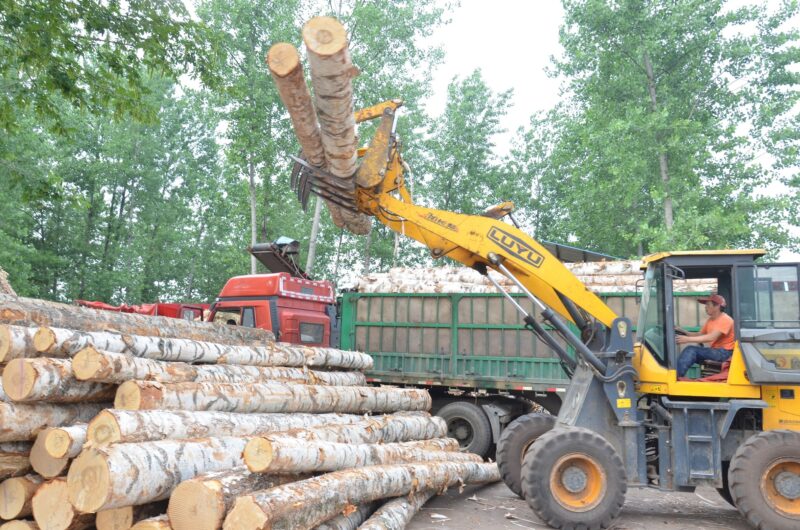
FSC Forest Certification: More Than Just a Certificate
All EcoWareTech birch and bamboo raw materials come from FSC 100% certified forests. Our certificate number is publicly verifiable on the FSC official website, ensuring complete supply chain traceability.
🌲 FSC 100% Certified
✅ BPI Compostable Certified
🍴 FDA Food Contact Safe
🇪🇺 EN 13432 EU Standard
This isn’t a marketing gimmick. This is the entry ticket to European and American markets. Starting in 2025, the EU PPWR regulation requires all imported “compostable” cutlery to present third-party certification. No FSC and compost certification? Your container will be detained by customs.
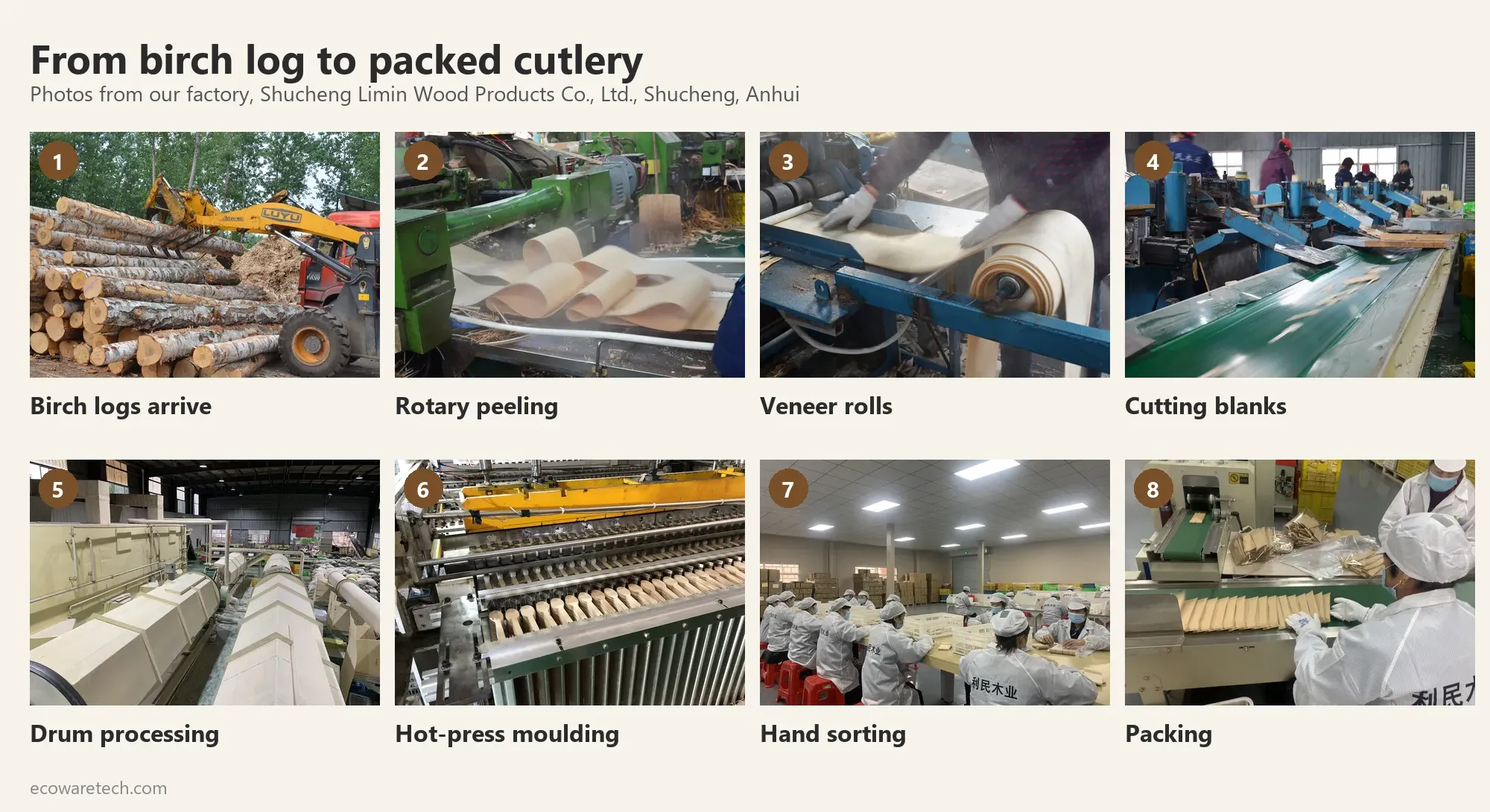
Core Processes: How 9 Steps Solve Customers‘ Biggest Headaches
From a raw log to a perfect wooden spoon, EcoWareTech insists on 9 precision processes. Each process targets a core industry pain point.
Process 1: Constant Temperature Water Boiling (Pre-Softening)
Technical Principle: Hot water softens lignin and hemicellulose, allowing wood fibers to withstand pressure evenly during subsequent pressing, avoiding stress concentration points.
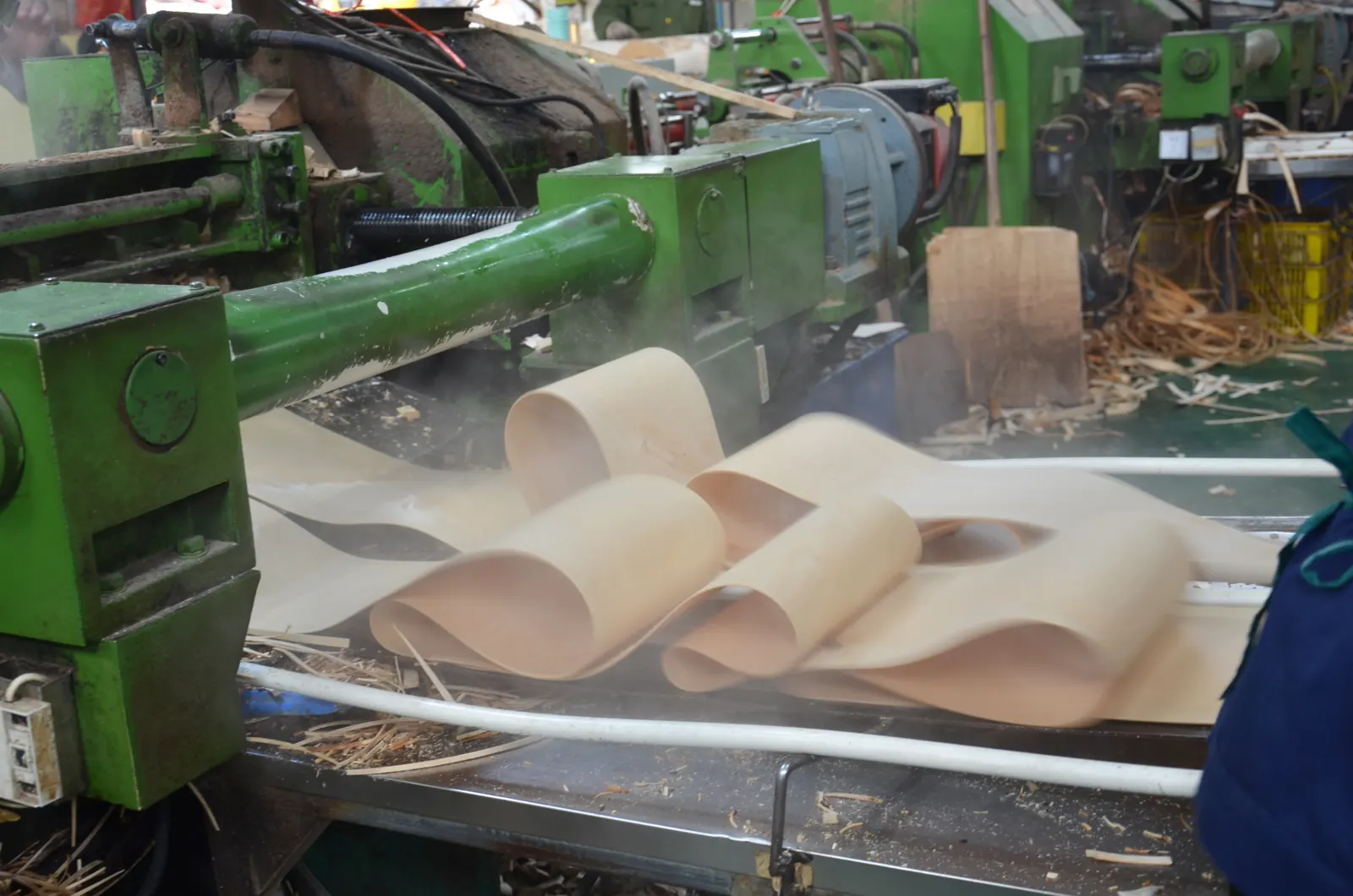
Process 2: High-Precision Rotary Cutting (Precision Rotary Cutting)
Birch is “peeled” into 1.8-2.2mm thick sheets (veneer) through German imported rotary cutting machines. This step determines the thickness consistency of the final product.
Process 3: High-Temperature Hot Pressing & Molding (Hot Pressing & Molding)
After die-cutting, wood sheets enter 180℃ instant memory hot pressing. This temperature point is critical—too low, wood won’t form; too high, it carbonizes and becomes brittle.
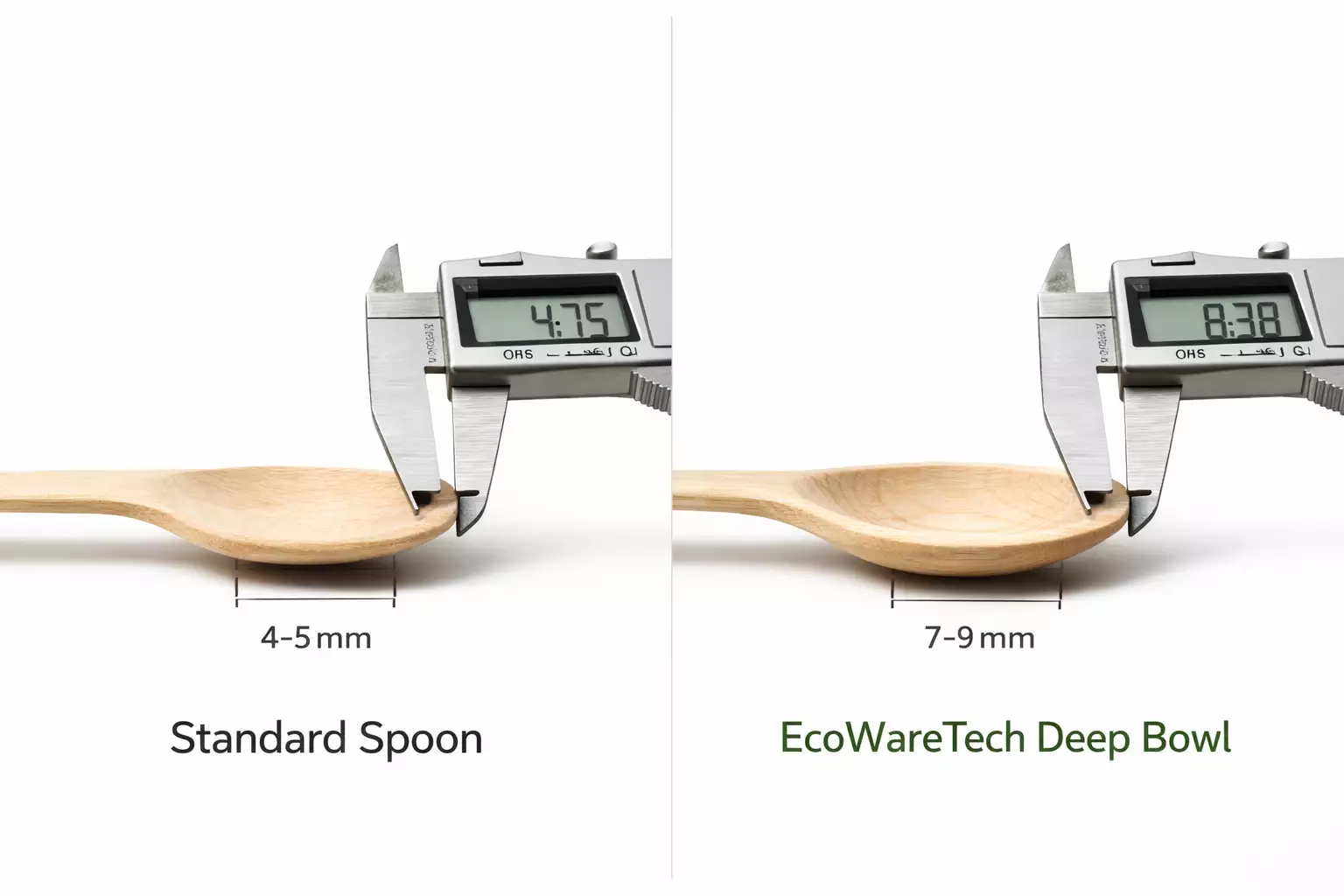
Deep Bowl Design Secret: EcoWareTech’s spoons use deep bowl molds (bowl depth 7-9mm), 40% deeper than industry standard. This means:
- Each spoonful holds more soup or sauce (35% capacity increase)
- Ice cream won’t drip easily
- Closer to metal spoon user experience
Process 4: Triple-Stage Tumbling Polishing (3-Stage Tumbling Polishing) — 🌟 Exclusive Differentiation
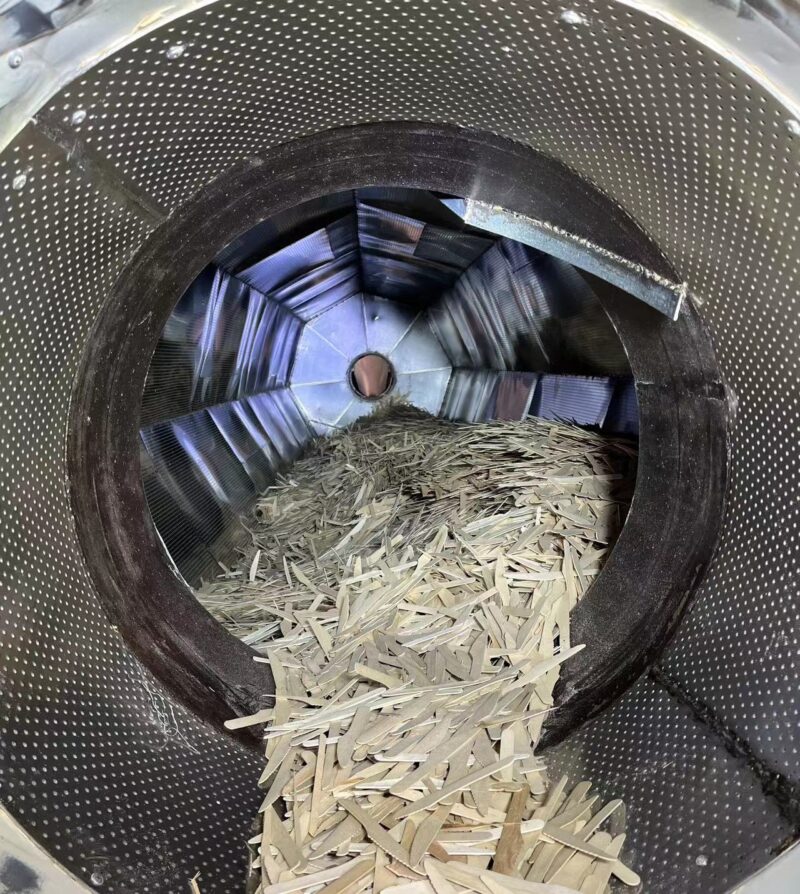
This is the step buyers notice first.
Our Polishing Process: Triple-Stage Tumbling
- Stage 1 (Rough Polishing): Using ceramic grinding media, removes surface burrs and wood chips, duration: 45 minutes
- Stage 2 (Fine Polishing): Using walnut shell powder (natural polishing agent), polishing to surface roughness Ra≤0.8μm, duration: 30 minutes
- Stage 3 (Sealing Polish): Using food-grade Brazilian Carnauba Wax, forming a natural protective film on wood surface, locking fibers and providing silk-like touch, duration: 20 minutes
Cost Comparison: This process adds $0.008 to each spoon’s production cost, and it is the step that removes most of the roughness buyers complain about.
Process 5: Infrared Precision Drying (Infrared Precision Drying) — 🔥 Core Competitiveness
This is the most overlooked yet most critical step in the industry.
When containers full of wooden cutlery ship from China to Europe/America (20-35 day voyage), container interiors produce condensation due to day-night temperature differences. If cutlery moisture content is poorly controlled (>12%), upon arrival at destination port you’ll discover:
❌ Products moldy and blackened
❌ Packaging cardboard boxes damp and collapsed
❌ Entire container rejected, losses of tens of thousands of dollars
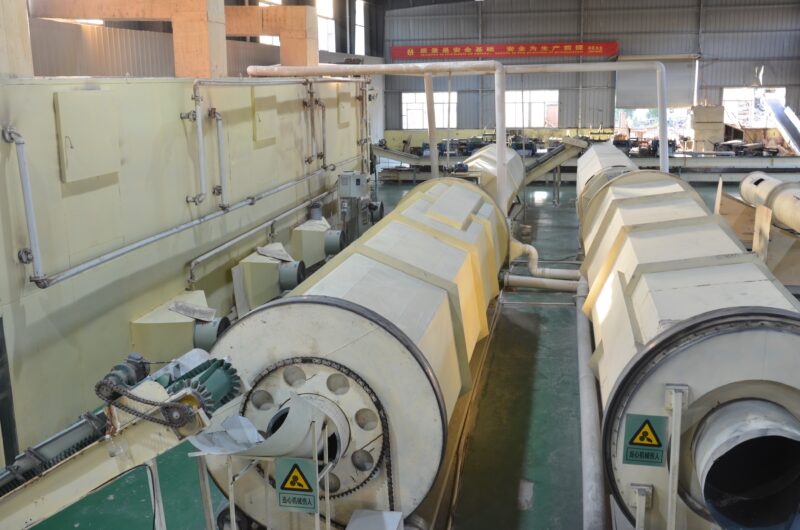
EcoWareTech Exclusive Solution: Infrared Drying Tunnel + Real-time Moisture Monitoring
- Equipment Investment: In 2021, we invested ¥2.8 million RMB (approximately $420,000 USD) to introduce a German infrared drying tunnel
- Precise Control: Locking each batch’s moisture content at 11%±1% (industry standard is ≤15%)
- Real-time Monitoring: Every 2 hours, QC team spot-checks 100 products using portable moisture meters
- Data Archiving: Each batch’s drying curve is recorded in ERP system, traceable for 5 years
Real Case: In summer 2023, a US distributor’s competitor imported a batch of wooden forks from another Chinese factory. Due to 14% moisture content, after arriving at LA port 23% of products showed mold spots, leading to destruction of the entire batch (valued at $38,000). The distributor then switched to EcoWareTech, zero mold complaints for 3 years.
| Comparison Item | Standard Factory | EcoWareTech |
|---|---|---|
| Drying Method | Natural air drying or hot air drying | Infrared tunnel drying |
| Moisture Control | 12-15% (high fluctuation) | 11%±1% (precise & stable) |
| Testing Frequency | Spot check or no check | Test every 2 hours |
| Ocean Shipping Mold Rate | 5-20% | <0.3% |
| Energy Cost | Low | High (but yields zero claims) |
Our Promise: If mold occurs due to moisture content issues, EcoWareTech bears 100% reproduction costs. Since we introduced it, we have invoked this promise: 0 times.
Process 6: Optical Intelligent Sorting (Optical Sorting System)
Human eyes get tired, but machines don’t.
Our German SIKORA optical sorting machine introduced in 2022 can detect product surface defects at 800 pieces per minute:
- Black spots (early mold)
- Wood knots (affect strength)
- Color difference (affects appearance)
- Damage (edge chipping)
Any defective products are automatically rejected into the recycling system (made into biomass fuel). Manual re-inspection only handles the final 5% edge cases.
Process 7: Boiling Water Test (Boiling Water Endurance Test)
After each batch production, the QC team randomly samples 200 products for extreme testing:
- Boil spoons in 100℃ boiling water for 30 minutes
- Check for discoloration, deformation, cracking
- Test if Brazilian Carnauba wax coating dissolves
Passing Standard: Zero discoloration, zero deformation, coating retention rate ≥95%
This ensures our products can safely be used in hot soup, hot coffee and other high-temperature scenarios (up to 95℃).
Process 8: Mechanical Strength Testing (Mechanical Strength Testing)
Using an electronic tensile testing machine, we test:
- Wooden forks: Fork tines withstand lateral force ≥1.5kg without breaking
- Wooden knives: Knife edge withstands downward pressure ≥2.2kg without bending
- Wooden spoons: Spoon handle withstands torsional force ≥1.8kg without breaking
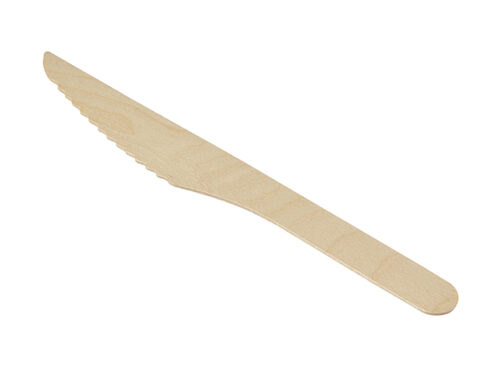
Data Record: A certain batch of 185mm reinforced wooden knives had an average breaking load of 2.67kg, far exceeding the industry standard of 1.8kg.
Process 9: Microbiological Testing (Microbiological Testing)
Every batch must pass our internal laboratory’s microbiological testing before shipment:
- E. coli: Not detected
- Salmonella: Not detected
- Mold: <10 CFU/g (far below national standard 100 CFU/g)
Testing Cycle: Reports issued within 48 hours of batch production completion. Failed batches directly destroyed, never entering the market.
Customization Services: Empowering Brands
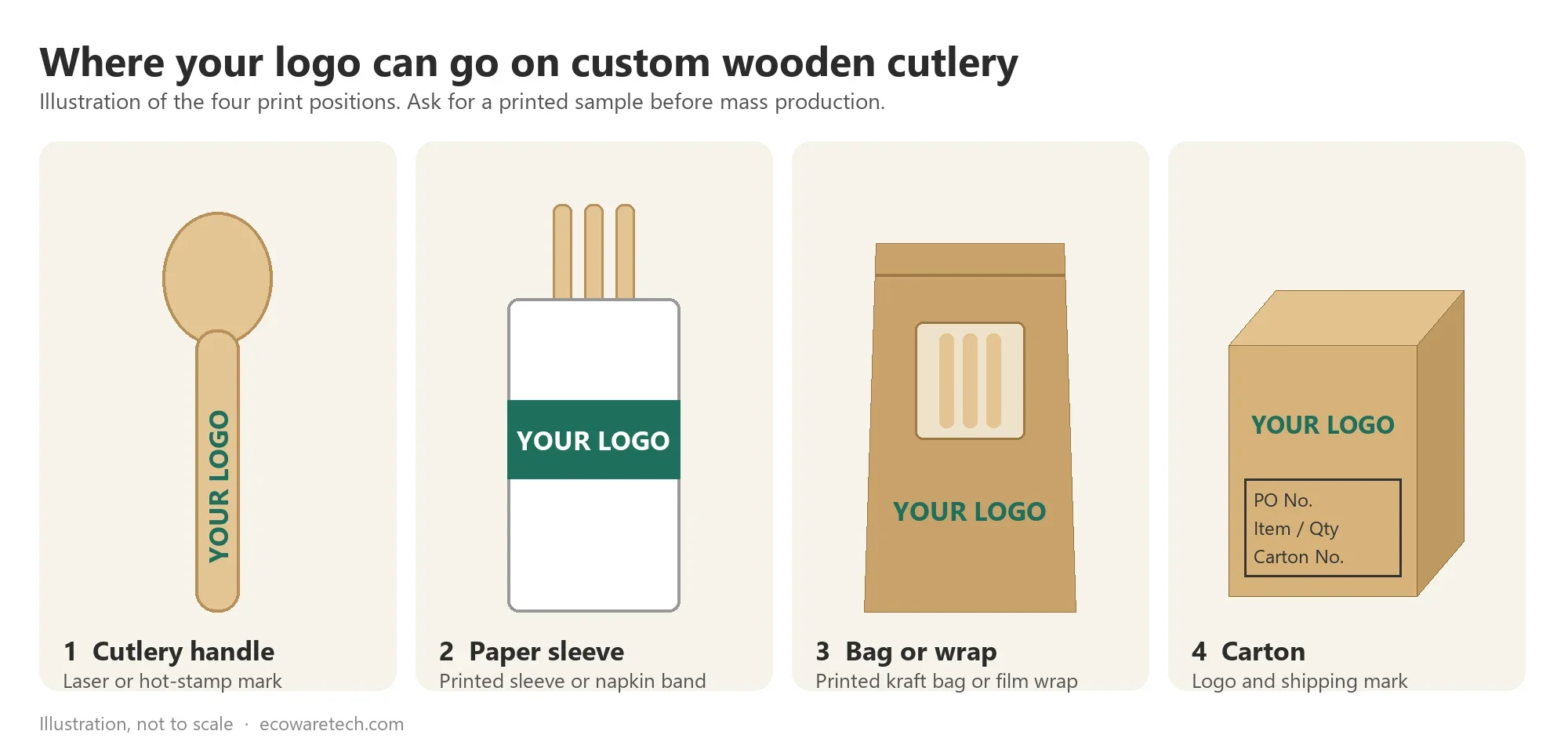
EcoWareTech doesn’t just sell products, we sell brand exposure opportunities.
1. Hot Stamping Technology (Hot Stamping / Laser Engraving)
We provide LOGO customization services for multiple international brands:
- Hot Stamping: Suitable for simple patterns (like text LOGOs), low cost, MOQ ≥50,000 pieces
- Laser Engraving: Suitable for complex patterns (like brand logos), high precision, MOQ ≥100,000 pieces
—— Marketing Director, North American Specialty Coffee Chain
2. Full Paper Packaging Solution (100% Plastic-Free Packaging)
Starting in 2024, EcoWareTech launched full paper packaging technology:
- Outer carton: Corrugated paper (recyclable)
- Inner bag: Food-grade kraft paper bag (compostable)
- Label: Soy ink printing (non-toxic)
This aligns with the EU’s “100% plastic-free packaging” trend starting in 2025, helping clients seize market opportunities.
3. Flexible MOQ (Flexible MOQ)
While we’re a large factory, we understand startup brand needs:
- Standard products: MOQ = 50,000 pieces (approximately 1 pallet)
- Custom products: MOQ = 100,000 pieces (approximately 2 pallets)
- Samples: Free provision of 50-100 sample pieces (shipping only)
Customer Testimonials: Data Speaks
Conclusion: Choosing a Supplier Is Choosing a Partner
Making one wooden spoon is easy, but consistently making 100 million perfect wooden spoons is hard.
This requires:
- Strict raw material selection (30% rejection rate)
- Continuous process investment (¥2.8M infrared drying equipment)
- Zero-compromise quality attitude (zero mold promise)
At EcoWareTech, we don’t pursue being the cheapest supplier. We pursue being the most trustworthy partner.
💡 Why Choose EcoWareTech?
- ✅ Family factory in production since 2008, selling its own output
- ✅ 9 precision processes, each targeting industry pain points
- ✅ Exclusive moisture control technology, 3 years zero mold complaints
- ✅ FSC 100% certified, all materials traceable
- ✅ Customization services, helping brands add value
- ✅ Exporting to 50+ countries, including high-standard European & American markets
📦 Don’t Just Look at Pictures—Feel the Difference with Your Lips
Contact EcoWareTech for a Free Sample Pack including:
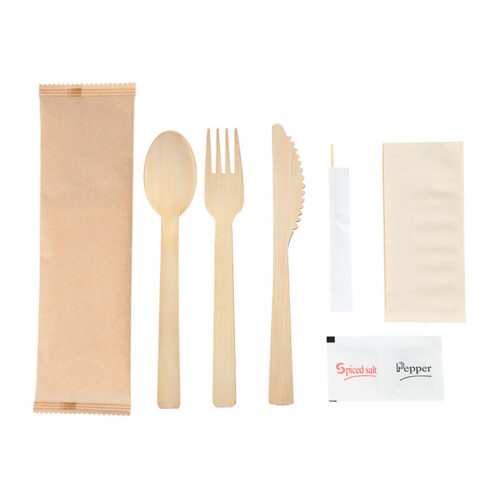
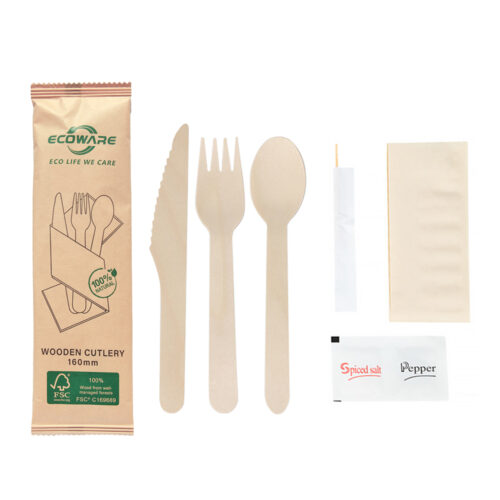
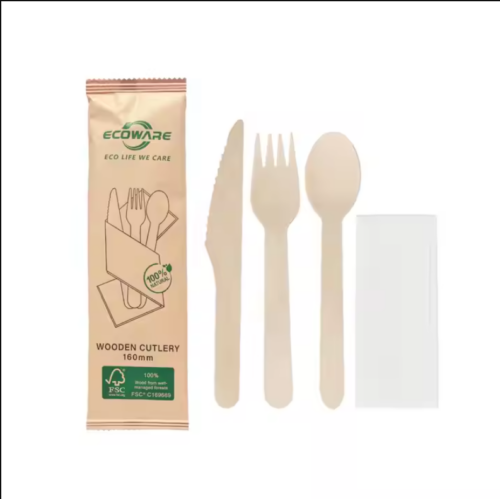
- 50 pieces standard wooden cutlery (spoon+fork+knife)
- 50 pieces bamboo cutlery comparison samples
- Product specification sheet + FSC certificate copy
- Moisture content test report (third-party lab)
Feel with your own lips the difference the polishing makes.
📧 Request Free Samples NowOr visit: www.ecowaretech.com | WhatsApp: +86 18756900204
Related Articles
Products in this guide
Related buyer guides
- How to Choose the Best Disposable Bamboo Cutlery for Your Business in 2025: The Ultimate Buyer’s Guide
- Wooden Cutlery HS Code (4419) and Import Duty from China: A Landed-Cost Walkthrough
- Pre-Shipment Inspection Checklist for Wooden Cutlery from China: Defects, AQL Sampling and What to Reject
- Trading Company vs Manufacturer: How to Tell Who You’re Really Buying Cutlery From