Buyer Guides & Resources
Guides for importers, distributors and foodservice buyers: cost, certificates, compostability claims, quality checks and how to choose a supplier. Start with a topic, or browse the latest articles below and the full article index.
The real cost per order: wood vs plastic.
BPI, EN 13432 and OK Compost by market.
What FSC, BPI, FDA and LFGB actually prove.
Defects, AQL sampling and what to reject.
How to vet a wooden cutlery factory in China.
Wood types, reuse and decomposition.
Latest Articles

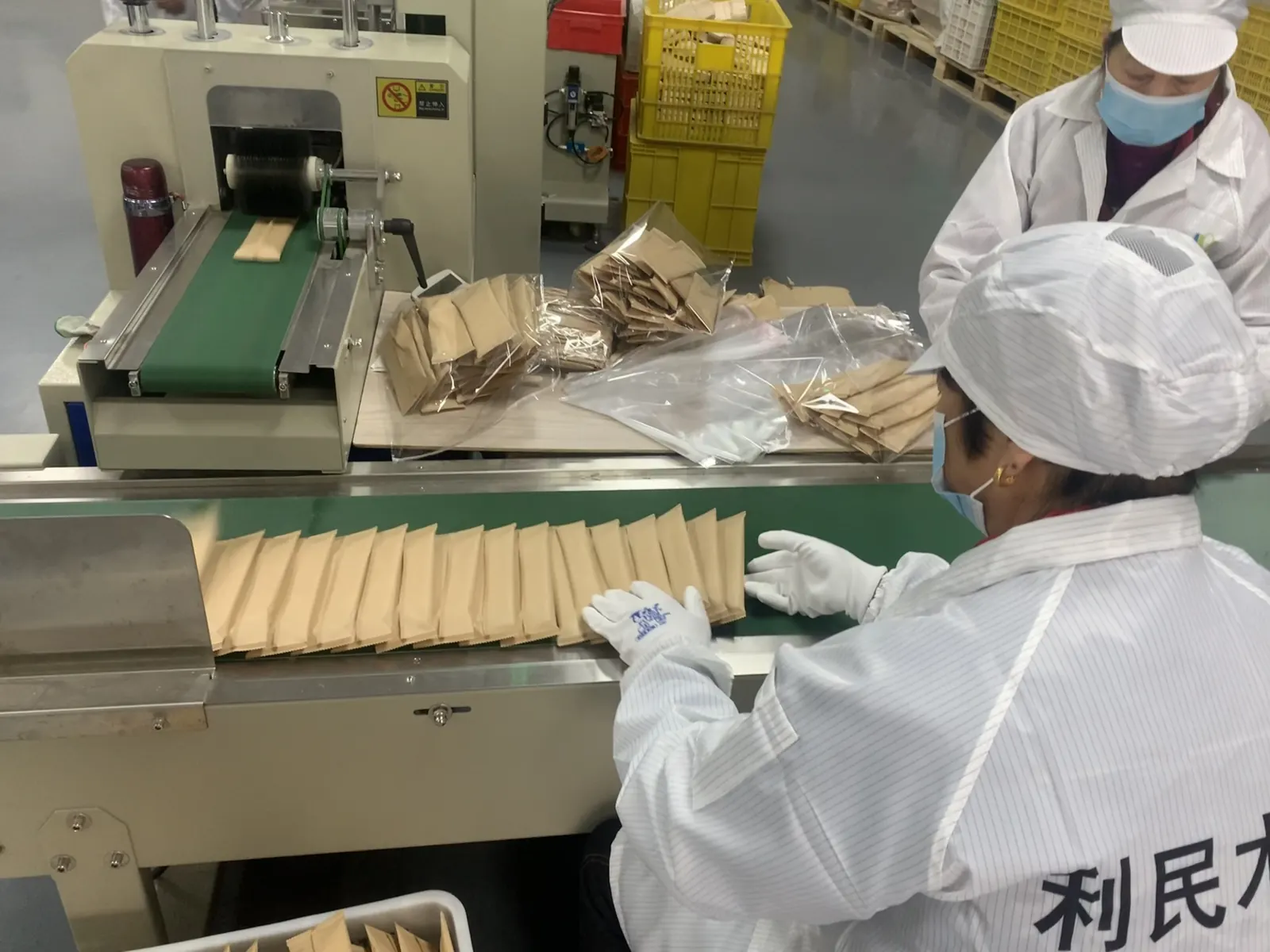
The production process of disposable wooden tableware is a complex multi-step procedure. From the procurement of raw materials to the final production of various environmentally friendly disposable tableware, we strictly control every step. This complex process will be described in detail below! The main steps at our factory, from birch logs to packed cutlery. Raw material procurement: Our [...]
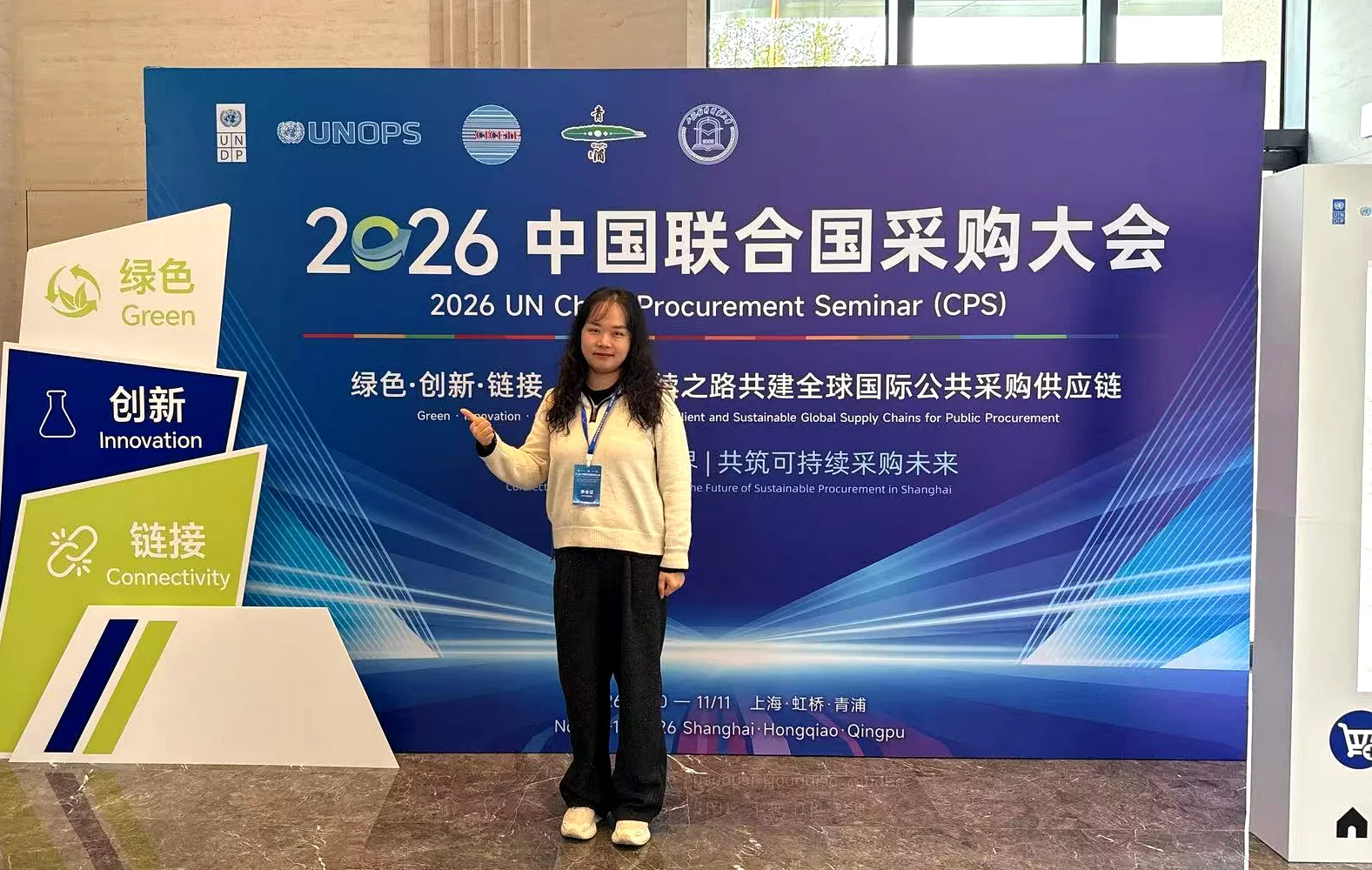
Notes from the 2026 UN China Procurement Seminar in Qingpu, Shanghai: Phase II of the sustainable procurement project, the Hongqiao Liancai service center, and how a supplier starts on UNGM.
Updated 11 November 2026 · Ecoware Export Team Food festivals, markets and company events create a lot of single-use waste in a few hours. Most of it comes from the same three places: the plates and cutlery, the bins, and the printed materials that get thrown away afterwards. Zero-waste event planning does not mean producing no waste at all. It [...]
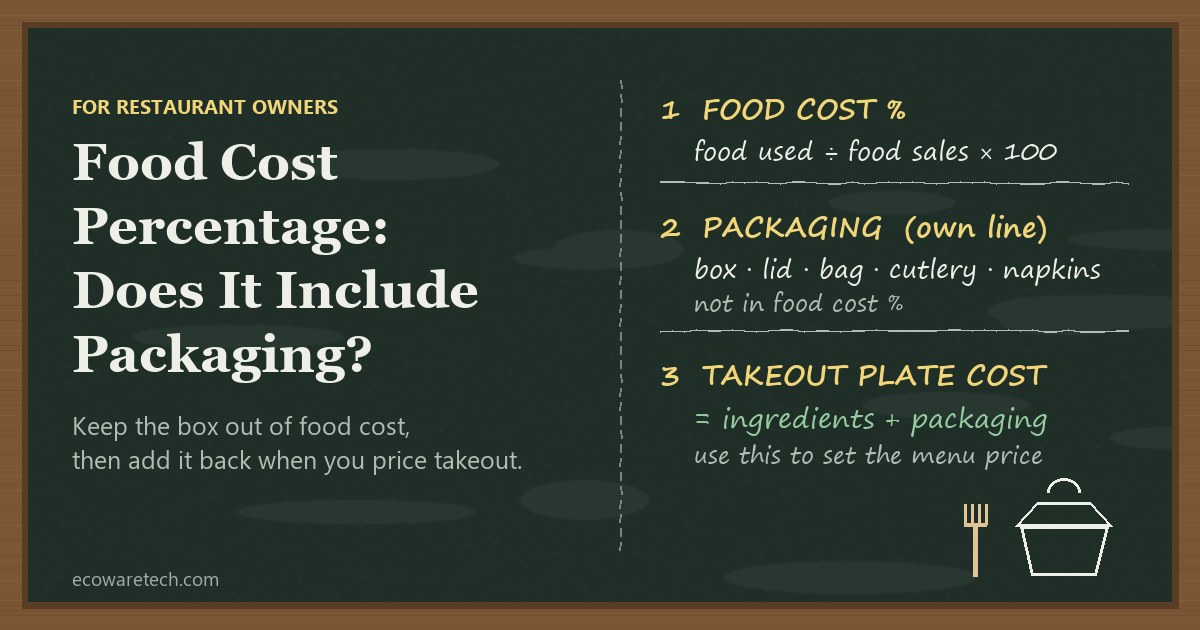
Updated 22 October 2026 · Ecoware Export Team Food cost percentage is the cost of the food you used in a period divided by your food sales, times 100. Keep to-go containers, bags, napkins and disposable cutlery out of it and track them as packaging. When you price a takeout dish, add that order’s packaging to the plate cost, or [...]
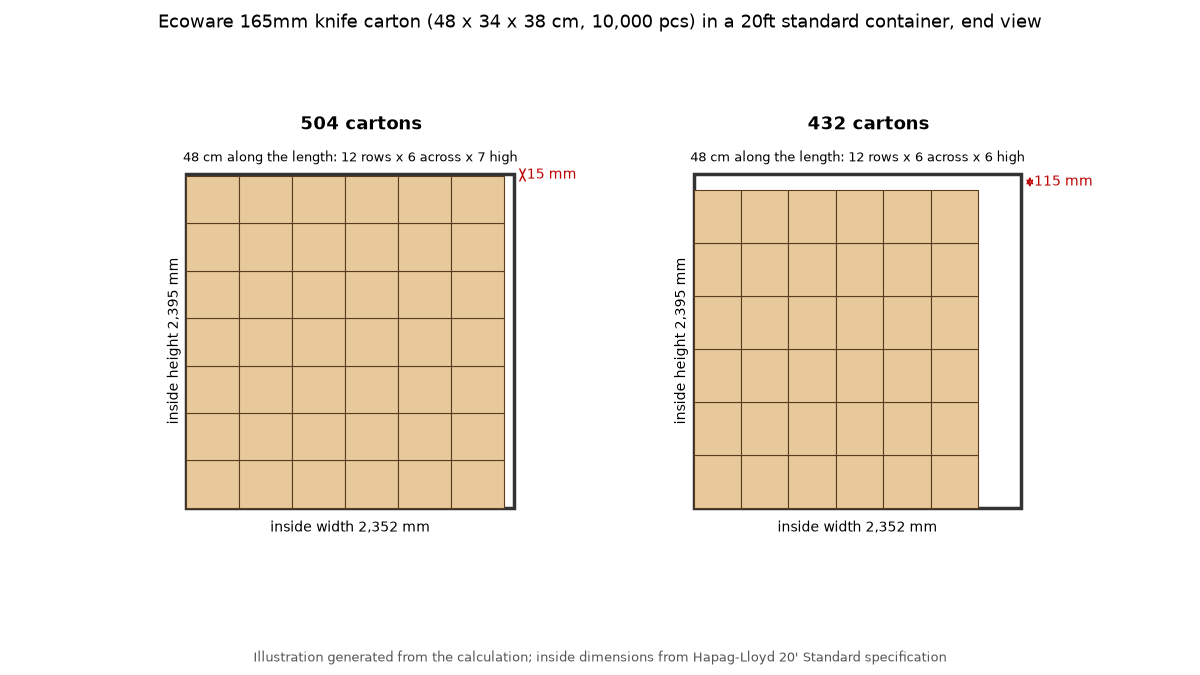
How many cartons fit in a 20ft or 40HQ container, worked through with Ecoware's own 10,000-piece knife, fork and spoon cartons: whole-carton counts, volume limits and the 26.5-tonne weight limit.
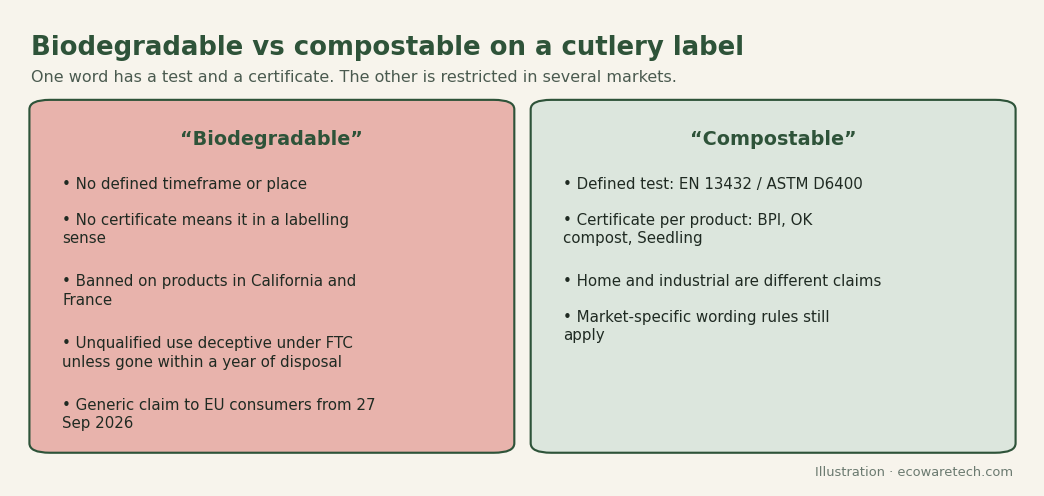
Updated 1 October 2026. Prepared by Ecoware’s marketing team. Legal statements link to the statute, regulation or official guidance; this page is general guidance, not legal advice. Short answer: “Compostable” means a product breaks down in a composting system within a set time, and there are test standards and certificates that prove it. “Biodegradable” only says microorganisms will eventually break [...]
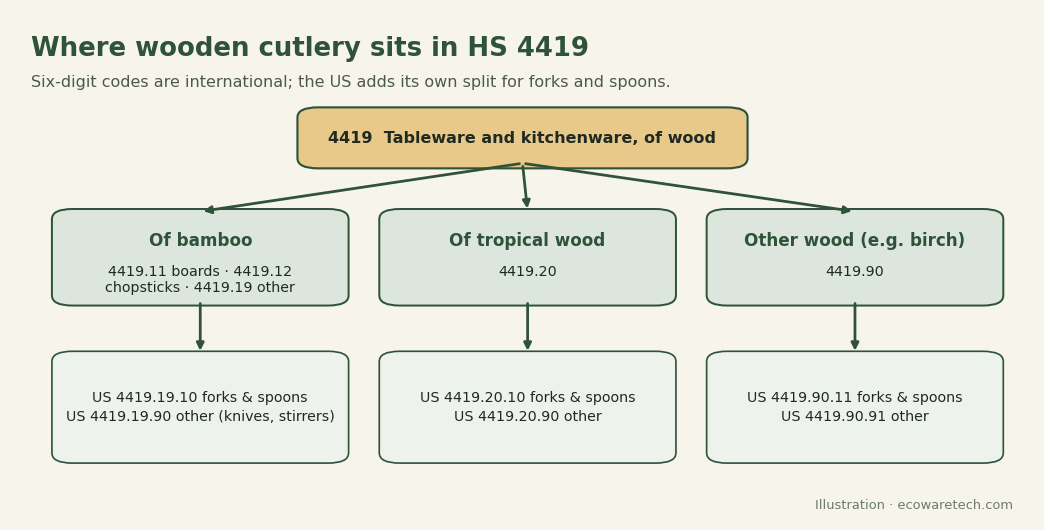
Updated 1 October 2026. Prepared by Ecoware’s marketing team. Tariff headings were read from the US, UK and EU tariff databases on that date. This page deliberately gives no duty rates: they change, and the official databases linked below are the only reliable place to read them on your entry date. Short answer: Wooden and bamboo cutlery is classified under [...]

Updated 4 November 2026. Prepared by Ecoware’s marketing team. Sample sizes and accept/reject numbers follow the single-sampling, normal-inspection tables of ISO 2859-1 (sample-size code letters, and Table 2-A as numbered in the 1999 edition). The standard was reissued as ISO 2859-1:2026, so name the edition in your PO. Short answer: A pre-shipment inspection checklist for wooden cutlery covers five things [...]
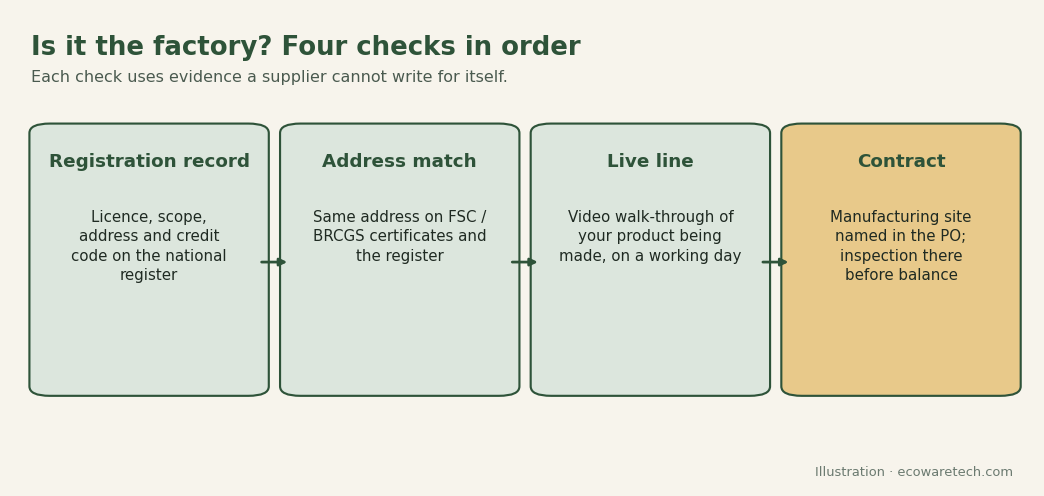
Updated 1 October 2026. Prepared by Ecoware’s marketing team. Statements about Chinese registration rules link to the government or legal source. Short answer: A manufacturer owns the production lines; a trading company buys from factories and resells, adding its own margin and services. Neither is bad, but you need to know which you are dealing with, because it decides who [...]
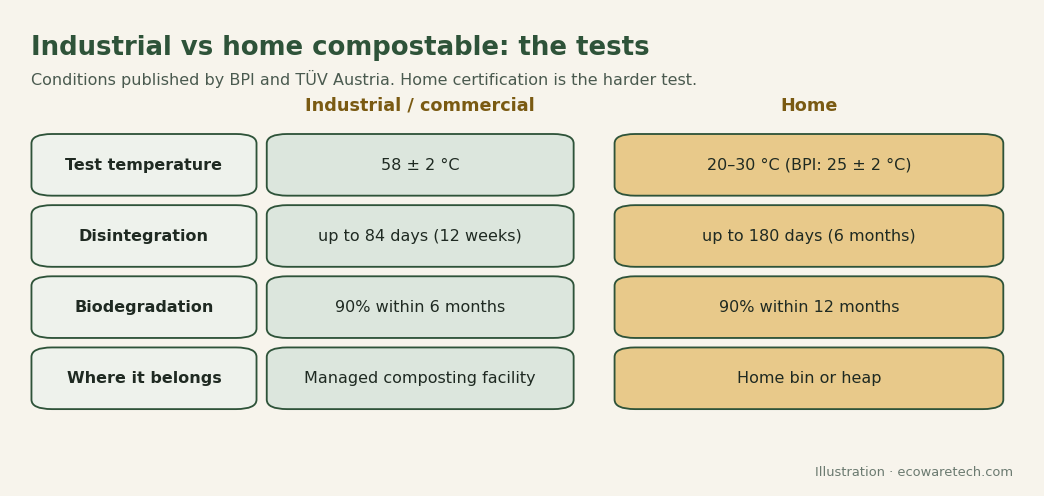
Updated 1 October 2026. Prepared by Ecoware’s marketing team. Test conditions are quoted from the certifiers’ scheme documents; labelling rules link to the statute or regulation. Short answer: Industrial (or commercial) compostable means a product broke down in tests run at about 58 °C, the temperature of a managed composting facility. Home compostable means it also broke down at ambient [...]
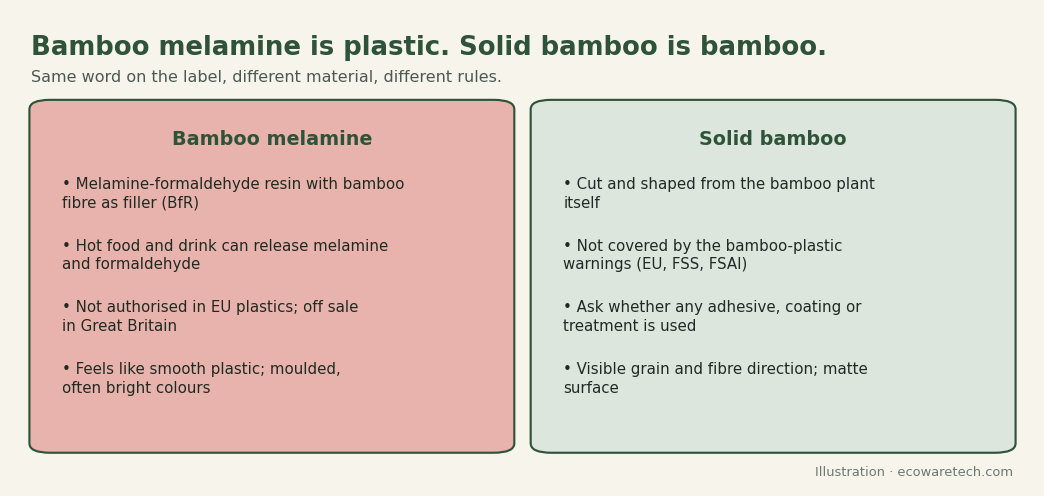
Updated 1 October 2026. Prepared by Ecoware’s marketing team. Every regulatory statement links to the authority that made it. Short answer: Bamboo melamine is not bamboo tableware. It is melamine-formaldehyde resin, a plastic, with ground bamboo fibre mixed in as a filler. In the European Union it is not a legal food-contact material at all: bamboo is not an authorised [...]
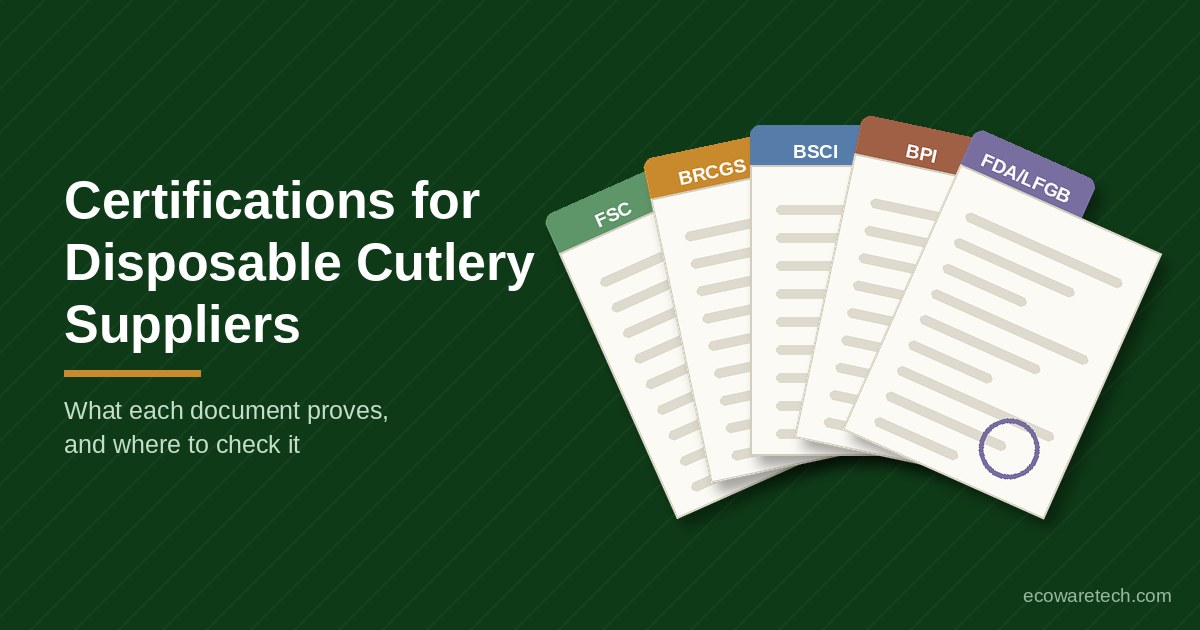
Updated 30 September 2026. Prepared by Ecoware’s marketing team. Registers and regulations are linked to the issuing body or the official text where one is public, and were opened on the date above. Short answer: The certifications for disposable cutlery suppliers, and the test reports that travel with them, fall into five kinds, and they prove different things. Chain-of-custody certificates [...]
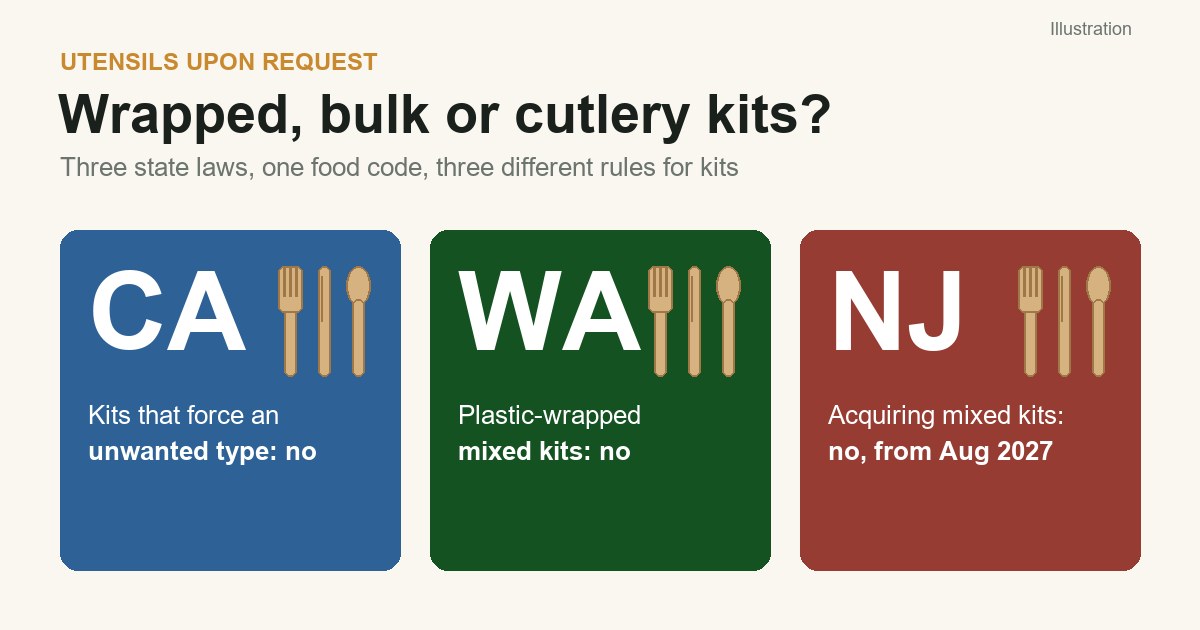
Two layers of rules now decide how disposable cutlery can be handed out in the US. The FDA Food Code says unwrapped forks, knives and spoons must be presented so that only the handles are touched, and that self-serve single-use items come in their original wrapper or from an approved dispenser. On top of that, California, Washington and New Jersey [...]
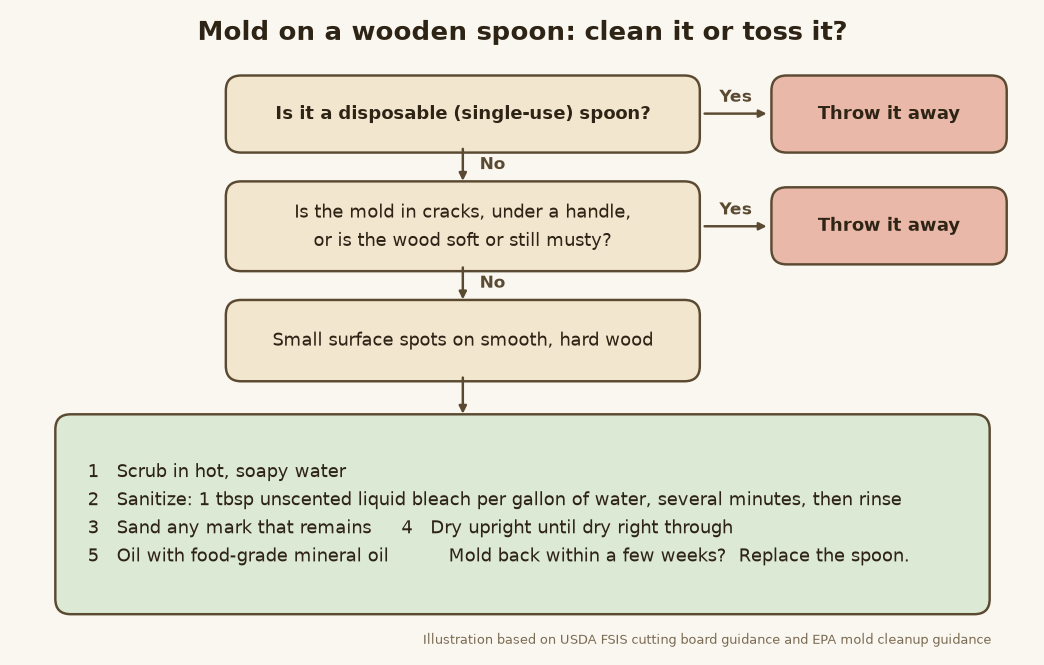
Wooden spoon mold is usually a surface problem you can fix, as long as it has not reached the inside of the wood. If the spots are small, sit on a smooth surface and come off with scrubbing, wash the spoon in hot soapy water, sanitize it with the ratio the USDA gives for wooden cutting boards (1 tablespoon of [...]
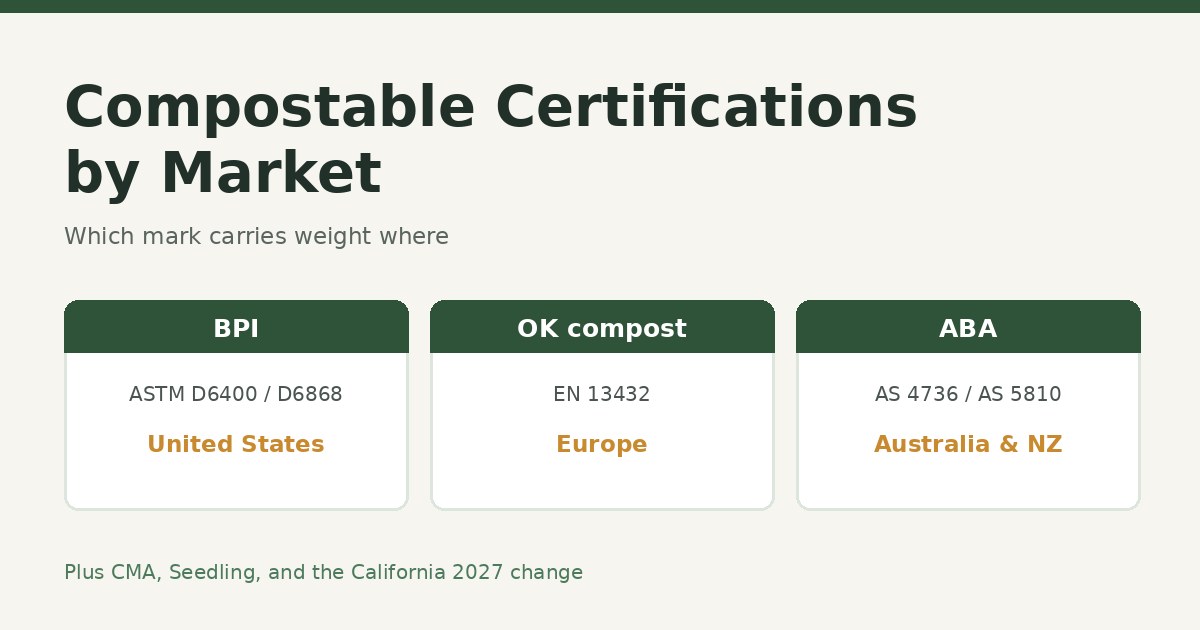
Updated 30 September 2026. Prepared by Ecoware’s marketing team. Test conditions are quoted from the certifiers’ own pages; the California section is dated because the rule is still moving. Short answer: There is no global compostable certification. Pick the mark by the market the product is sold in. BPI certifies products for the United States and Canada, tested against ASTM [...]
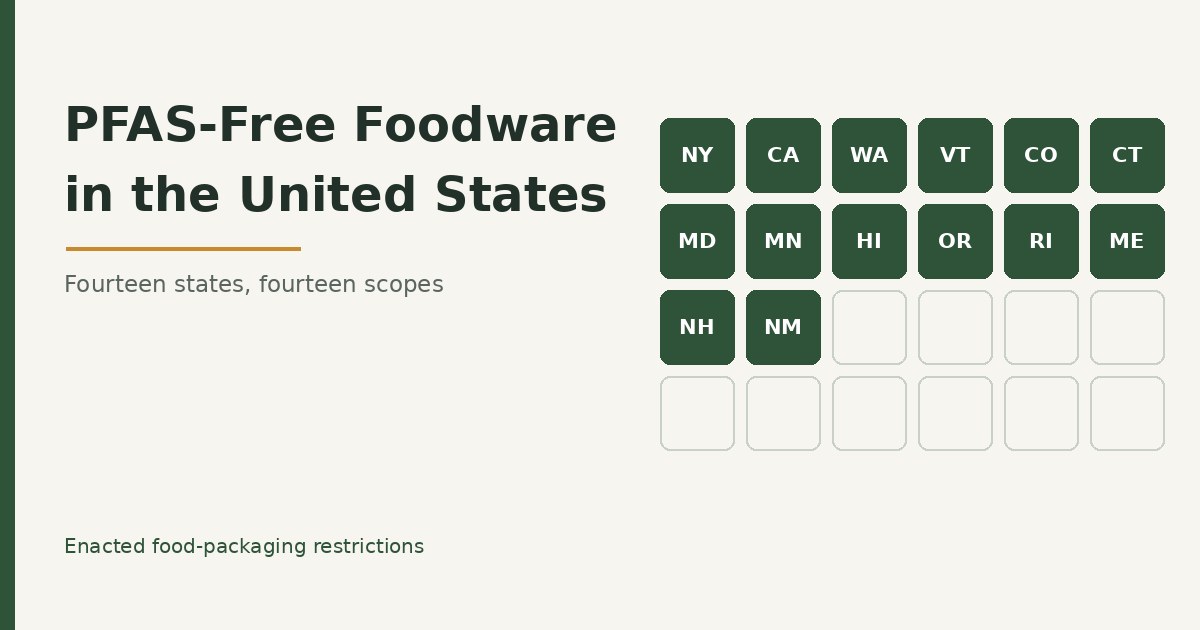
Quick answer: Fourteen US states have enacted restrictions on PFAS in food packaging, and they do not share one rule, one date or one definition. Most target intentionally added PFAS; California adds a total organic fluorine screen; some cover all food packaging while others reach only plant-fibre packaging. There is still no federal ban, which surprises buyers who have read [...]
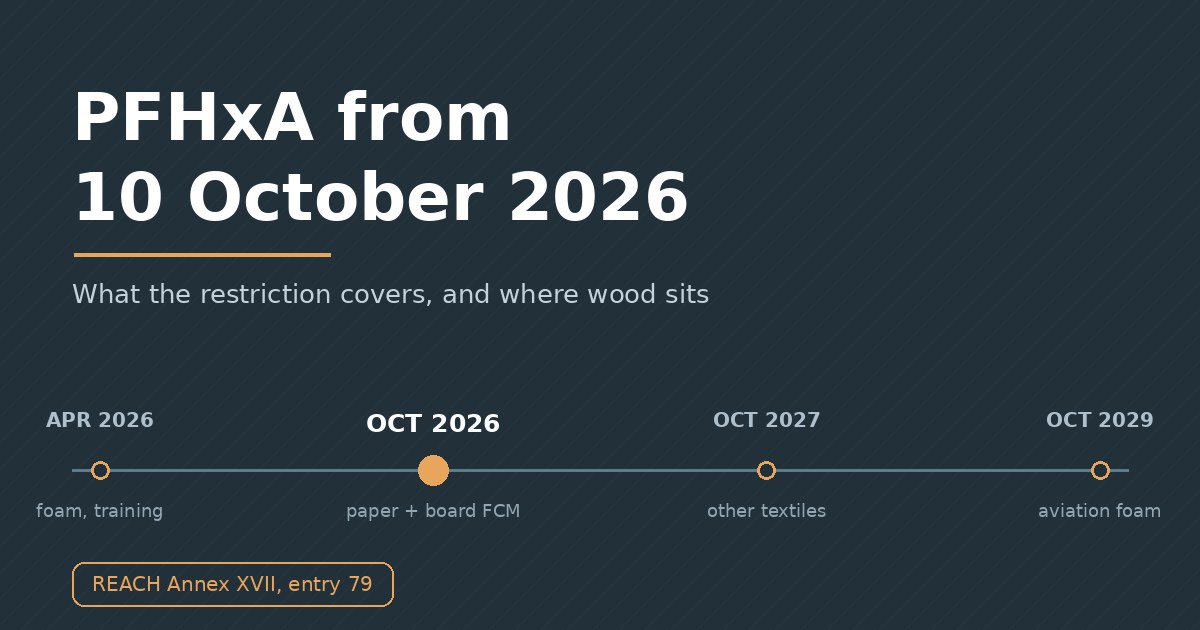
Quick answer: The PFHxA restriction, added to REACH Annex XVII as entry 79 by Regulation (EU) 2024/2462, starts applying to paper and board food contact materials on 10 October 2026. Wooden and bamboo cutlery are not among the restricted categories. The paper and board that travels with the product can be, which is where most of the confusion in buyer [...]

Quick answer: Wooden tableware falls under HS heading 4419, and heading 4419 is listed in Annex I of the EU Deforestation Regulation. Birch cutlery, wooden plates and wooden stirrers are therefore in scope. The obligation starts on 30 December 2026 for large and medium operators and for downstream operators and traders of every size, and on 30 June 2027 for [...]
Quick answer: ISPM 15, the international standard behind the heat-treatment stamp on shipping pallets and crates, is written to cover wood packaging material, not finished wood products sold as the goods themselves. Wooden forks, chopsticks and plates are the cargo, not the packaging, so they fall outside what the standard itself regulates. That said, individual countries can layer on their [...]
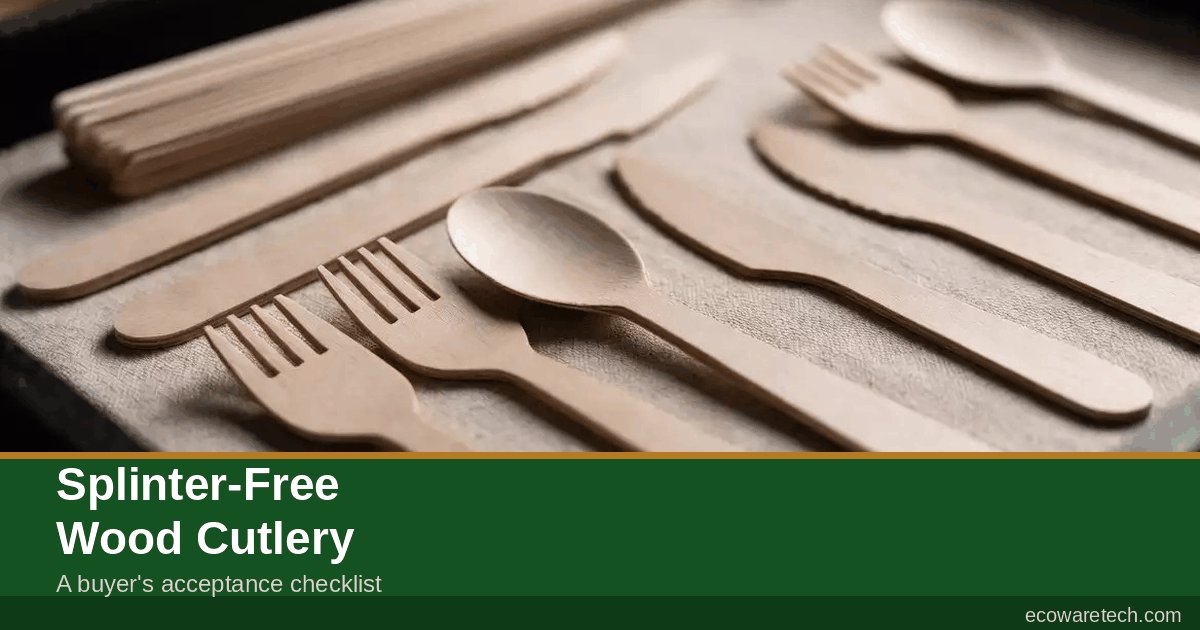
Quick answer: There is no certified, industry-wide “splinter-free” standard for wood cutlery, and checking competitor sites confirms it: suppliers describe their process, not a number. What protects a buyer is putting specific, checkable terms in the purchase order instead: a defined sanding stage, a thickness spec, a moisture-content range tied to a named test method, a written definition of what [...]
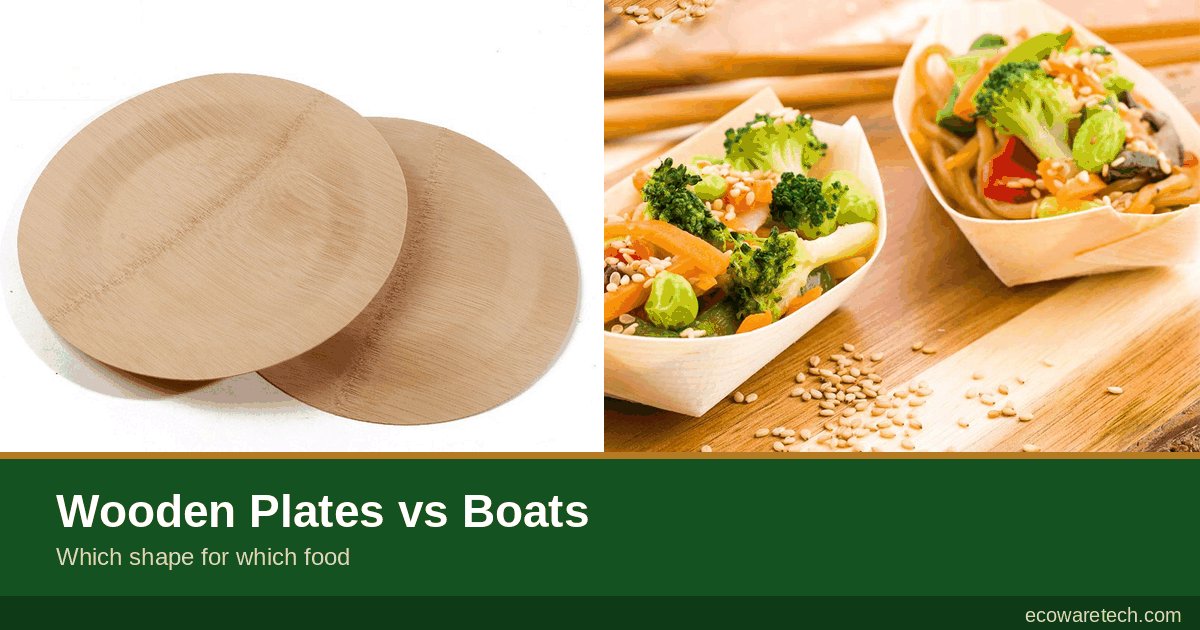
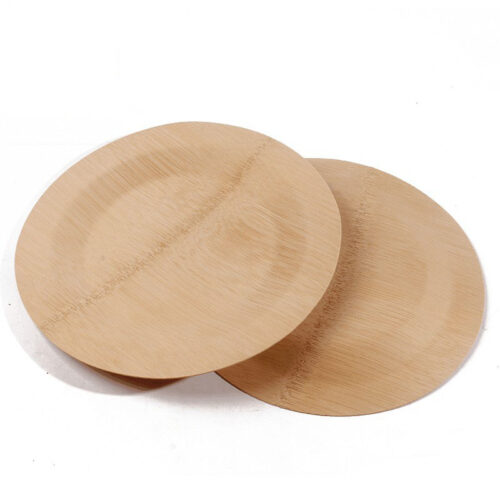
Quick answer: Plates (round or square, flat) suit dry or lightly sauced food such as appetizers, pastries and sandwiches. Boats (elongated, with raised sides) hold sushi, dumplings and other long, handheld items where a little moisture needs to stay contained along one axis. Neither shape is the right call for soup or a heavily sauced dish held for a long [...]
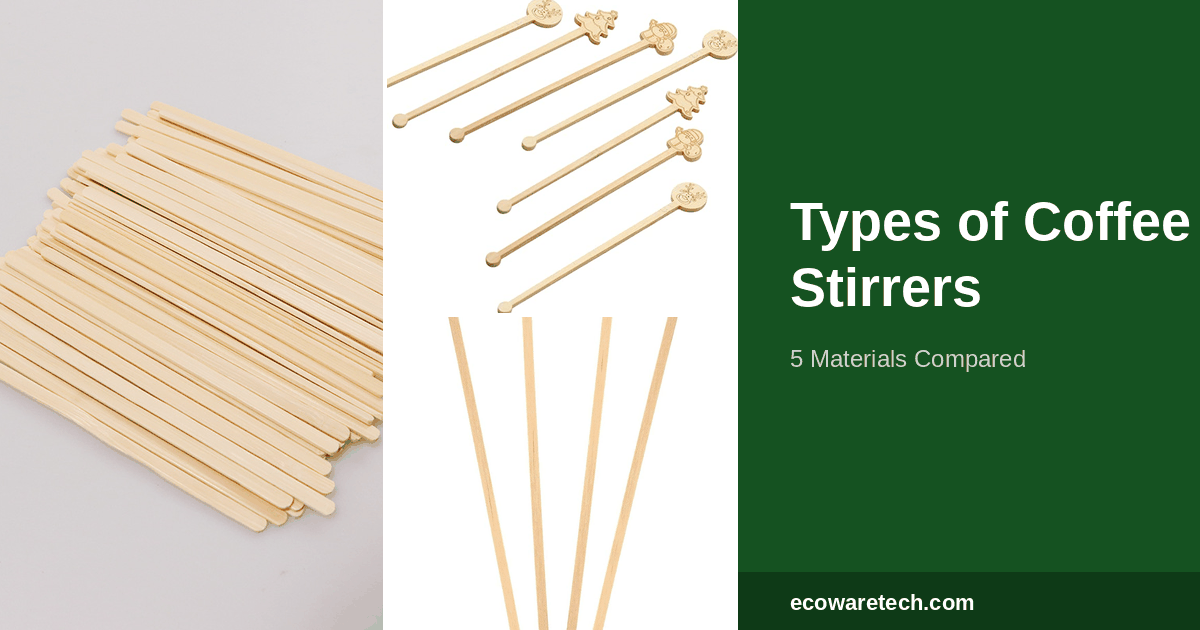
Coffee stirrers come in five materials buyers actually encounter: wood and bamboo for a natural, often FSC-certified look with good rigidity, plastic for the cheapest per-unit cost, metal for reusable, premium service, and paper for a fully biodegradable option that softens quickly in liquid. Within wood and bamboo, the two shapes that matter are flat-ended and round-ended, and the right [...]
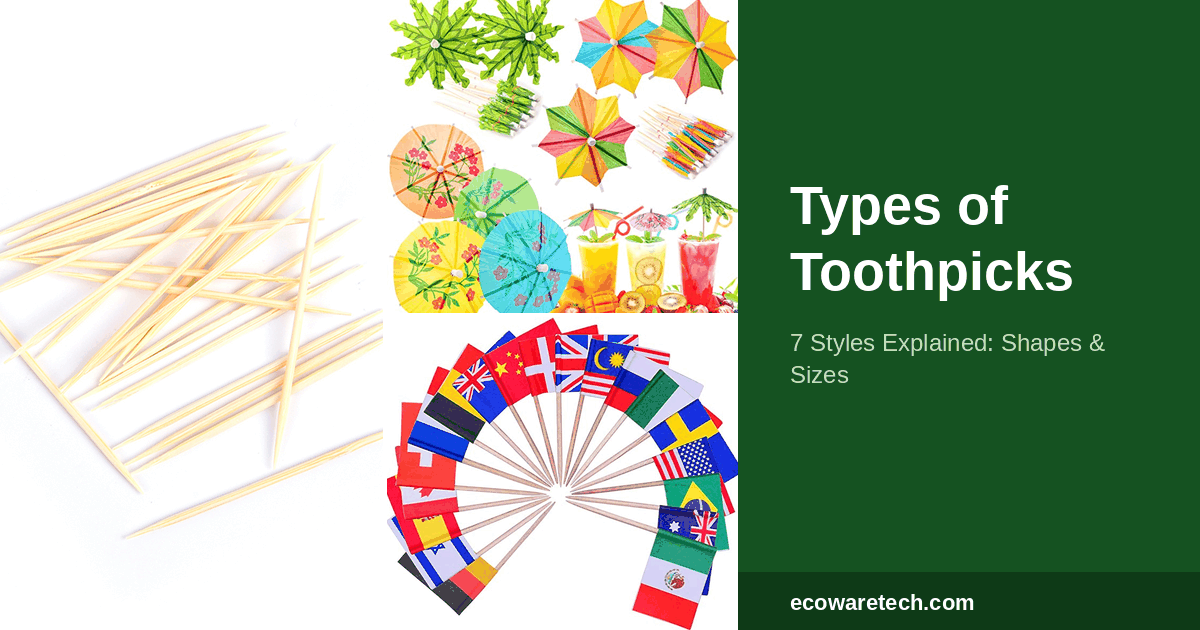
A toothpick is a short pointed stick, usually wood or bamboo, sized for cleaning between teeth or spearing a single bite of food. Standard picks run about 65mm long, far shorter than a skewer or cocktail pick. Round toothpicks are the classic double-pointed bar pick, flat toothpicks resist rolling off a table, grooved picks snap into their own little stand, [...]
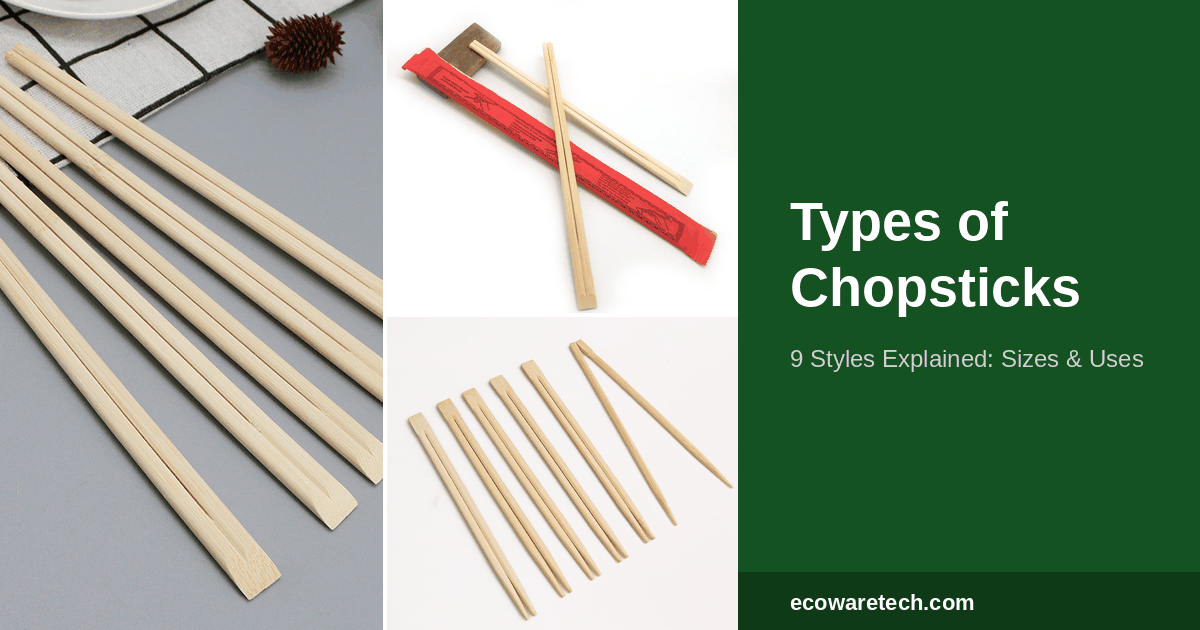
The main types of chopsticks divide along two lines: country of origin, and the cut of the stick itself. Chinese chopsticks run longest (24-27cm+) with a thicker, tapered tip built for communal serving from a shared pot. Japanese chopsticks are shorter (20-23cm) with a finer point suited to picking bones out of fish. Korean chopsticks are flat, often metal, with [...]
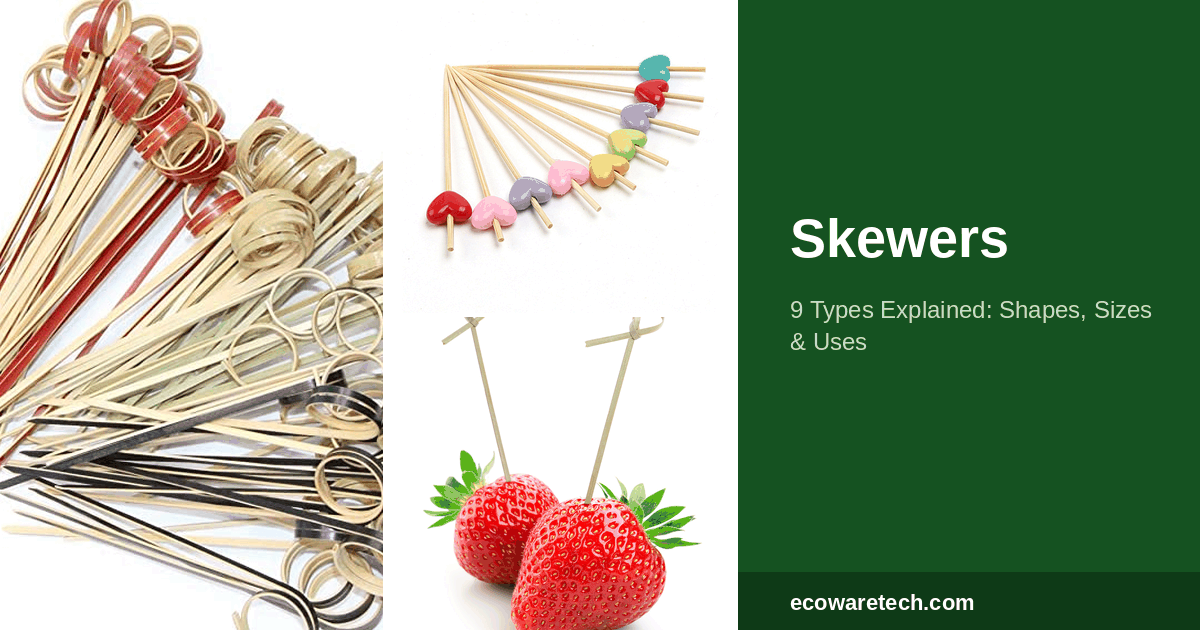
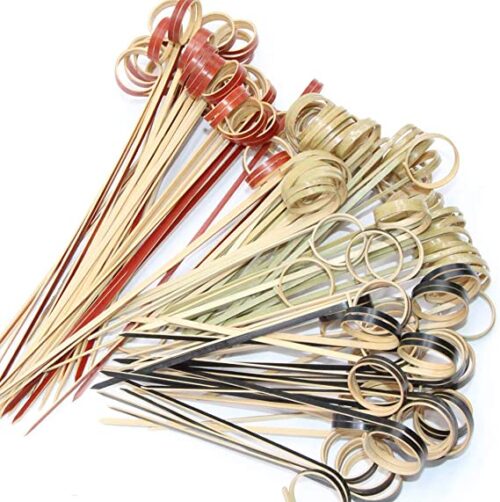
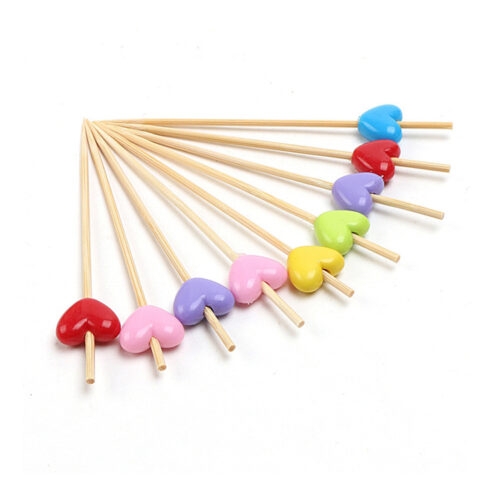
A skewer is a thin stick, usually bamboo or wood, used to hold food together for grilling, roasting, serving or decoration. The shape does real work: round skewers suit general grilling, flat and double-prong skewers stop food from spinning as you turn it, paddle and knotted skewers give a secure grip for appetizers, and teppo, cocktail and fruit picks are [...]
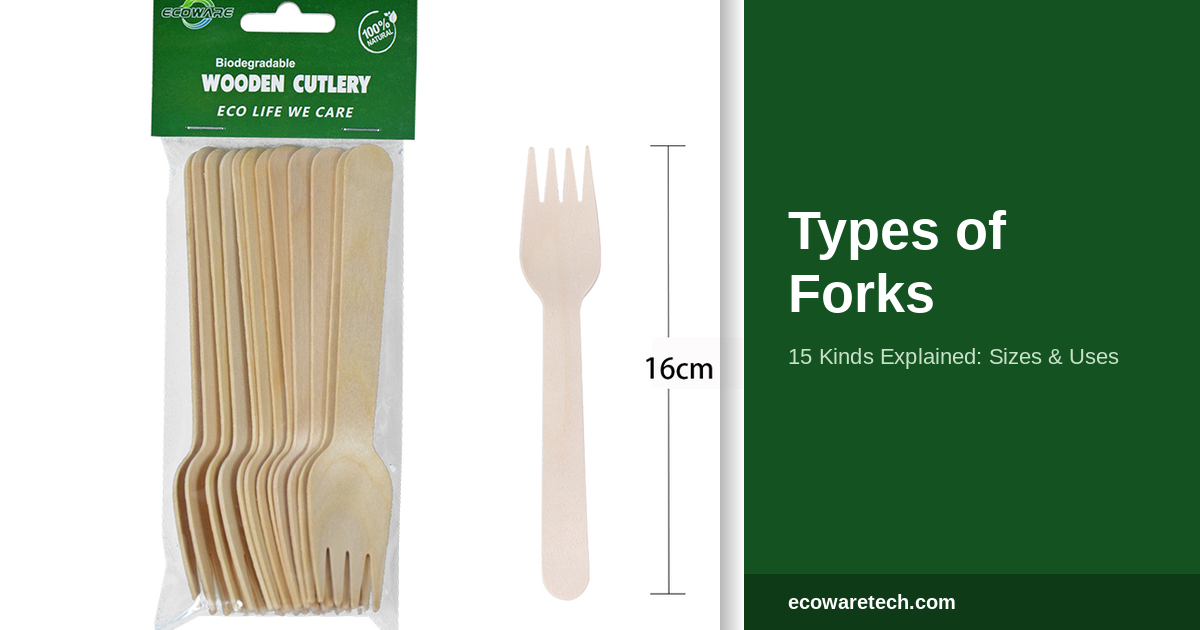
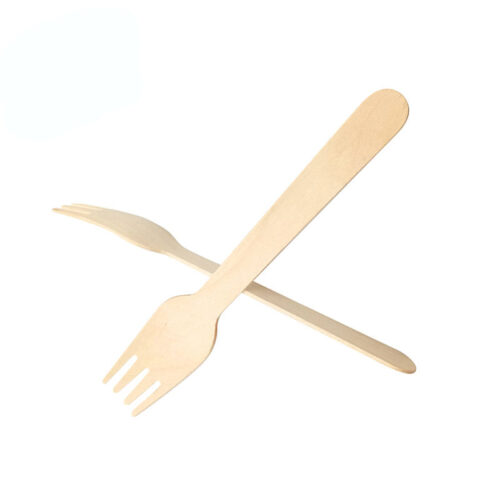
15 disposable fork types compared: dinner, salad, cocktail, oyster and more, with tine counts, sizes in mm and food pairings.
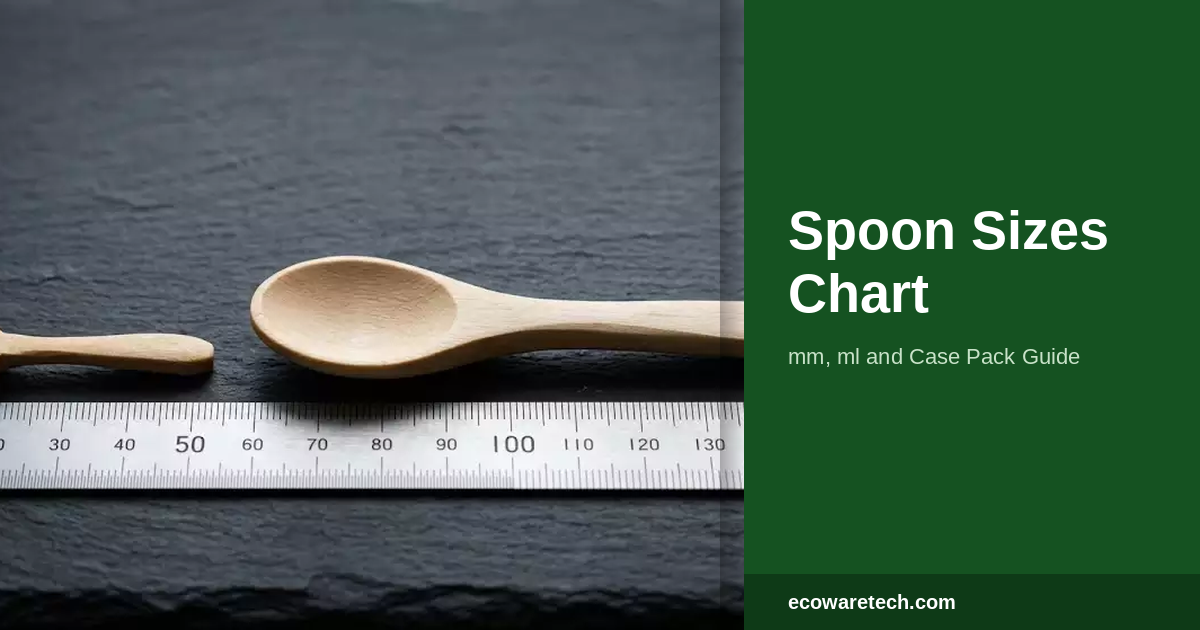
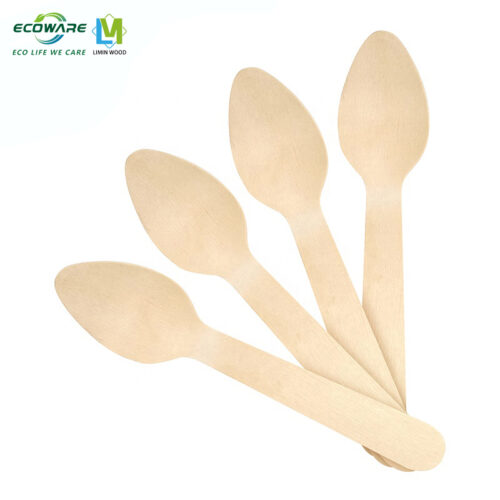
Every disposable spoon size from 75mm to 190mm, with capacity, wall thickness, case pack and tolerance data. Compare sizes and request a custom quote.
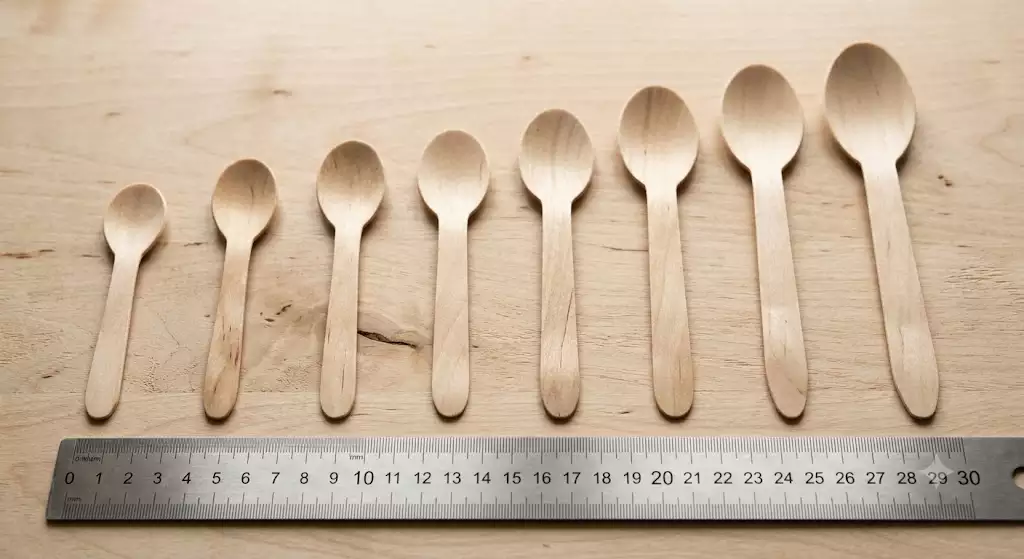
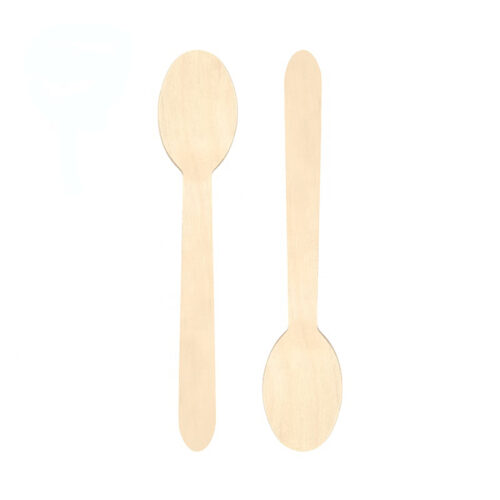
All 18 spoon types compared by length, capacity and food use, plus real case-pack counts from a wooden spoon factory.

Ecoware showcased compostable sugarcane bagasse & bamboo tableware at MIFB 2026 in KLCC and joined the MCCC trade delegation to expand green packaging across ASEAN.

TL;DR: If you’re serving food at or around the 2026 World Cup in Canada’s host cities — Toronto and Vancouver — single-use plastic foodware faces growing restrictions, and the political spotlight is intense. Several Canadian municipalities have passed foodware bylaws, and the Toronto Environmental Alliance estimated over a million plastic items could be avoided by switching at the city’s matches. [...]
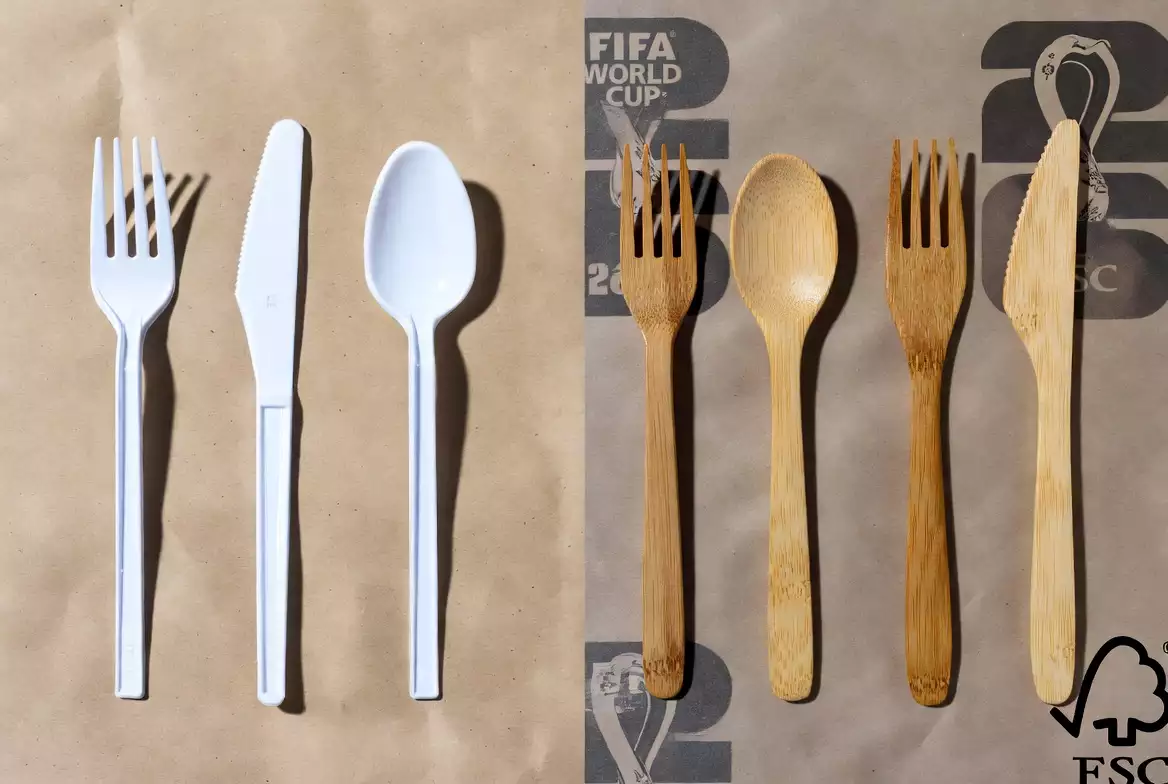
TL;DR: For 2026 World Cup foodservice, disposable bamboo and birchwood cutlery beat plastic on compostability, compliance and brand value, while staying competitive on landed cost at bulk volume. Plastic wins only on raw sticker price — and that advantage shrinks once you factor in single-use plastic bans, disposal and the reputational risk of serving plastic at a tournament under heavy [...]