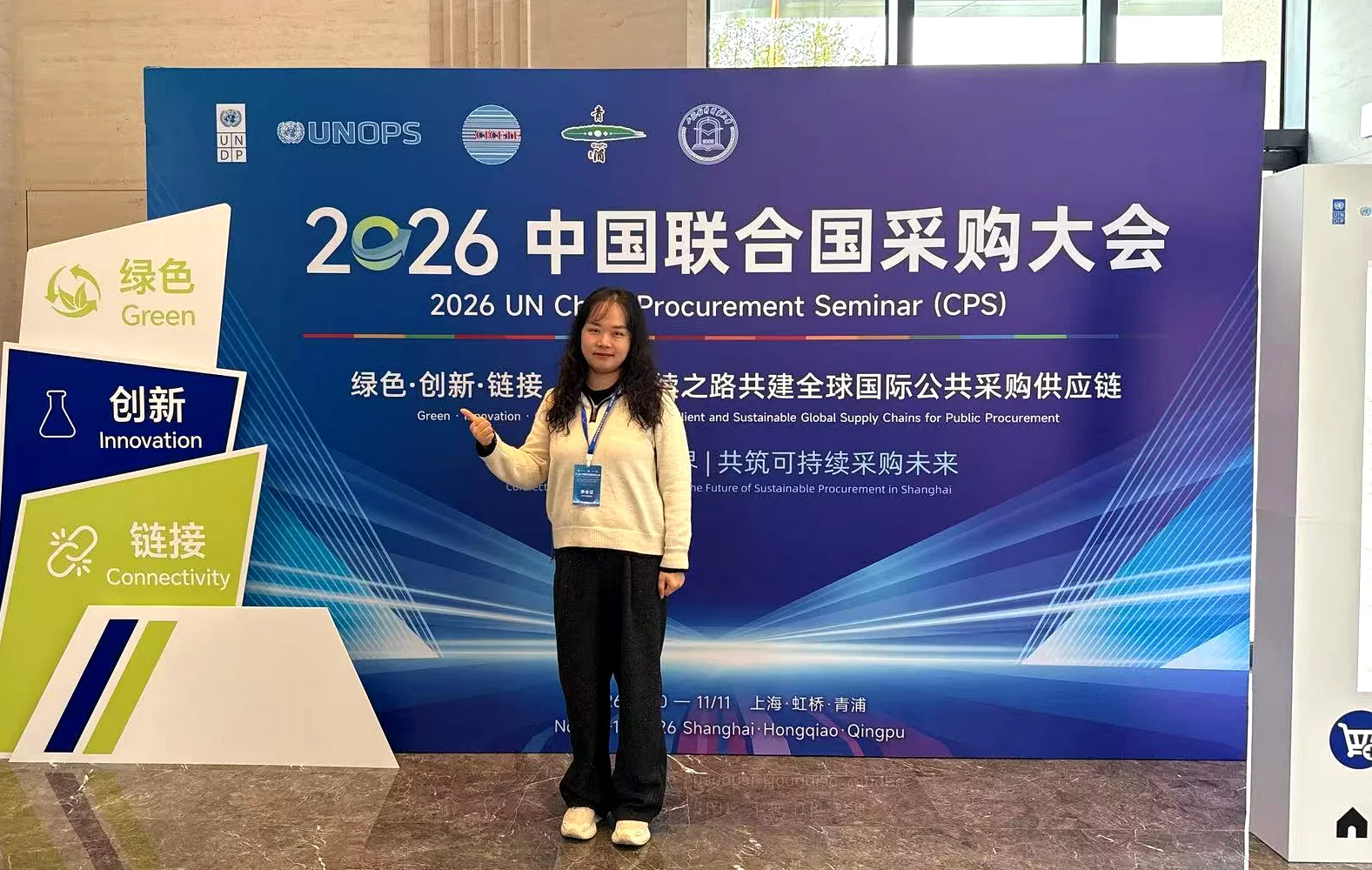
Published 13 November 2026 · Ecoware Export Team
On 10 November 2026 an Ecoware team member attended the 2026 UN China Procurement Seminar (CPS) in Qingpu, Shanghai. The seminar launched Phase II of the Shanghai sustainable procurement project, opened the Shanghai Hongqiao Liancai International Public Procurement Service Center and called for entries to a third product catalogue. For a supplier of disposable wooden and bamboo tableware, three things change: the support for Chinese firms that want to sell to UN agencies is getting a physical service center, regular visits by UN procurement officers and a new round of its sustainable product catalogue.
What Happened at the 2026 UN China Procurement Seminar
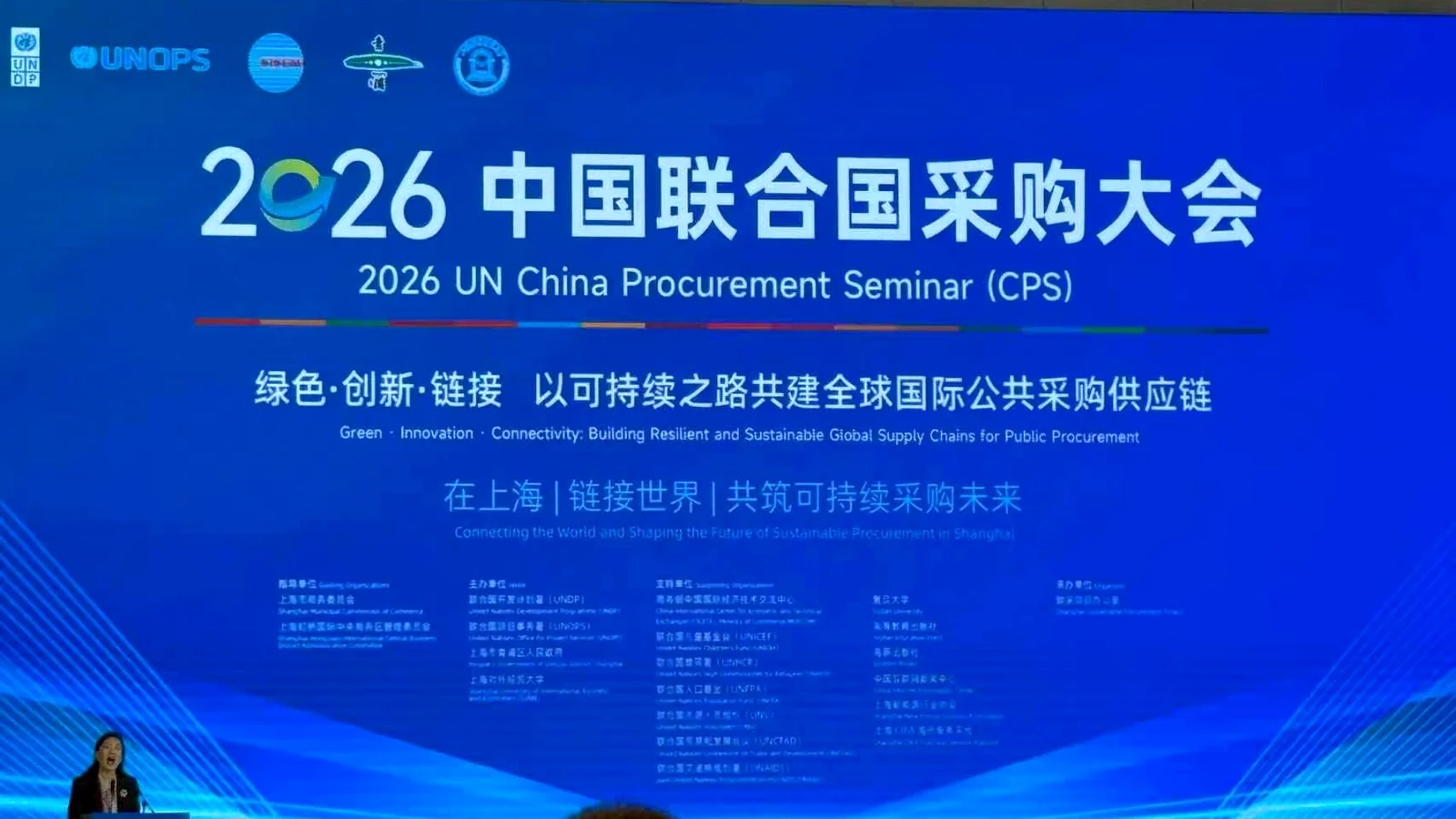
The seminar ran on 10 and 11 November 2026 in Qingpu, in the Hongqiao area of western Shanghai, straight after the China International Import Expo closed. Its theme was “Green, Innovation, Connectivity: Building Resilient and Sustainable Global Supply Chains for Public Procurement”. The stage screen listed UNDP, UNOPS, the Qingpu District People’s Government and Shanghai University of International Business and Economics as organisers, with the Shanghai Municipal Commission of Commerce and the Hongqiao International Central Business District administration as guiding bodies.
According to Wenhui Bao’s report, the speakers included Wang Ping, Party Secretary of Qingpu District; Ai Yinfang, Deputy Director of CICETE under the Ministry of Commerce; Torben Soll, deputy director of procurement at UNDP; and Chen Xiqi, Deputy District Mayor of Qingpu and country director of the project.
Three things were unveiled on stage:
- Phase II of the Shanghai sustainable procurement project;
- a UN sustainable procurement talent lab run by UNDP and Shanghai University of International Business and Economics;
- the Shanghai Hongqiao Liancai International Public Procurement Service Center.
The organisers also opened the call for the third batch of the International Public Procurement China Sustainable Innovation Product Catalogue, adding healthcare and new energy sections; put the first structured course on UN procurement online; and signed cooperation agreements with partners including the UNCTAD FIC Shanghai coordination centre and Higher Education Press (Xinmin Evening News).
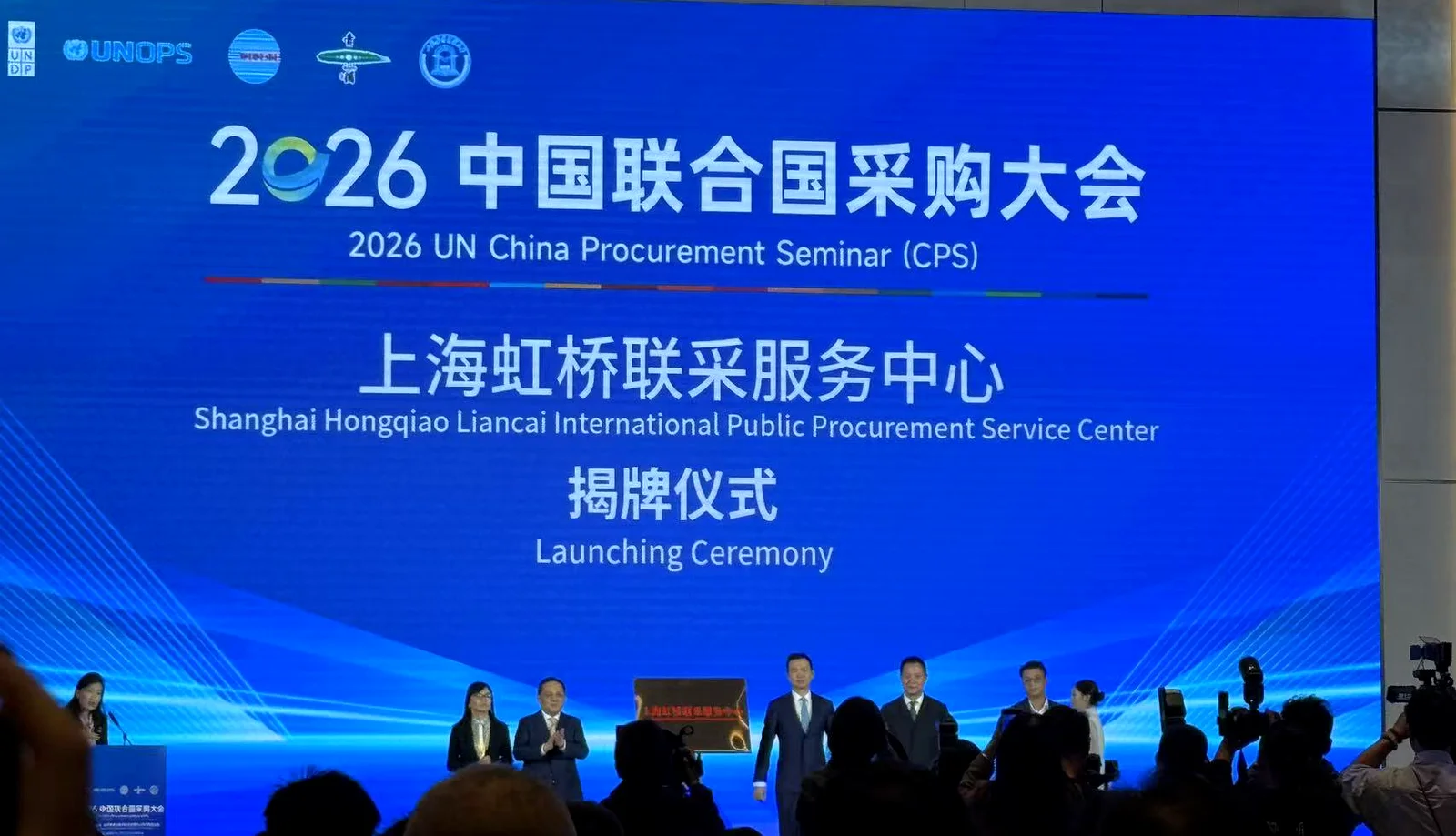
Phase II of the Shanghai Sustainable Procurement Project: What Changes
Phase II keeps the platform that Phase I built and adds three things: a physical service platform, regular visits by UN procurement officers, and a university talent programme. The project started in Xujing, Qingpu, in 2021, and the reports describe it as the first platform in Asia built with the direct involvement of UN agencies to help companies into international public procurement.
The figures quoted on stage for Phase I came from three speakers, so they overlap rather than add up:
| Phase I result (2021–2026) | Figure quoted | Who said it |
|---|---|---|
| Procurement notices published | Nearly 130,000 (more than 128,000 in the project director’s figure) | Wang Ping; Chen Xiqi |
| SMEs registered as UN suppliers | More than 1,500 | Wang Ping |
| Contract awards won with project help | 68, including 8 long-term agreements | Chen Xiqi |
| Procurement opportunities shared | About 4,000 | Torben Soll |
| Companies supported | More than 3,000, many of them SMEs and women-owned businesses | Torben Soll |
| Training workshops held | More than 70 | Torben Soll |
Sources for the table: Wenhui Bao and Xinmin Evening News, 10 November 2026.
Chen Xiqi described Phase II in three parts:
- A two-layer operating model, “public good plus sustainable”. The project will set up a physical service platform. The Shanghai Hongqiao Liancai International Public Procurement Service Center was unveiled at the same session, though the reports do not say whether it is that platform.
- Regular visits by UN procurement officers, plus pilot supplier incubation bases in the region.
- A talent lab with universities, to train people for international organisations.
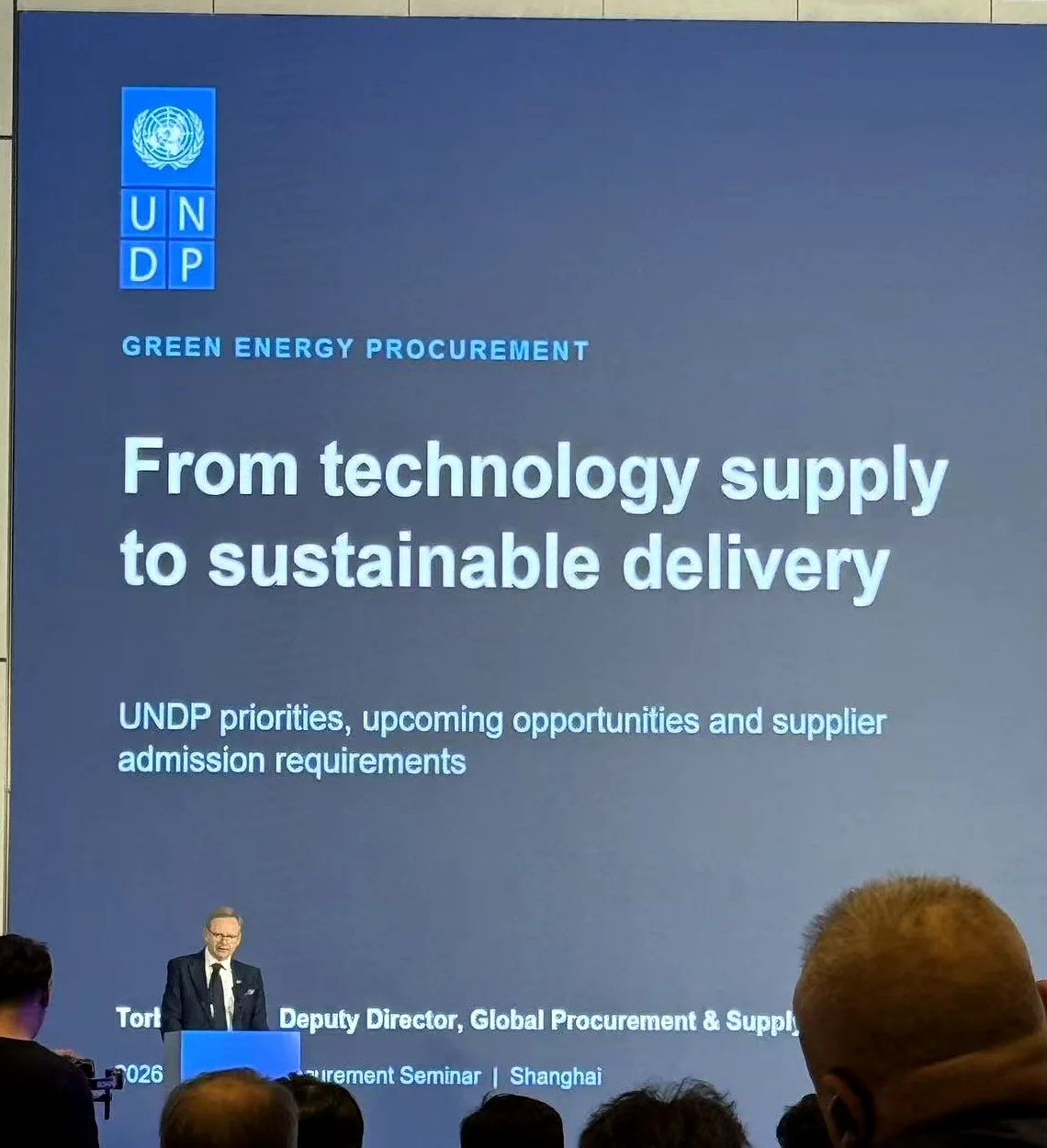
Torben Soll said Phase II would link China’s green manufacturing capacity more closely with global demand. A UNDP session on green energy procurement used the slide title “From technology supply to sustainable delivery” and covered UNDP’s priorities, upcoming opportunities and supplier admission requirements.
What We Asked as a Tableware Supplier
We went to the seminar with two questions: which UN agencies buy tableware or food packaging, and what their sustainable procurement requirements look like in practice. We put both questions to UN procurement staff and the project office during the day. This page does not report their answers; it sticks to what was said publicly. On the day, UNDP, UNOPS, UNICEF, UNFPA and other agencies presented procurement needs in green and sustainable development, healthcare, humanitarian relief, infrastructure and digital technology, and the two-day programme included a UNHCR procurement training session (Xinmin Evening News).
The market is large, and China’s share of it is growing:
- UN organisations spent $22.7 billion on goods and services in 2025, 11.5% less than in 2024 but still the fifth-highest year on record (UNOPS, July 2026).
- 83% of reporting UN organisations build sustainability criteria into their procurement (same UNOPS release).
- UN procurement from China rose from $328 million in 2023 to $451 million in 2025, the number of UN organisations buying from China went from 30 to 32, and China moved from 17th to 12th among supplier countries, according to the figures quoted at the seminar (Xinmin Evening News).
The sustainability figure is the one that matters most for a tableware maker. Sustainability criteria in a tender have to be shown on paper: where the raw material comes from, how quality is managed, how workers are treated. For our wooden cutlery, these are the documents we hold today, all issued to our factory, Shucheng Limin Wood Products Co., Ltd., and listed on our About page:
| What a buyer may ask you to show | Document | Ecoware status |
|---|---|---|
| Where the wood comes from | FSC chain-of-custody certificate | Held, GFA-COC-005688 |
| How quality is managed | ISO 9001:2015 certificate | Held, 959-25-Q-1482-R0S |
| How workers are treated | amfori BSCI social audit (an audit report, not a certificate) | Audited, 156-043679-000 |
Our guide to supplier certifications explains how a buyer can check each one.
Ecoware has not registered on the UN Global Marketplace (UNGM) yet; we are preparing the registration now. We also plan to apply for the third batch of the sustainable innovation product catalogue that opened at the seminar.
How a Supplier Starts With UN Procurement
A supplier starts by registering on UNGM, the shared procurement portal that UN organisations use to find vendors and publish tenders. The UN Procurement Division ties the registration level to the estimated size of the contract:
| UNGM level | Estimated contract award (UN Procurement Division) | When you need it |
|---|---|---|
| Basic | Under USD 150,000 | Every vendor starts here |
| Level 1 | USD 150,000 to 500,000 | When a tender of this size asks for it |
| Level 2 | Over USD 500,000 | When a tender of this size asks for it |
Source: UN Procurement Division, information for new vendors. These thresholds are the UN Secretariat’s.
The same page lists what the higher levels add. Level 1 asks for a certificate of incorporation, at least three years in business and details of at least three references. Level 2 adds at least three reference letters, an income statement and balance sheet, and audited financial statements for the last three years. Vendors can upgrade from Basic at any time and must comply with the UN Supplier Code of Conduct. For a young exporter, the three-year rule is the one to check first.
The practical order, based on the public guidance above and what the seminar covered:
- Register at Basic level on UNGM. The UN Procurement Division’s Basic form asks for company information (name, most senior official, company type, licence number, country), the company address, registration type, contacts, UNSPSC commodity codes and a declaration of eligibility.
- Pick your UNSPSC codes carefully. The UN Secretariat considers only the first seven codes on a vendor’s list, so a tableware maker should put the codes that match its main products, such as disposable cutlery and food packaging, at the top rather than spreading them across every product it can make.
- Watch the notices. UNGM carries tenders from many agencies; UNDP also publishes its own procurement notices.
- Have the sustainability documents ready before a tender appears. Collecting certificates and test reports after a tender is published eats into the time left to prepare the offer.
- Use the Shanghai project’s support. Since 2021 the project has helped more than 1,500 SMEs register as UN suppliers; Phase II adds the Hongqiao Liancai center and the new product catalogue round as two more entry points.
The Mistake to Avoid
The mistake is treating UN procurement as a trade fair: turning up, collecting business cards and waiting for an order. UN agencies buy through published tenders with fixed deadlines, so a supplier whose registration and documents are not ready when a tender opens loses part of the response window, or cannot bid at all. Basic registration is the first step for every vendor, and it does not depend on any particular tender, so there is no reason to leave it until one appears.
If you buy disposable wooden or bamboo tableware for a public or institutional programme and want to see our documents, request a quote and tell us which tender or programme it is for.
FAQ
What is the UN China Procurement Seminar?
The UN China Procurement Seminar is an event in Qingpu, Shanghai, where UN agencies explain how they buy and Chinese companies learn how to become UN suppliers. It is linked to the Shanghai sustainable procurement project, which started in Xujing, Qingpu, in 2021. The 2026 edition was organised by UNDP, UNOPS, the Qingpu District People’s Government and Shanghai University of International Business and Economics, according to the stage screen.
When and where was the 2026 UN China Procurement Seminar held?
The 2026 seminar was held on 10 and 11 November 2026 in Qingpu District, Shanghai, in the Hongqiao area. Its theme was “Green, Innovation, Connectivity: Building Resilient and Sustainable Global Supply Chains for Public Procurement”.
What is Phase II of the Shanghai sustainable procurement project?
Phase II, launched at the 2026 seminar, adds a physical service platform, regular visits by UN procurement officers with pilot supplier incubation bases, and a talent lab run with Shanghai University of International Business and Economics.
Which UNGM registration level does a new supplier need?
A new supplier starts at Basic level. The UN Procurement Division uses Basic for estimated contracts under USD 150,000; Level 1 (USD 150,000 to 500,000) and Level 2 (over USD 500,000) also require at least three years in business plus references, and Level 2 requires audited financial statements.
Is Ecoware a registered UN supplier?
Not yet. Ecoware attended the 2026 seminar and is preparing its UNGM registration. We will update this page when the registration is complete.