Updated 30 September 2026. Prepared by Ecoware’s marketing team, drawing on our own production and on the public sources linked in each section.
Short answer: If you are asking what wood is wooden cutlery made of, the answer for disposable forks, knives and spoons sold in bulk is mostly birch, cut into thin veneer from logs, then stamped, dried and sanded. Heavier reusable wooden utensils are usually carved from denser hardwoods such as beech, maple or olive. Bamboo cutlery looks similar but comes from a grass, not a tree. At home you can wash and reuse an intact disposable piece; in a restaurant or food business you can’t, because the FDA Food Code says single-service and single-use articles may not be reused. How long wooden cutlery takes to decompose depends on heat, moisture and oxygen, so there is no single number: certified compostable items have passed tests run over weeks to months, while wood in a dry landfill can last far longer.
What wood is wooden cutlery made of?
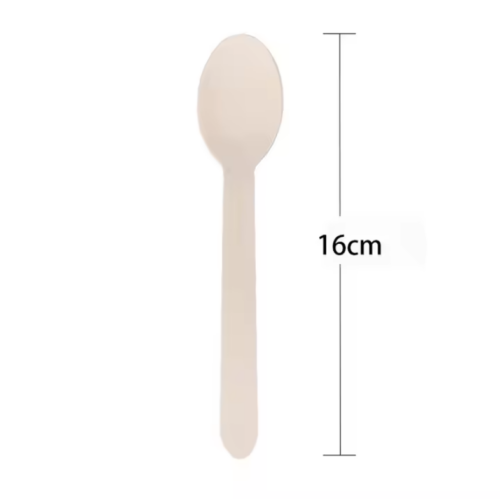
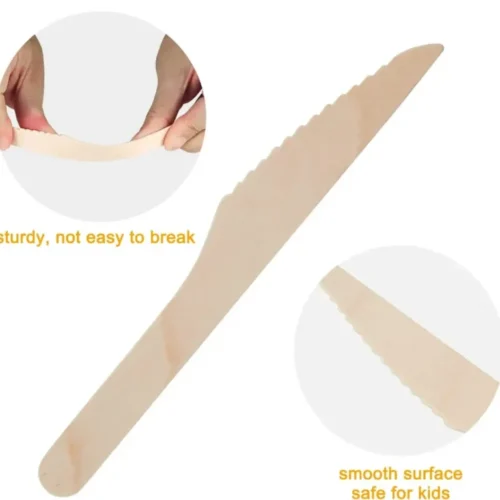
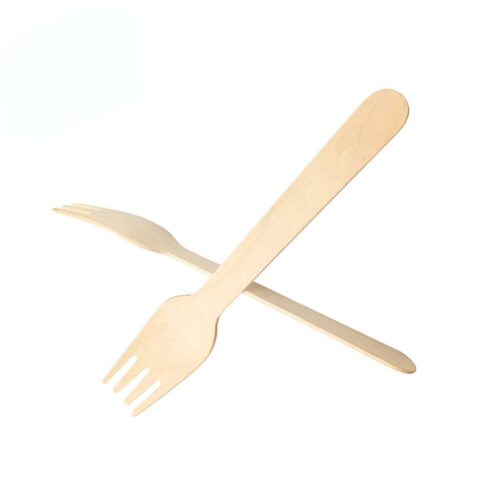
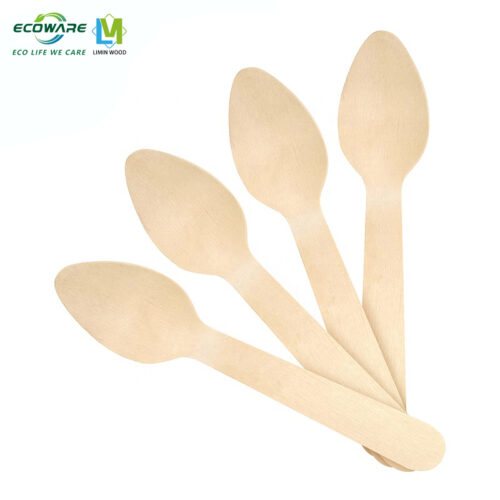
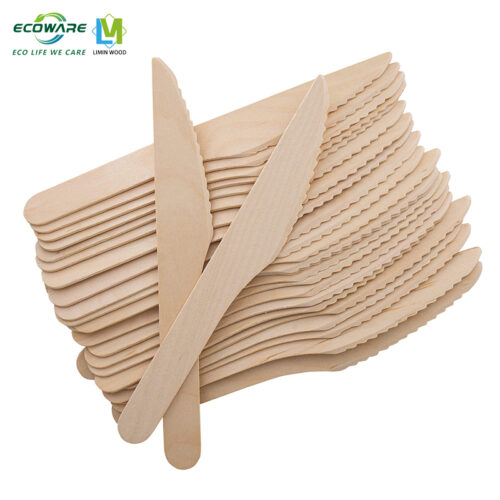
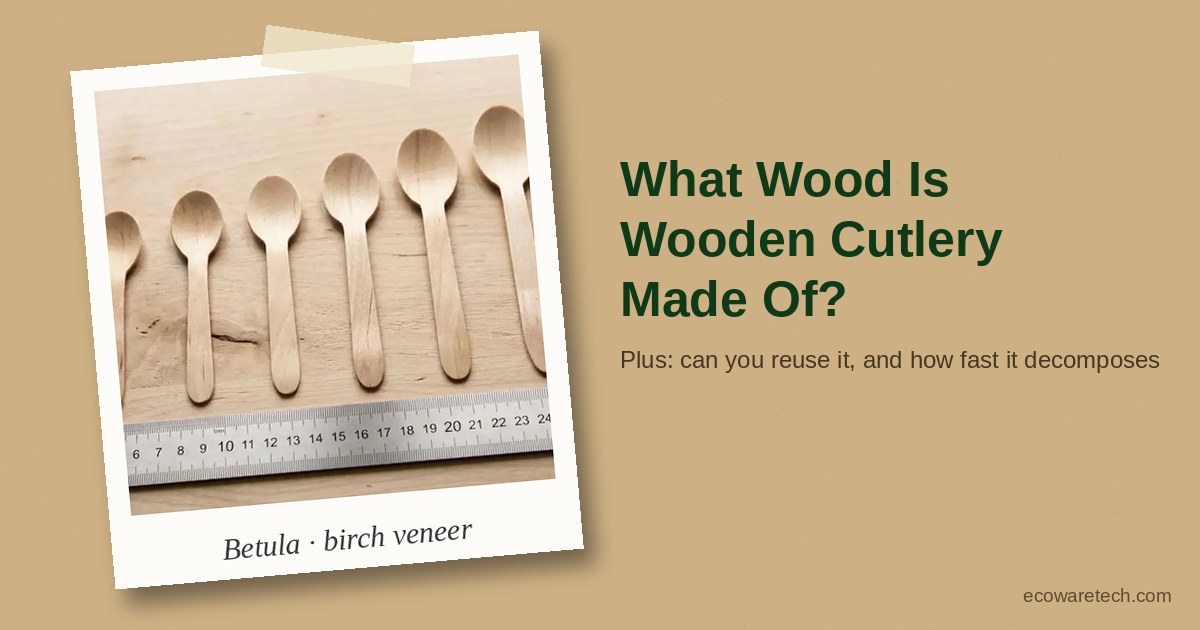
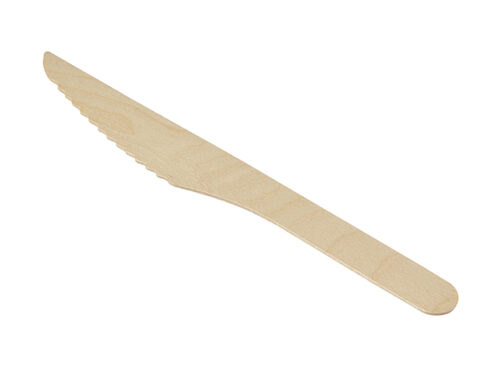
Most disposable wooden cutlery is birch. At Ecoware we start from birch logs, peel them into veneer, and stamp, dry and sand the pieces in our own plant; our step-by-step guide to how disposable wooden spoons are made follows each stage. Birch suits this process because the wood is light in colour, has a fine, even texture, and peels into a smooth, continuous sheet.
Other species do show up in quotes and on product listings, and reusable utensils are a different product altogether:
| What you are holding | Typical wood | How it is made | What to check |
|---|---|---|---|
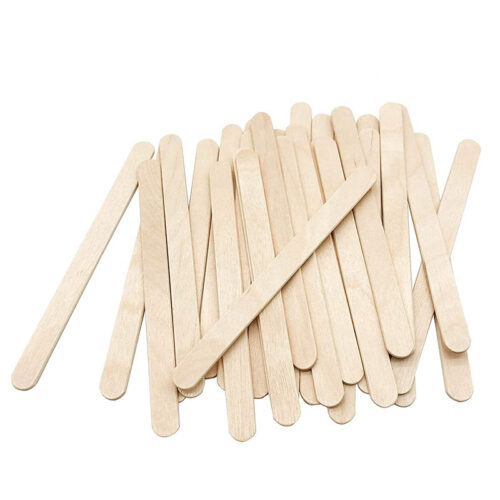
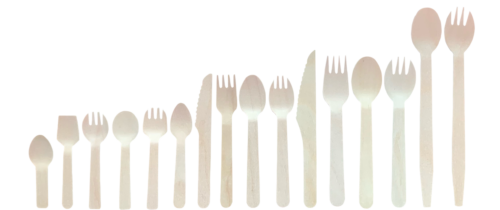
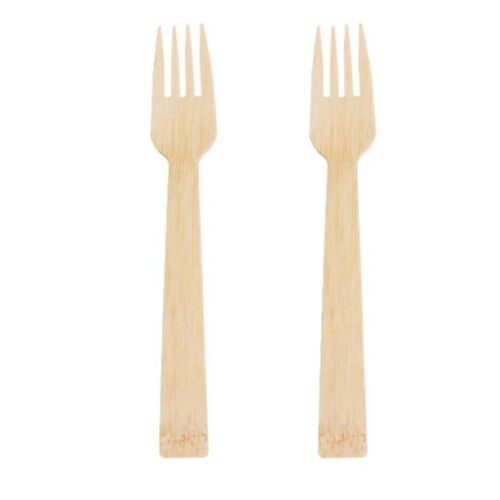
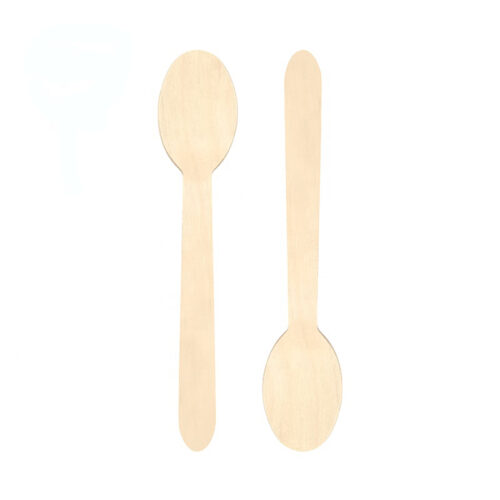
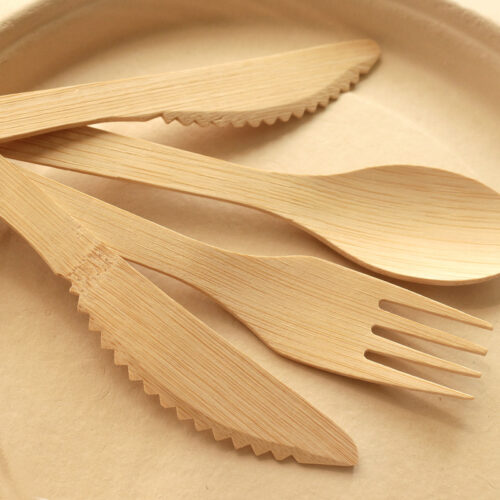
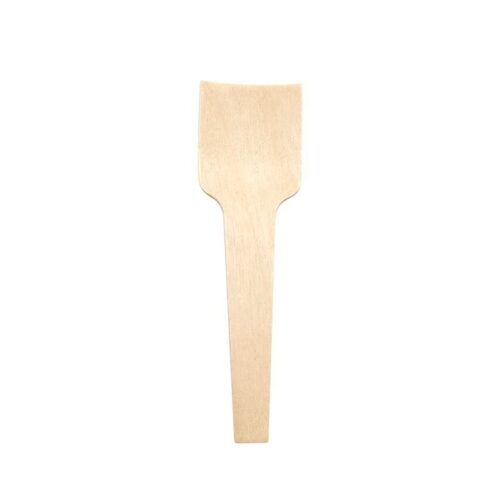
| Disposable fork, knife, spoon, ice cream spoon | Birch is the most common; poplar and other hardwoods are also offered | Rotary-peeled veneer, stamped or pressed, dried, sanded or tumbled | Species named on the quote and invoice; surface finish; thickness |
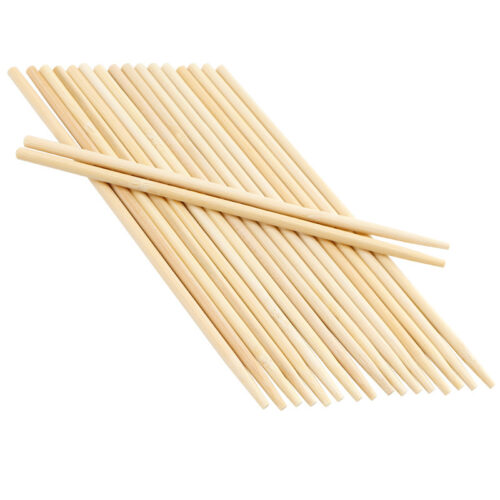
| Disposable chopsticks, skewers, stirrers | Birch or bamboo | Split, cut or peeled, then shaped | Whether it is wood or bamboo; this changes EU paperwork (below) |
| Reusable kitchen spoons and spatulas | Beech, maple, cherry, walnut, olive, teak | Carved or turned from solid wood, often oiled | Finish, and whether it is sold as food-safe for repeated washing |
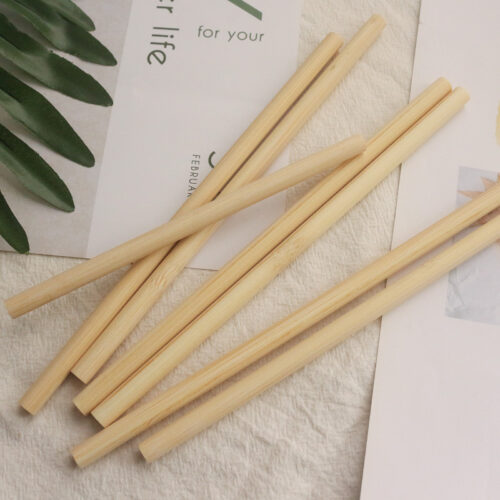
| “Bamboo” cutlery | Not wood: bamboo is a grass | Split and laminated strips, pressed and sanded | Whether it is solid bamboo or a bamboo-fibre and resin mix |
How to tell which wood you actually received
Colour is a poor guide, because veneer from different species can look alike once sanded. Three checks are more reliable:
- The paperwork. Ask for the species by common and scientific name on the quotation and the commercial invoice. For wooden products entering the EU, the due diligence statement under the EU Deforestation Regulation, Regulation (EU) 2023/1115 must include the species’ common and full scientific names. The EU operator files that statement from 30 December 2026 (30 June 2027 for micro and small companies), so expect EU buyers to ask suppliers for species names before then. Our guide to EUDR and wooden tableware explains the rest of that file and why bamboo-only products fall outside it.
- The FSC claim. If the cutlery is sold as FSC-certified, the invoice should carry the FSC claim and the supplier’s certificate code, and the code should be valid on the FSC public certificate search. The certificate confirms the chain of custody for the product group in its scope; it is not a species test.
- The grain under a lens. Birch veneer shows a fine, uniform surface; bamboo shows parallel fibre bundles and, on thicker pieces, the glue lines between strips. This settles wood versus bamboo but not one hardwood species versus another.
For material differences in more depth, see wooden vs bamboo cutlery.
Can you reuse wooden cutlery?
In a restaurant, café or any food business: no. The FDA Food Code, the model that US state and local regulators adopt into their own rules, says in §4-502.13 that single-service and single-use articles may not be reused (FDA Food Code 2026; the rule is unchanged from the 2022 edition). Disposable cutlery is a single-service article: the Code defines these as tableware and carry-out utensils designed for one-time, one-person use. So it goes in the bin after one customer, however clean it looks. Jurisdictions adopt new editions on their own timetable, so your inspector may still work from an earlier one; the reuse rule is the same in each.
At home: an intact piece can be hand-washed and used again. There is no tested number of cycles, so treat it the way you would a cheap wooden spoon and stop at the first sign of damage:
- Wash by hand in warm soapy water and rinse. A dishwasher soaks the thin veneer for a long cycle, which tends to leave it rough, warped or split.
- Dry it standing up in open air, not in a closed drawer. The USDA Forest Products Laboratory’s Wood Handbook notes that air-dried wood at or below about 20% moisture will not decay, but humid air alone can still let surface mould grow, so dry pieces fully before storing them.
- Throw it out once the surface turns fuzzy, cracks, or shows any dark spots. Our guide to mould on wooden cutlery explains why porous single-use pieces are thrown away rather than cleaned once mould appears.
If you want wooden cutlery to use every day, buy reusable utensils made for it. Disposable veneer is thin by design.
How long does wooden cutlery take to decompose?
There is no single figure, because wood breaks down only when microbes have enough moisture, oxygen and warmth. Three settings give very different results:
| Where it ends up | What happens | What you can say with evidence |
|---|---|---|
| Industrial composting | High heat, moisture and regular turning speed up breakdown | A product that is certified compostable has passed standardised lab tests. BPI certification, for example, requires disintegration testing at 58 ± 2 °C for up to 84 days and biodegradation testing at the same temperature for 6 months (BPI certification) |
| Home compost heap | Lower, variable temperatures | Home certification is tested at 25 ± 2 °C, for up to 180 days (disintegration) and 12 months (biodegradation), per the same BPI page. Uncertified items have no tested timeframe |
| Landfill | Compacted, often dry, low oxygen | Very little breaks down. A USDA Forest Products Laboratory study estimated that only 0–3% of the carbon in landfilled wood is ever released as landfill gas (Micales and Skog, 1997); the Wood Handbook adds that serious decay needs moisture above the fibre saturation point, around 30% |
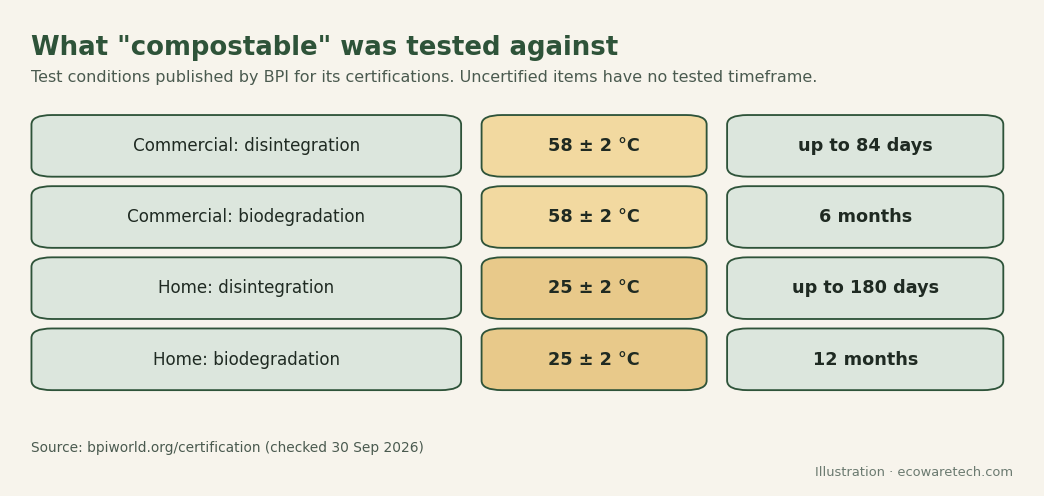
Source: BPI certification page, checked 30 September 2026. Chart: Ecoware.
Two points follow. “Wood decomposes” and “this cutlery is certified compostable” are different claims. Only the second one belongs on a label, and it needs a named certificate. Our guide to compostable certification by market sets out which mark applies where.
Coatings and wraps also change the answer. Wax, lacquer or a plastic sleeve can slow or block breakdown, and a paper sleeve brings its own rules. For bamboo specifically, see how long bamboo cutlery takes to decompose. Home and industrial composting are tested at different temperatures; see home compostable vs industrial compostable.
Is wooden cutlery eco-friendly?
Compared with plastic cutlery, wooden cutlery comes from a renewable source and breaks down in composting conditions, which is why it is sold as ecological or sustainable cutlery. Plain wood is not the target of single-use plastics bans; a plastic coating can bring it back into scope under the EU Single-Use Plastics Directive. On a label, “eco-friendly” needs evidence behind it. The two claims buyers can check are an FSC or PEFC claim with a certificate code on the invoice, which speaks to where the wood came from, and a compostability certificate for the specific product, which speaks to what happens after use. Our guide to compostable certification by market covers the second, and the EUDR guide explains what EU buyers must now document about the wood’s origin.
Is wooden cutlery safe to eat with?
Uncoated birch cutlery made for food contact is widely used in foodservice. Safety comes down to three things you can check: what the surface is treated with, whether the supplier can show a food-contact test report for your market, and whether the pieces were dry and mould-free when packed. Our page on how safe wooden tableware is goes into food-contact rules, and the question of whether wooden tableware affects taste has its own guide.
What wooden cutlery is good at, and where it struggles
| Situation | How wood performs | Why |
|---|---|---|
| Hot food | Stays rigid | Wood does not soften with heat the way thin plastic can; see our guide to wooden cutlery with hot food |
| Wet or oily food over a long delivery | Can soften at the tips if left soaking | Veneer absorbs liquid through cut edges |
| Cutting dense food | Harder work with a thin knife | A thin veneer knife flexes; reinforced pieces help |
| Mouthfeel | Some customers notice a dry feel | The surface is wood, not a sealed polymer |
| Splinters | Controlled by sanding and thickness | Our splinter acceptance checklist turns this into purchase-order terms |
| Compared with plastic cutlery | Costs more per piece; permitted where single-use plastic cutlery is banned | The cost gap per order depends on how many pieces leave the building; see is wooden cutlery better than plastic |
Quick answers
Is wooden cutlery compostable? Uncoated wood breaks down in composting conditions, but “compostable” on a label needs a certificate for that product. A BPI-certified item has passed disintegration testing at 58 ± 2 °C for up to 84 days; an uncertified item has no tested timeframe.
Is wooden cutlery biodegradable? Wood is a natural material that microbes break down when there is enough moisture, oxygen and warmth. “Biodegradable” with no time frame or conditions is a weak claim, and the FTC’s Green Guides expect degradability claims to be qualified.
Is bamboo cutlery made of wood? No. Bamboo is a grass. It is processed differently and, for EU deforestation rules, products made only from bamboo sit outside the regulation, confirmed by Delegated Regulation (EU) 2026/2102; the wooden parts of mixed sets are still in scope.
Buying wooden cutlery for a business
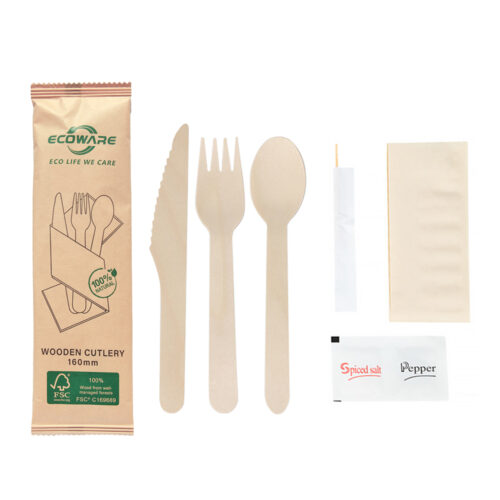
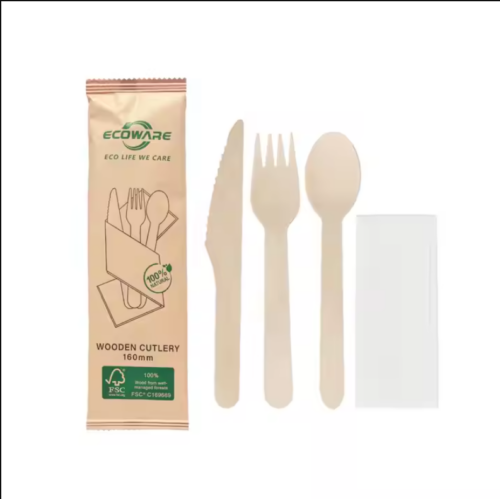
If you are sourcing for a café, caterer, distributor or delivery brand, the specification that matters is species, thickness, finish, moisture at packing and packing format, in that order. Put a maximum moisture content at packing on the purchase order, and say how it is measured. Browse our disposable wooden cutlery sets, or ask for a quote with your configuration and we will confirm species, MOQ and lead time in writing.
Test temperatures and durations are quoted from BPI’s certification page; moisture thresholds from the USDA Wood Handbook; the reuse rule from the FDA Food Code. No decomposition test was run for this article.
Products in this guide
Related buyer guides
- How Many Cartons Fit in a 20ft or 40ft Container? A Worked Method for Wooden Cutlery Orders
- Biodegradable vs Compostable Cutlery: What Each Label Means and Which One Your Market Accepts
- Wooden Cutlery HS Code (4419) and Import Duty from China: A Landed-Cost Walkthrough
- Trading Company vs Manufacturer: How to Tell Who You’re Really Buying Cutlery From