Quick answer: There is no certified, industry-wide “splinter-free” standard for wood cutlery, and checking competitor sites confirms it: suppliers describe their process, not a number. What protects a buyer is putting specific, checkable terms in the purchase order instead: a defined sanding stage, a thickness spec, a moisture-content range tied to a named test method, a written definition of what counts as a defect, and a pre-shipment sample the shipped batch is checked against. The checklist below gives you that wording.
The Acceptance Checklist: What to Put in Your PO
“Natural wood grain” and “a splinter” are not the same thing, but without a shared definition they get treated as the same thing during a dispute. These five terms turn a subjective complaint into something both sides agreed to beforehand.
| Specify this | Why it matters | How to verify it |
|---|---|---|
| Sanding/finishing stage | Raised splinters mostly trace back to a sanding or tumbling step that was skipped or cut short, not to the wood itself. | Ask the supplier to state the finishing stages in writing and request a pre-production sample finished the same way. |
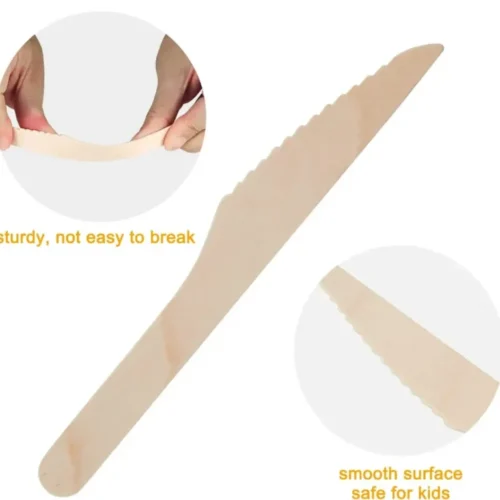
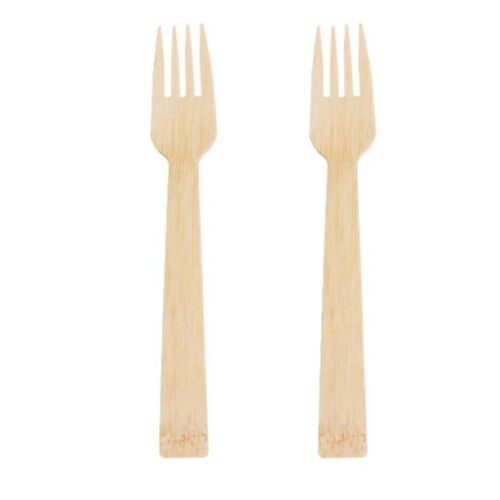
| Tine and handle thickness | A thinner cross-section flexes more under pressure and is more likely to crack or fray at the edge. | Put a minimum thickness in millimeters in the PO. Ecoware’s reinforced fork and knife line (165 to 205mm) is one reference point for what a thicker spec looks like. |
| Moisture content range | Wood that is too wet or too dry raises grain and turns brittle at the fiber level, both of which increase splinter risk. | Ask the supplier to state a moisture content range and the test method used to check it. ASTM D4442 is the standard method for measuring moisture content in wood. |
| Written defect definition | Without an agreed definition, the same piece can pass for one buyer and fail for another. | Agree in writing on what counts as a rejectable splinter or burr (for example, raised fiber that catches a fingernail) versus acceptable natural grain lines. Reference photos help. |
| Pre-shipment sample approval | A product spec describes the design. A retained sample checks the actual batch against it before it ships. | Request an approved sample, sometimes called a golden sample, that the outgoing shipment is checked against before it leaves the factory. |
| Remedy if the sample fails | A defect dispute without a pre-agreed resolution turns into a slow email chain after the product has already shipped. | Agree in writing, before production starts, on what happens if the pre-shipment sample fails: rework, replacement, or a discount. |
None of these terms are Ecoware’s stated internal defect rate or rejection rate; the point of the checklist is to give you specific, checkable language to put in your own contract, not to assert a number here.
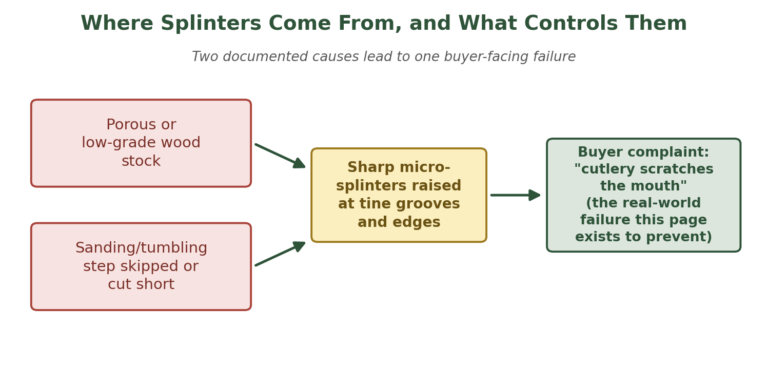
Two documented causes, traced to the buyer-facing complaint they produce. Illustrative diagram built from the reasoning in this article.
Where Splinters Come From
Two things drive most splinter complaints, and both are process choices rather than an unavoidable property of wood. The first is the wood stock itself: porous or lower-grade stock has more loose fiber at the surface to begin with. The second is the finishing step: a sanding or tumbling stage that is skipped, shortened, or run with the wrong grit sequence leaves sharp micro-splinters standing up at the tine grooves and cut edges, which is exactly where a mouth or a hand makes contact. Neither cause is visible on a spec sheet. Both are visible in a physical sample and in a supplier willing to describe their finishing process in writing.
Why There Is No Industry-Wide Splinter Standard
Checking how other wood-cutlery suppliers write about this confirms the gap rather than closing it. A competitor post titled as a “smoothness test” describes tumble polishing and a manual check for rough edges and cracks, in each case using words like “smooth” and “rounded” rather than a number. Another factory-process page makes the same move: it explains that its process “eliminates splinters,” which is a description of intent, not a measurement anyone outside the factory could check. Neither source publishes a defect rate, a grit specification, or an inspection sampling rule. That is the actual gap this checklist fills: not more reassurance, but specific terms a buyer can put in a contract and a supplier can be held to.
Ecoware’s Reinforced Line, for Higher-Handling Use Cases
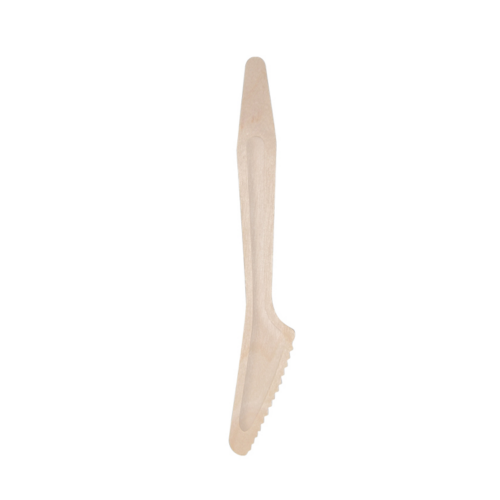
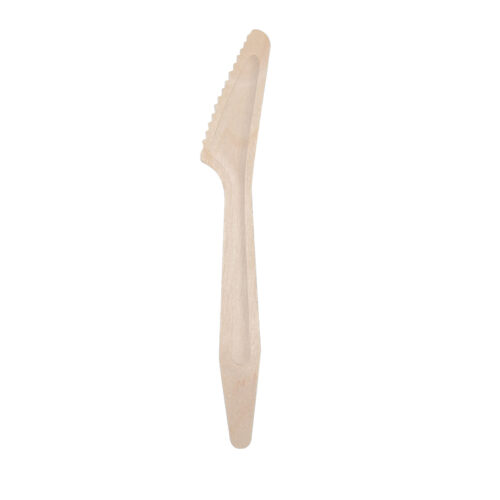
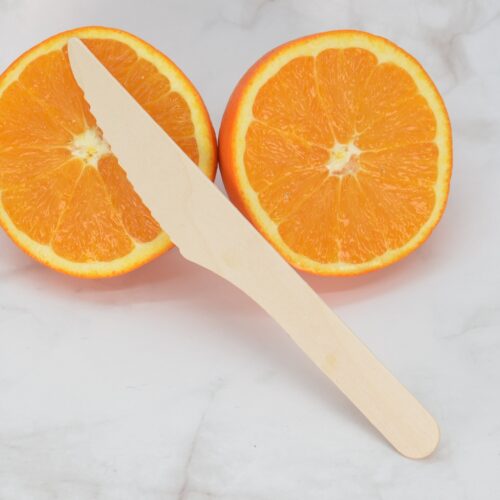
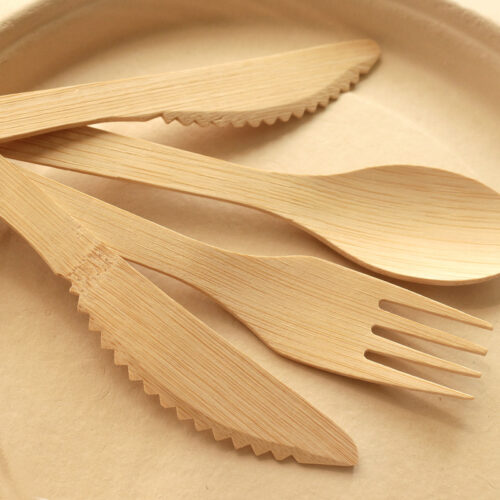
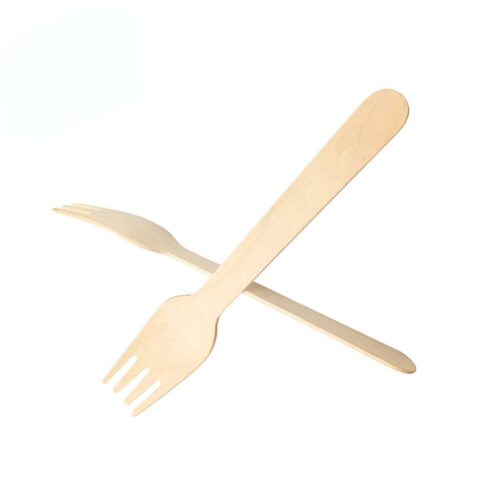
Ecoware stocks a reinforced fork and knife line in 165mm, 185mm, 192mm and 205mm sizes, built with a thicker cross-section than the standard-weight line. Reinforced is a statement about thickness and rigidity, not a separate certification, so it does not replace the finishing, moisture and inspection terms in the checklist above; a thick tine can still be sanded poorly. For catering, airline and delivery use where cutlery flexes under real pressure, it is the right starting point to specify, alongside the same finishing and moisture terms as any other order. See the current sizes under Disposable Wooden Fork and Disposable Wooden Knife.
What This Guide Does Not Claim
This page does not state a certified industry splinter standard, because none exists publicly today; it gives you checkable terms to write into your own contract instead. It does not state Ecoware’s own sampling ratio, rejection rate, or defect rate, since a specific figure like that needs a production-department sign-off this draft does not have. It does not promise zero splinters or an unbreakable product; wood is a natural material with grain variation, and the goal of the checklist above is a shared, verifiable definition of acceptable, not a guarantee no supplier can honestly make.
Frequently Asked Questions
Is there an industry-wide splinter-free certification for wood cutlery?
No. Checking competitor sites directly turns up process descriptions, not a certification or numeric standard. The workaround is putting specific, checkable terms in your own purchase order, which is what the checklist above is for.
What moisture content should wood cutlery be manufactured at?
There is no single published number that applies across suppliers. Ask your supplier to state a moisture content range and the test method behind it. ASTM D4442 is the standard test method for measuring moisture content in wood, and naming it in your PO gives both sides a shared reference.
What is a pre-shipment or “golden” sample, and why does it matter for splinter complaints?
It is a physical sample both sides agree represents an acceptable unit, checked against the actual outgoing batch before it ships. A spec sheet describes the design; a retained sample checks whether this specific production run matches it.
Does “reinforced” wooden cutlery mean it will not splinter?
No. Reinforced describes a thicker, more rigid tine and handle, which helps under heavier use, but it is a separate property from surface finishing. A thicker piece can still be under-sanded, so the finishing and inspection terms in the checklist still apply.
Related Guides
This page is not part of the spoon, fork or bamboo-pick classification series already published on this site; it stands on its own as a procurement reference.
- Bamboo vs Birchwood Cutlery. For material-level comparison (cost, UX and physics) beyond what this checklist covers.
- Product line: Disposable Wooden Fork and Disposable Wooden Knife, including the reinforced sizes.
About Ecoware
Ecoware Co., Ltd. sells disposable wooden and bamboo tableware made at its family factory in Shucheng, Anhui province, China (Shucheng Limin Wood Products Co., Ltd., established 2008). The company supplies FSC Chain-of-Custody certified birch and bamboo product lines alongside food-contact compliance documentation (FDA 21 CFR 176.170, EU 10/2011 and LFGB testing on request) for import buyers who need paperwork ready before a shipment clears customs.
The figures in this guide come from a mix of independently published wood-science and materials data (cited inline), Ecoware’s own in-house product testing published on ecowaretech.com, and standard-setting bodies (ASTM, BPI, TÜV Austria, the EU). Where a number could not be independently verified, this guide says so rather than estimating one, and points you to where you can request the missing spec sheet directly from Ecoware.
Want help writing these terms into your next PO? Request a quote →
Related Articles
- Mold on Wooden Cutlery: Why Dry Batches Arrive Moldy
- Ecoware at MoreFood Expo Indonesia 2026 – Wooden Tableware Market Field Report
- Disposable Wooden Cutlery: The Eco-Friendly Solution for Your Next Event
- Does Disposable Wooden Cutlery Break Easily?
- British buyers came to our factory to inspect and have dinner together
- Pre-Shipment Inspection Checklist for Wooden Cutlery from China: Defects, AQL Sampling and What to Reject
- Browse all articles & products →