Updated 22 October 2026. Prepared by the Ecoware Export Team. Container dimensions and payloads are Hapag-Lloyd’s published figures for its 20′ Standard, 40′ Standard and 40′ High Cube boxes. Carton sizes, gross weights and the loading limits quoted as Ecoware’s were confirmed by our management in October 2026.
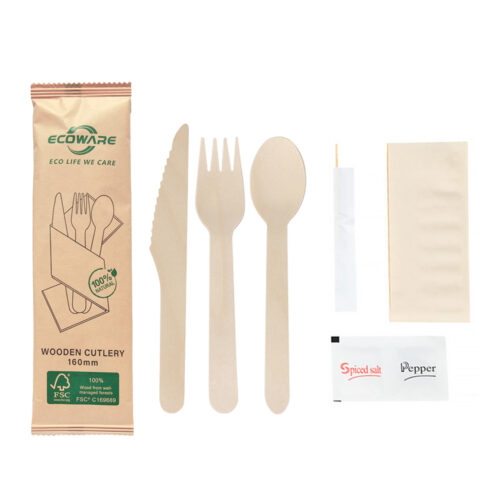
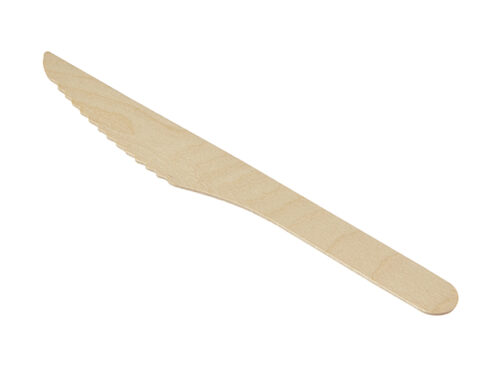
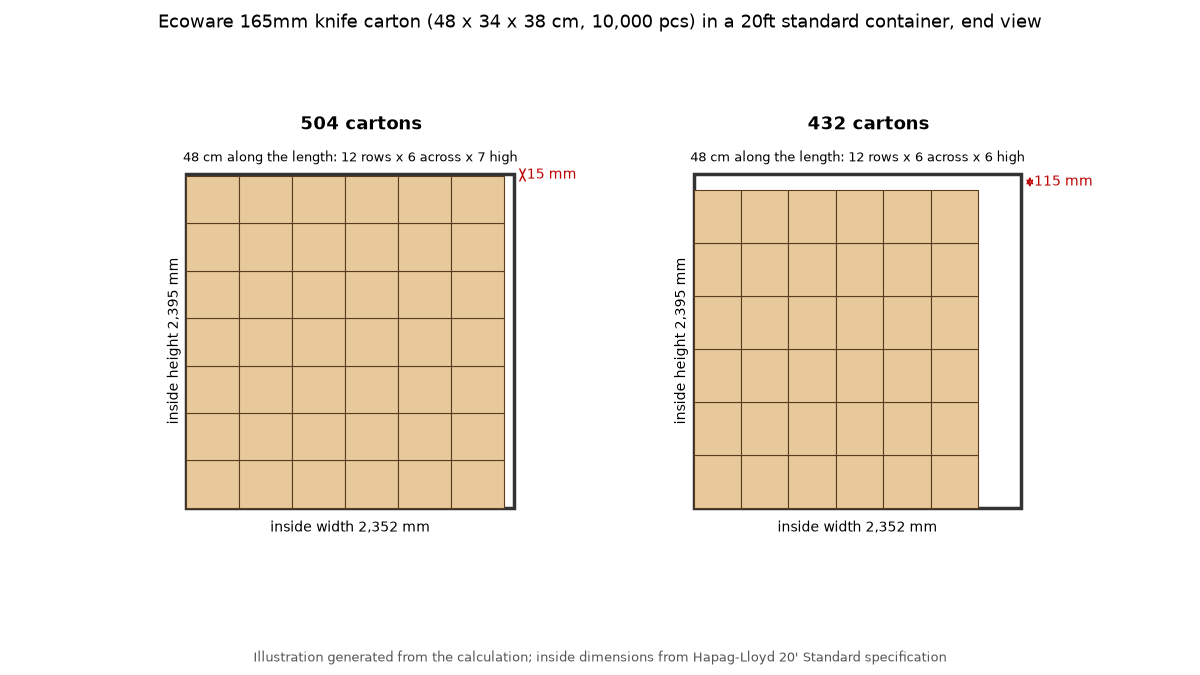
Short answer: How many cartons fit in a 20ft container depends on the carton’s outer size and its gross weight, and dividing the container’s capacity by the volume of one carton gives too high a number. Our 165mm wooden knives are packed 10,000 to a 48 × 34 × 38 cm carton with a gross weight of 25.6 kg. Hapag-Lloyd’s 20ft container holds 33.2 m³, and 33.2 m³ divided by that carton’s 0.062 m³ says 535 cartons. Counted as whole cartons along the length, width and height, at most 504 fit, and that layout leaves 15 mm under the roof. We plan a 20ft on 27 to 28 m³ of cartons, which for this carton is 435 to 451 cartons, or 4.35 to 4.51 million knives. In a 40HQ the same cartons reach our 26.5-tonne limit at 1,035 cartons, before the space is full. Pieces per container is the carton count multiplied by the pieces in each carton.
This page covers the loading calculation only. For choosing a supplier and what a quote should contain, see our guide to wooden cutlery manufacturers in China.
Inside dimensions of 20GP, 40GP and 40HQ containers
Hapag-Lloyd’s specification for its standard 20ft container (20GP) gives 5,900 mm of inside length, 2,352 mm of width and 2,395 mm of height. A carton count is built from those three numbers; the 33.2 m³ capacity only sets the ceiling. The table puts the three common dry containers side by side.
| Container | Inside length | Inside width | Inside height | Capacity | Door opening (W × H) | Max payload |
|---|---|---|---|---|---|---|
| 20′ Standard (20GP) | 5,900 mm | 2,352 mm | 2,395 mm | 33.2 m³ | 2,340 × 2,292 mm | 28,130 kg |
| 40′ Standard (40GP) | 12,032 mm | 2,352 mm | 2,395 mm | 67.7 m³ | 2,340 × 2,292 mm | 28,750 kg |
| 40′ High Cube (40HQ) | 12,032 mm | 2,350 mm | 2,700 mm | 76.3 m³ | 2,340 × 2,597 mm | 28,600 kg |
Source: Hapag-Lloyd container specifications for the 20′ Standard, 40′ Standard and 40′ Standard High Cube, read on 22 October 2026. Hapag-Lloyd notes that these figures are examples from its own fleet and that containers vary by manufacturer. A box from another carrier can be a few millimetres different, and a few millimetres can decide whether the last row fits.
Usable space is smaller than the capacity column, because cartons never fill every corner. Ecoware works to about 27 to 28 m³ of cartons in a 20ft and 67 to 68 m³ in a 40HQ. Every order we load is calculated from its own carton sizes and gross weights, and even containers of the same type differ slightly in size.
Two things in this table matter more than the capacity column. The 40ft boxes have about twice the volume of the 20ft but almost the same payload, around 28 tonnes, so heavy cartons run into the weight limit in a 40ft first. The 40HQ has the same floor as the 40GP and adds 305 mm of height, which helps only when the carton’s height divides into it.
How to calculate how many cartons fit in a container
Calculating how many cartons fit in a container takes six steps and a calculator. You need the outer size of the carton and its gross weight, both of which belong on the supplier’s packing list or quote.
- Get the carton data. For each item, write down the outer carton length, width and height in centimetres and the gross weight in kilograms. Use the outer size of the shipping carton, not the size of the inner bags or boxes.
- Pick the container’s inside dimensions. Use the length, width and height from the table above. If your forwarder has told you which carrier’s box you are booked on, use that carrier’s figures.
- Count whole cartons for each orientation. A box can stand six ways. For each one, divide the container’s inside length by the carton side running along it and round down. Do the same for width and height, then multiply the three whole numbers. Keep the orientation with the largest result. If the carton is marked “this side up”, only the two orientations that keep it upright count.
- Look at the leftover space. Subtract the space the cartons use from each inside dimension. If one leftover strip is larger than one of the carton’s sides, a row or layer turned another way may fit there. Add those cartons, and note how much clearance is left under the roof, because the loader needs room to place the last layer by hand.
- Check the weight. Multiply the carton count by the gross weight per carton. If the total is above the container’s payload, or above the road limit on your route, weight sets the count instead: divide the weight limit by the weight of one carton and round down.
- Convert to pieces. Multiply the final carton count by the pieces packed in each carton.
Skipping step 3 is how a correct volume figure still produces an order that will not load. A small importer writing in a public logistics forum, who brings in a few containers a year, described planning loads in Excel: the interior volume was right, but the size and shape of the products meant the order did not fit, and the overseas suppliers struggled to pack it. Step 3 shows how far a CBM figure overstates the count, and step 5 matters most in a 40HQ. The next three sections run both steps on our own knife, fork and spoon cartons.
Worked example: our 165mm knife carton in a 20GP
Our 165mm knife carton, 48 × 34 × 38 cm with 10,000 knives inside, fits a Hapag-Lloyd 20GP at most 504 times and at worst 360 times, depending on which way it stands. The container is the 20GP from the table above: 5,900 × 2,352 × 2,395 mm.
| Carton side along the length × across the width × upright (cm) | Cartons along the length | Cartons across the width | Layers high | Cartons in the container |
|---|---|---|---|---|
| 48 × 38 × 34 | 12 | 6 | 7 | 504 |
| 48 × 34 × 38 | 12 | 6 | 6 | 432 |
| 38 × 48 × 34 | 15 | 4 | 7 | 420 |
| 34 × 38 × 48 | 17 | 6 | 4 | 408 |
| 34 × 48 × 38 | 17 | 4 | 6 | 408 |
| 38 × 34 × 48 | 15 | 6 | 4 | 360 |
Each row is three divisions, rounded down. In the first row, 5,900 ÷ 480 = 12.3, so 12 cartons run along the length. 2,352 ÷ 380 = 6.2, so 6 fit across. 2,395 ÷ 340 = 7.04, so 7 layers fit. 12 × 6 × 7 = 504. Seven layers of 340 mm stand 2,380 mm high, which leaves 15 mm under the roof. The second row stacks six layers of 380 mm to 2,280 mm and leaves 115 mm. Choosing the worst orientation would cost 144 cartons, 29% of the best load.
Our working figure for a 20ft, 27 to 28 m³ of cartons, comes to 435 to 451 knife cartons. That is more than the 432 layout and less than the 504 layout with its 15 mm gap. The geometric count is a ceiling; the loading plan for the order sets the number we quote.
If you are planning an order with us, send the items and quantities through our quote request form. We work out the carton count and loading plan from the real carton sizes and include them with the quote.
20ft or 40HQ for our knife, fork and spoon cartons
For our three 10,000-piece cartons, CBM division overstates the whole-carton count in both container sizes. The counts below use Hapag-Lloyd’s inside dimensions and the best single orientation.
| Item (10,000 pieces per carton) | Carton (cm) | 20GP: CBM division | 20GP: whole cartons | 40HQ: CBM division | 40HQ: whole cartons |
|---|---|---|---|---|---|
| 165mm knife | 48 × 34 × 38 | 535 | 504 | 1,230 | 1,050 |
| 160mm fork | 55 × 33.5 × 39.5 | 456 | 420 | 1,048 | 960 |
| 160mm spoon | 59 × 33.5 × 39.5 | 425 | 420 | 977 | 840 |
The high cube’s extra 305 mm does not always add a layer. With the knife carton, a 40GP and a 40HQ both take 1,050 cartons in one orientation: 2,395 mm already holds seven 34 cm layers, and the 2,700 mm high cube still holds only seven, with 320 mm spare. With the fork carton the extra height does count. Laid 33.5 cm high, eight layers fit in 2,700 mm, and the 40HQ takes 960 cartons against 882 in a 40GP. The spoon carton gives 840 in both.
Turning part of the load can add more. Our calculation finds mixed layouts of 1,155 knife cartons and 940 spoon cartons in a 40HQ. The knife layout is academic: at 25.6 kg a carton, 1,155 cartons would weigh 29.6 tonnes, above our 26.5-tonne limit.
Compare containers on whole cartons and on weight, never on the CBM column.
When weight fills the container before space
Of our three 10,000-piece cartons, only the 165mm knife carton makes a 40HQ reach its weight limit first; the fork and spoon cartons fill it by volume. We load a 40HQ to at most 26.5 tonnes and about 67 to 68 m³ of cartons, whichever limit comes first. In our own loading, a 20ft container takes about 27 to 28 m³ of cartons and does not go overweight, so we size a 20ft by volume.
| Item | Gross weight per carton | 20ft by volume (27 to 28 m³) | 20ft load weight | 40HQ by volume (67 to 68 m³) | 40HQ by weight (26.5 t) | 40HQ planning figure |
|---|---|---|---|---|---|---|
| 165mm knife | 25.6 kg | 435 to 451 cartons | 11.1 to 11.5 t | 1,080 to 1,096 cartons | 1,035 cartons | 1,035 cartons, weight first (10.35 million knives) |
| 160mm fork | 26.7 kg | 370 to 384 cartons | 9.9 to 10.3 t | 920 to 934 cartons | 992 cartons | 920 to 934 cartons, volume first (9.20 to 9.34 million forks) |
| 160mm spoon | 26.8 kg | 345 to 358 cartons | 9.2 to 9.6 t | 858 to 870 cartons | 988 cartons | 858 to 870 cartons, volume first (8.58 to 8.70 million spoons) |
These are planning figures. The real count for an order is set by that order’s carton sizes and gross weights and by the container supplied on the day.
The arithmetic shows why the knife carton behaves differently. A 40HQ reaches 26.5 tonnes before 68 m³ once the cartons average more than about 390 kg per cubic metre (26,500 ÷ 68). The knife carton packs 25.6 kg into 0.062 m³, about 413 kg per cubic metre. The fork and spoon cartons are longer for almost the same weight, at about 367 and 343 kg per cubic metre. A 20ft reaches Hapag-Lloyd’s 28,130 kg payload before 28 m³ is full only if the cartons average more than about 1,000 kg per cubic metre (28,130 ÷ 28), the density of water, which is why a 20ft of our cartons weighs only 9 to 12 tonnes.
Payload is also not the only limit. On the US Interstate system, federal rules cap a truck’s gross vehicle weight at 80,000 pounds, per the Federal Highway Administration, and that total includes the tractor, the chassis and the empty container. A question from a flooring importer in a public supply chain forum shows the effect: the company had the volume for 40ft containers but shipped in 20s because of weight, and one reply put the usual US cargo allowance at about 45,000 lb in a 40ft. At that figure, about 20.4 tonnes, a 40HQ would take 797 of our knife cartons rather than 1,035, and the fork and spoon cartons would also stop on weight, at 764 and 761. Ask your forwarder for the loaded weight allowed on your route before you fix the order quantity.
Ask the supplier for the gross weight per carton, which appears on the packing list, and do step 5 before you confirm a 40HQ. If the cartons average more than about 390 kg per cubic metre, size the 40HQ by weight and take the leftover space as a given.
What changes the carton count on a wooden cutlery order
On a wooden cutlery order, the packing format decides the carton size, and the carton size drives every step of the calculation above. The same forks can ship loose in bags, individually wrapped, or as part of a knife, fork, spoon and napkin kit. Each format gives a different carton size and a different number of pieces per carton, so each needs its own run through the six steps. Which format you need often depends on how the cutlery will be handed out at the point of sale. Our article on utensils-upon-request laws and cutlery packaging covers that choice.
Four other things move the number:
- Mixed items in one container. Knives, forks, spoons and sets are often packed in cartons of different sizes, as our three cartons above are. Calculate each carton size as its own block along the container’s length and add the blocks. Each block leaves its own strip of unused space, so a mixed container holds fewer cartons than the same length filled with one size. Check the weight on the whole mix: knife cartons raise it, fork and spoon cartons lower it.
- Pallets or floor loading. Pallets raise every carton by the height of the pallet and tie the floor plan to the pallet size. If the goods go on pallets, take a loaded pallet as the unit and run the same steps with it. Pallets made from raw wood fall under ISPM 15, the international standard for wood packaging material, and need its treatment mark to cross a border. Our article on ISPM 15 and wooden tableware explains why the rule covers the pallets and not the cutlery on them.
- Moisture. A container of wooden cutlery travels sealed for weeks, and a fuller container does nothing to protect it from moisture. Our guide to mold on wooden cutlery covers what does: moisture content at packing, dry cartons and pallets, and barrier packing on humid routes.
- Freight per piece. The carton count sets how much of the container’s freight each piece carries. Use it in the landed-cost calculation in our guide to the wooden cutlery HS code and landed cost.
If you book an inspection, ask the inspector to count cartons and photograph the stack as the container is loaded. The loading part of our pre-shipment inspection checklist for wooden cutlery lists what to record.
Questions buyers ask about container loading
How many CBM fit in a 20ft container?
Hapag-Lloyd lists its 20ft standard container at 33.2 m³ of capacity. Cartons never fill all of it. Ecoware plans on about 27 to 28 m³ of cartons per 20ft. Even the tightest layout of our knife carton, 504 cartons with 15 mm to spare, uses 31.3 m³.
How many kg can a 20ft container carry?
Hapag-Lloyd gives a maximum payload of 28,130 kg for its 20ft standard container. That is the 30,480 kg maximum gross weight minus the 2,350 kg empty container. Road limits between the port and your warehouse can be lower, so your forwarder should confirm the weight allowed on your route. A 20ft of our 10,000-piece cutlery cartons weighs about 9 to 12 tonnes, far below that payload.
How many cartons fit in a 40ft container?
The answer depends on the carton’s size and weight, so there is no single number. With our 10,000-piece cartons, a 40HQ takes 1,035 knife cartons before it reaches 26.5 tonnes, or 920 to 934 fork cartons or 858 to 870 spoon cartons before it runs out of space.
Is a container loading calculator accurate?
A container loading calculator that counts whole cartons along each side of the container gives the same result as the method on this page. One that divides volume by volume will overstate the count. Either way, the result is only as good as the carton size and gross weight you enter, so use the figures from the supplier’s packing list.

Getting a loading figure for your own order
A real loading figure starts with three facts about your order: which items, how many of each, and which packing format. Ecoware works out the carton count and loading plan for a wooden cutlery order from those three facts and the gross weight of each carton, and sends both with the quote. Container quantity depends on the items and packing chosen, so we calculate it per order rather than quote one fixed figure.
To get one, list each item with its quantity and packing format, and say whether you prefer a 20GP or a 40HQ. Then send the list through our quote request form.
How this guide was made: drafted with AI assistance and edited by the Ecoware Export Team on 22 October 2026. Container dimensions, capacities and payloads are from Hapag-Lloyd’s published specifications, linked where they are used; carton sizes, gross weights and the 20ft and 40HQ working limits are Ecoware’s own, confirmed by our management; every carton count is arithmetic on those figures, so you can repeat it with your own carton size. The end-view illustration is generated from that arithmetic.