Updated October 2026 by the Ecoware Export Team. The MOQ, lead-time and container figures for Ecoware were confirmed by our management in October 2026; the buyer accounts are paraphrased from public discussions linked in the tables.
Short answer: To narrow a list of wooden cutlery manufacturers in China down to the two that deserve samples, run four checks in this order. First, confirm the company runs its own peeling, stamping and sanding lines rather than reselling. Second, look up every certificate it sends on the issuing body’s own public register, not on the PDF. Third, get the MOQ, lead time and carton spec for your exact SKU in writing, and compare them with a real factory’s terms. Fourth, agree before you pay the deposit that an inspector can sample the finished lot before the balance is paid. Directory listings and “top 10” pages rank suppliers. They do not run these four checks for you.
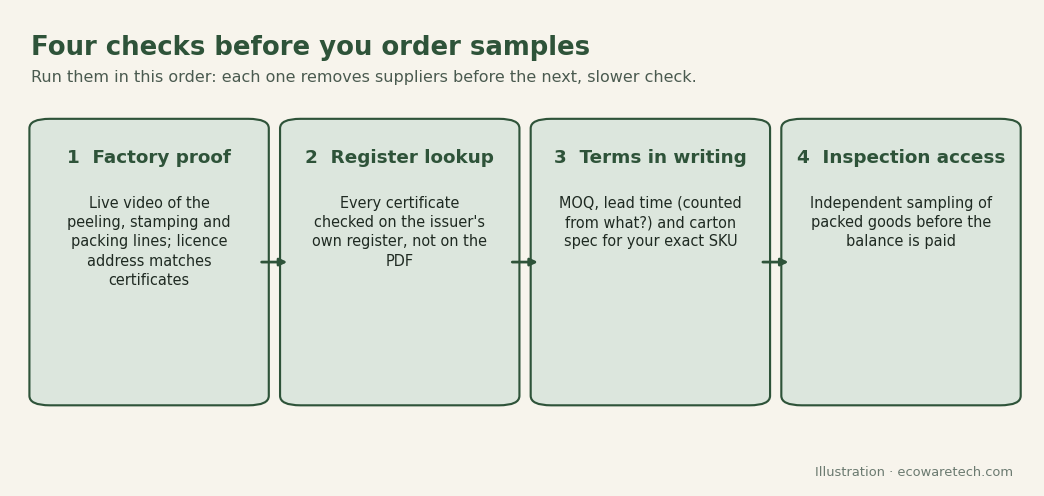
Illustration: the four checks in the order they save you the most time. Drawn for this guide; it shows a method, not data.
Why “top 10 manufacturer” lists don’t answer the buying question
Search for wooden cutlery manufacturers in China and most of the first page is either a marketplace directory or a ranked list written by one of the manufacturers on it. Both are a reasonable first answer to how to find a manufacturer in China, because they give you a longlist of names. Neither tells you whether a specific factory can hold your spec, your date and your documents, because most lists do not publish their ranking criteria and many are written by a manufacturer that ranks itself first.
The four checks below are built for the stage after the longlist, when you have five to ten names and need to get down to two that deserve samples.
What buyers who have ordered from China report
Before the checks, it helps to see where orders actually go wrong. We read the buyer discussions linked below, including a group of five restaurants weighing whether to import tableware and to-go packaging directly. The same few problems came up in different threads:
| What buyers report | Which check it points to | Source |
|---|---|---|
| A restaurant operator weighing direct imports was told that if anything goes wrong with an order, the marketplace arbitration “sides heavily with the manufacturer” | Check 4: tie payment to inspection, not to the platform | Restaurant owners: buying from Alibaba (2026) |
| A US-based sourcing agent called the marketplace’s grievance process unreliable and said he prefers bank transfer with a negotiated discount | Check 4 | Lessons from sourcing in China (2023) |
| Measurable items such as metal ramekins were described as the safest category to import; custom disposables were where buyers “get hurt”, because printing and coatings vary between factories | Checks 2 and 4: food-contact reports and a locked sample | Restaurant owners thread |
| One buyer paid about US$200 for an inspector on a 1,000-unit order; the inspector checked about 80 units, photographed them and wrote a report, and the factory had to rework the order | Check 4: pre-shipment inspection | Lessons from sourcing in China |
| A buyer who pushed hard on price said the goods arrived at low quality and the supplier answered that the buyer had asked for cheap | Check 3: price the exact specification, not a generic SKU | Haggling with suppliers (2022) |
| A restaurant that orders branded cups said they cost the same or less than unbranded cups at home, but each round takes about three months; another buyer warned that shipping fees can cost more than the items themselves | Freight and timing, below | Restaurant owners thread |
| Another operator warned that 30,000 cups take up far more storage than expected | Freight and storage, below | Restaurant owners thread |
| A trade veteran’s checklist uses the business licence scope (manufacturing versus trading) as a first filter; a reply pointed out that many factory owners also run two or three trading companies | Check 1 | Factory verification cheat sheet (2026) |
These are individual accounts, and some come from sellers of other products. Each one maps to a check you can run before paying a deposit.
Check 1: Is it a factory, and which process does it actually run?
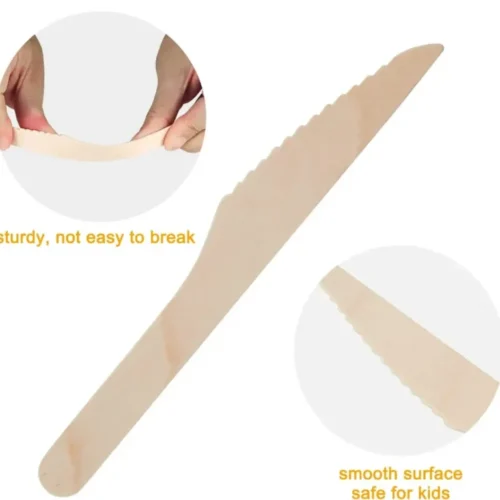
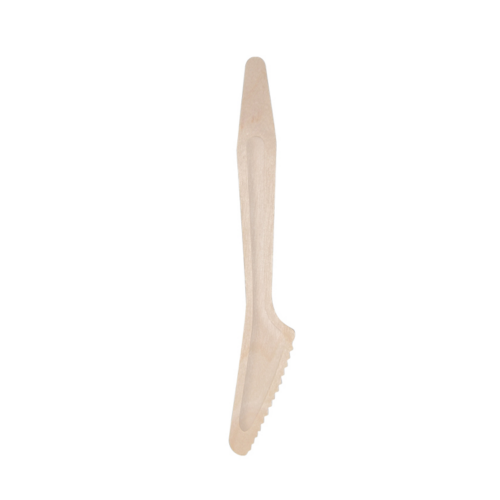
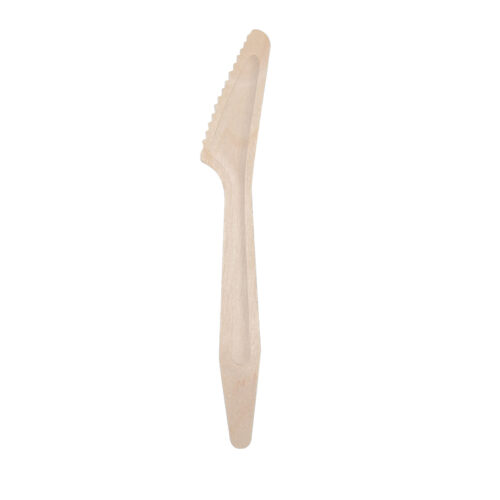
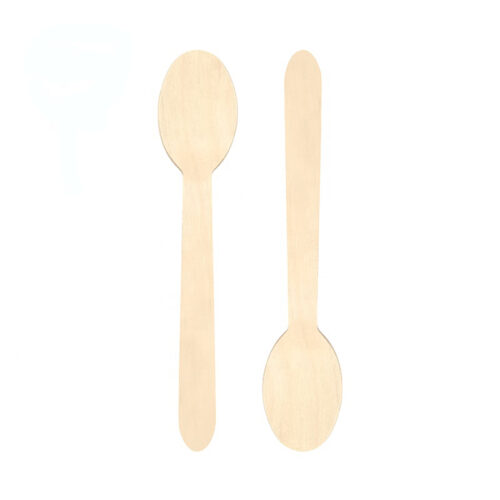
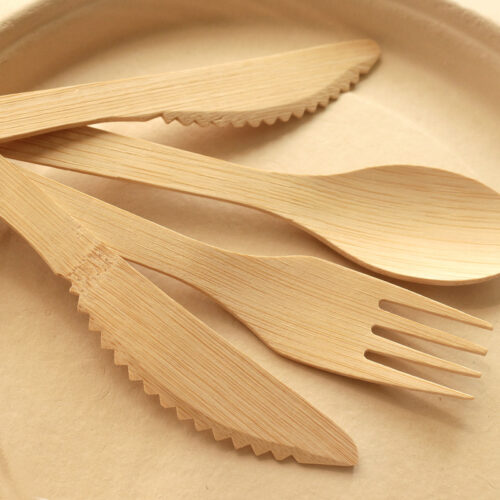
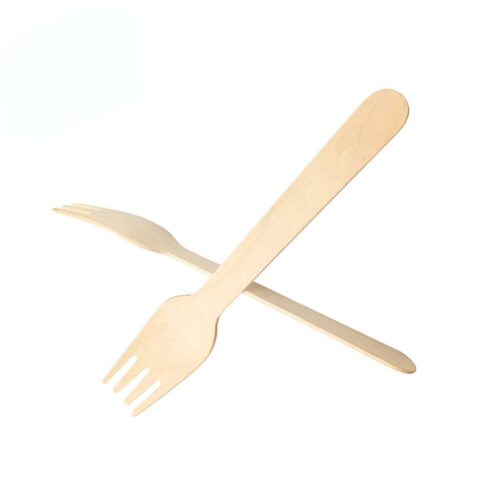
Disposable wooden forks, knives and spoons are usually made from rotary-peeled hardwood veneer, most often birch, which is dried, stamped or pressed to shape, then sanded or tumbled and sorted. Our own nine-step walkthrough of how disposable wooden spoons are made shows each stage. A trading company can sell the same product, and some do it well, but you should know which one you are dealing with, because it changes who you can hold to a spec and who controls the production calendar.
Ask for evidence you can check, not a description:
| What the supplier says | Evidence that settles it | Where to check it yourself |
|---|---|---|
| “We are the factory.” | A live video call walking from the log or veneer store to the stamping line and the packing room, on a working day | Ask to see the peeling or veneer stock and a machine running, not a showroom |
| “Our factory is in Anhui / Heilongjiang / Fujian…” | Business licence whose registered address and scope match the address on the certificates | The address printed on the FSC or BRCGS certificate, checked on the registers in Check 2 |
| “We make X million pieces a day.” | Line count and shift pattern for the SKU you want, not a site-wide number | A timed video of the line, or a third-party factory audit report |
| “We can print your logo on the packaging.” | A photo of a previous printed run and the name of the print partner if printing is outsourced | Sample of a printed sleeve or carton |
If the answers keep coming back as brochures, move the company to the bottom of the list.
Read the business licence too. A Chinese business licence lists the company’s business scope, and a scope that covers manufacturing is a first sign that the company makes what it sells. It is only a first filter: many factory owners also run separate trading or export companies, so a trading licence does not by itself mean a middleman.
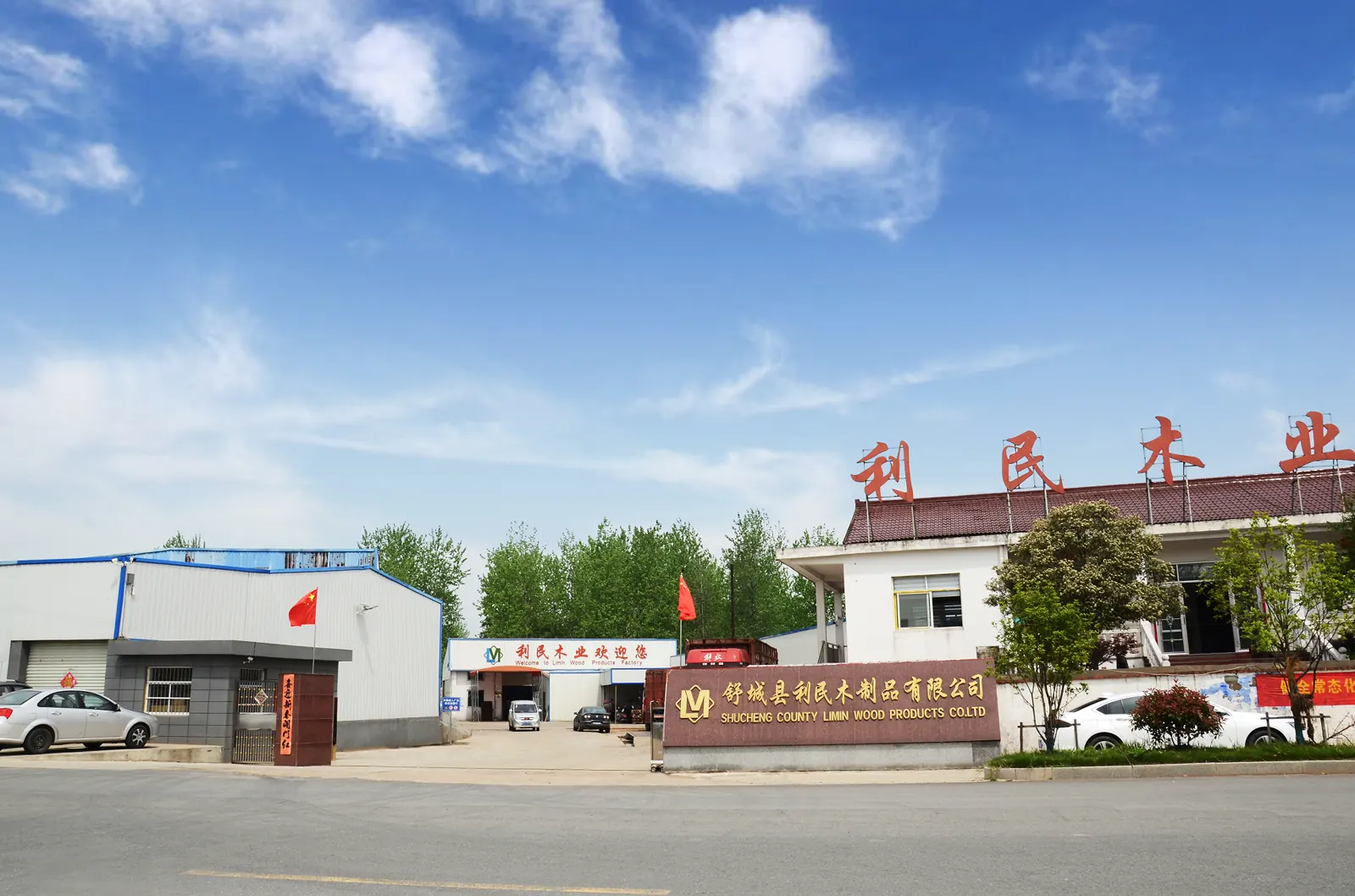
We are an example of that structure, and you can check it. Ecoware Co., Ltd. (unified social credit code 91340104MA8NLGYG8N, registered in Hefei in 2022) is the export company. The goods are made by our family factory, Shucheng Limin Wood Products Co., Ltd. (unified social credit code 9134152368081586XB, registered in 2008), in Qianrenqiao Town, Shucheng County. The factory holds the certificates listed in Check 2. Our factory page sets out what we run as a wooden cutlery manufacturer in Anhui, processing birch from the log. The same checks apply to us: ask for the business licence of the company that invoices you and of the company that makes the goods, and how the two are related. A Ukrainian buyer’s full-day factory inspection shows the order in which an audit team usually walks a plant like ours.
Check 2: Look up every certificate on the issuer’s register
Check each certificate on the issuing body’s register, not on the PDF the supplier sends. Most schemes a cutlery buyer will be asked about have a public lookup, and the lookup takes less time than reading the certificate. amfori BSCI is the exception: audit results are visible only to amfori members.
| Certificate a supplier sends | What it covers | Public register | What to compare |
|---|---|---|---|
| FSC chain of custody | That the certificate holder can pass on an FSC claim for the product groups in its scope | FSC public certificate search | Status “valid”, company name and address, and whether wooden cutlery or tableware is inside the product scope |
| BRCGS Packaging Materials | A food-safety and quality system for packaging manufacture at one site | BRCGS Directory | Site name and address, grade, audit date, and the scope wording |
| ISO 9001 quality management | That a management system was audited, not that a product meets a spec | IAF CertSearch | Certification body is accredited, scope names the product, certificate not expired. Not every certification body uploads to CertSearch; if a certificate is missing, ask the certification body before treating it as fake. ISO 9001:2026 was published in September 2026. Certificates issued to ISO 9001:2015 stay valid during the accreditation transition period, so check the edition and the expiry date together |
| amfori BSCI audit | A social-compliance audit of working conditions, graded rather than pass/fail | Ask for the audit reference and grade; amfori members can see results on the amfori platform | Audit date, site address, rating |
Food-contact test reports (for example against US 21 CFR food-contact rules or the EU framework Regulation (EU) No 1935/2004) are not certificates and have no central register. For those, check that the report names the lab, the sample description, the test method and the date, and that the sample description matches your material and any coating.
To try the lookups on a real case, here are ours, all issued to the factory, Shucheng Limin Wood Products Co., Ltd.: FSC chain of custody GFA-COC-005688 (valid to 24 August 2031); ISO 9001:2015 certificate 959-25-Q-1482-R0S (valid to 10 October 2028, subject to annual surveillance audits); amfori BSCI amfori ID 156-043679-000 (audit valid to 31 July 2027); and BRCGS Packaging Materials certificate CN25/00006200, site code 10008469, grade B+, which expired on 15 September 2026 and is being renewed. Because the certificates are in the factory’s name and invoices come from Ecoware, this is exactly the entity question described next.
Two mismatches to look for: the certificate belongs to a different legal entity from the one on your invoice, or the product scope does not include cutlery. Neither is proof of bad faith, since trading arms and sister companies are common, but either one means the certificate does not cover the goods you are buying. Our guide to certifications for disposable cutlery suppliers explains what each document proves.
Check 3: Get MOQ, lead time and packing in writing, then compare
Quoted MOQs and lead times vary widely between suppliers and are often given for the easiest SKU in the catalogue. Ask for them for your product, your packaging and your print, and ask what the lead time is counted from.
For comparison, this is how Ecoware quotes as of October 2026. It is one factory’s practice, not an industry average.
| Product type | Standard MOQ | Trial or low-MOQ order | Custom print or OEM packaging |
|---|---|---|---|
| Standard items in stock (forks, knives, spoons, sets, bamboo cutlery) | No minimum | Any quantity | Higher MOQ, depends on the packaging; confirmed in the quote |
| Best-price tier | 10,000+ pcs, up to a full container; container quantity depends on carton size and gross weight | — | Negotiated |
| Order type | Production time | Sample time |
|---|---|---|
| Standard items in stock | Can ship within days | Same day possible |
| Custom logo, custom packaging or new mould | Depends on packaging and quantity; confirmed in the quote | Depends on the design |
| Very large orders or peak season | Book capacity early | — |
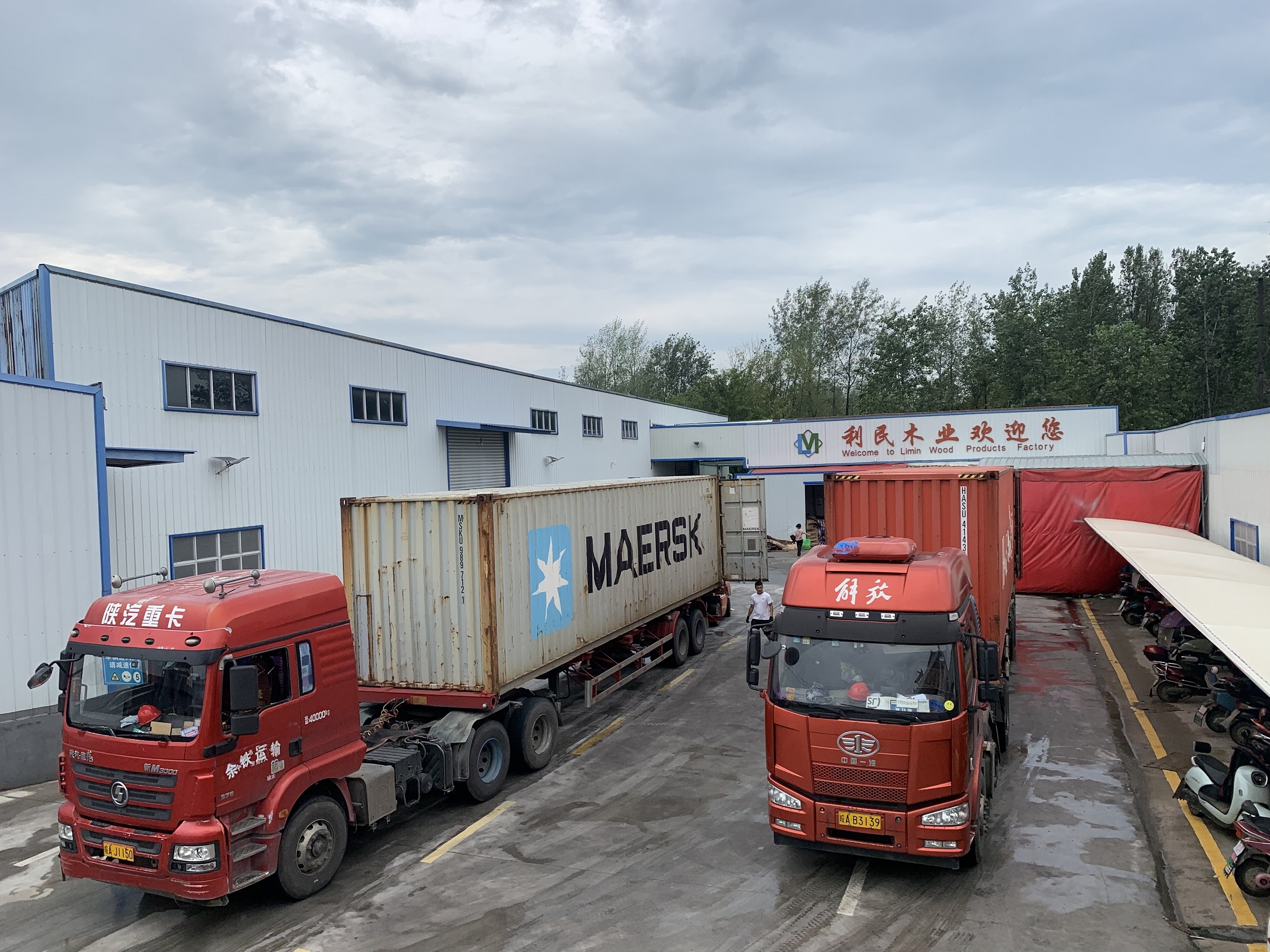
Production time at Ecoware runs from order confirmation plus deposit, not from the first enquiry. Container quantity has no single figure, because it depends on each order’s carton size and gross weight. In our loading, a 40HQ takes up to about 26.5 tonnes or 67 to 68 m³, whichever is reached first, and a 20ft container holds about 27 to 28 m³ and fills by volume. Three of our bulk cartons, each holding 10,000 pieces, show how differently that works out:
| Carton (10,000 pcs) | Size and gross weight | 20ft (27–28 m³) | 40HQ (26.5 t or 67–68 m³) |
|---|---|---|---|
| 165 mm wooden knives | 48 × 34 × 38 cm, 25.6 kg | 435–451 cartons | 1,035 cartons; weight is reached first |
| 160 mm wooden forks | 55 × 33.5 × 39.5 cm, 26.7 kg | 370–384 cartons | 920–934 cartons; space is reached first |
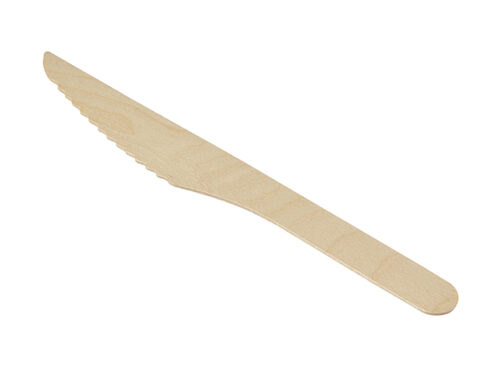
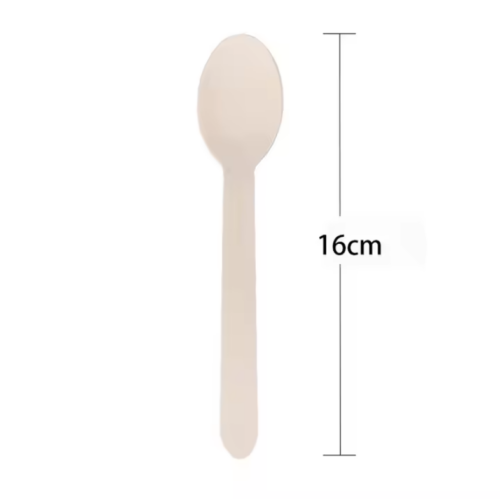
| 160 mm wooden spoons | 59 × 33.5 × 39.5 cm, 26.8 kg | 345–358 cartons | 858–870 cartons; space is reached first |
Real loads also depend on how the cartons stack and on the exact container, so treat these as planning figures and ask for a loading plan with the quote. Our guide to how many cartons fit in a 20ft or 40ft container shows the calculation step by step, including road-weight limits at destination.
How to use a table like this when comparing quotes:
- A much lower MOQ with print included usually means stock packaging with a sticker or a label, not a printed sleeve. Ask to see a sample of exactly what ships.
- A much shorter lead time for a custom run is worth a direct question: is the production slot already booked, and does the lead time include printing the packaging?
- No carton spec in the quote makes freight impossible to compare. Carton dimensions and pieces per carton decide how many cartons fit a container and what each order costs to ship.
Check 4: Sample, lock the sample, inspect before the balance
A common complaint is a bulk shipment that does not match the approved sample. The protection is contractual and it has to be agreed before production:
- Approve a pre-production sample made from the same wood lot, with the same finish, and keep one set sealed at each end.
- Write the acceptance terms into the PO: a moisture-content range tied to a named test method, a sanding or finishing stage, minimum thickness, and what counts as a defect. Our splinter acceptance checklist gives PO wording for the finish, and the guide to mould on wooden cutlery covers moisture terms and container conditions.
- Agree inspection access in writing: an independent inspector samples the finished, packed goods before the balance is paid, using a sampling plan both sides named in advance, usually ISO 2859-1 at an agreed AQL. The standard was revised in 2026, so name the edition in the PO. Our pre-shipment inspection checklist sets out what to check and when to reject a lot.
If a supplier resists any of the three before the deposit, treat that as a warning sign.
For the sample itself, one buyer of custom packaging suggests asking for a “random imprinted sample” sent by express air, which takes about 3 to 6 days. In the threads we read, buyers who relied on marketplace arbitration after a bad shipment described it as weak protection, which is why the inspection terms below carry the weight.
Tie the money to the same steps. A common structure is a deposit on order confirmation and the balance on a passed inspection report, written into the contract as “balance payable within X days of a passed pre-shipment inspection report issued by [inspection company]”. Paying the balance against a photo of loaded cartons gives up the only leverage the inspection creates.
Freight, storage and timing: the costs buyers say surprised them
The unit price is the easiest number to compare and the least complete. Three costs came up again and again in buyer discussions:
- Freight. One buyer warned that shipping fees can cost more than the items themselves. Ask every supplier to quote the same Incoterm and the carton count for your quantity, and get a separate freight quote from a forwarder you choose.
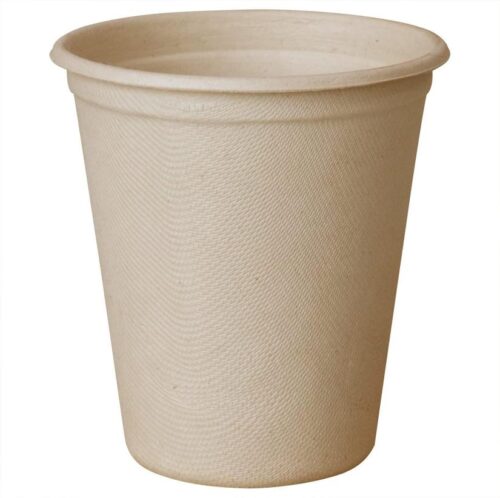
- Storage. A container of disposables is bulky; one operator warned that 30,000 cups take far more room than expected. Work out pallets and storage space before you choose a full-container order over smaller, more frequent shipments.
- Time. A restaurant that reorders branded cups said each round takes about three months. Plan reorders against your stock, not against the supplier’s production time alone.
Duty depends on how the goods are classified. Our wooden cutlery HS code and landed-cost guide walks through the cost line by line.
Documents your market will ask for
Different markets ask for different paperwork, and a missing document can hold a shipment at the border just as a quality failure can.
| Destination or channel | Document question to raise with the supplier | Guide |
|---|---|---|
| European Union, wooden products | EUDR due diligence data for products under HS heading 4419; products made only from bamboo are outside the regulation | EUDR and wooden tableware |
| Any market, shipped on pallets | ISPM 15 heat-treatment marking applies to wooden pallets and crates, not to the cutlery inside | ISPM 15 and wooden tableware |
| EU, paper sleeves and wraps | PFHxA limits on paper and board food-contact packaging | The PFHxA restriction |
| United States, paper packaging | State-level PFAS rules for food packaging | US state PFAS rules |
| Any market, “compostable” on the label | Which compostability certificate the destination recognises | Compostable certification by market |
The RFQ that gets comparable answers
Send every shortlisted supplier the same request, so the replies line up column by column:
- Product, dimensions and wood species (for example birch, 160 mm spoon), and whether the cutlery is coated, waxed or uncoated.
- Packing: pieces per inner bag, inner bags per carton, carton dimensions and gross weight, and any printing.
- MOQ for that exact configuration, and whether a trial order is possible at a higher unit price.
- Production lead time and what it is counted from; sample lead time for stock and for custom samples.
- Certificate numbers for every certificate mentioned, with the legal entity that holds them.
- Food-contact test reports for your market, with lab name, method and date.
- Inspection terms: whether a third-party inspector may sample before balance payment, and at what AQL.
- Incoterm and port: FOB, CIF or CFR, or DDP if you want the supplier to handle import.
If you would like Ecoware to answer that list for your SKU, send it through our quote form and we will reply with the configuration, MOQ, lead time and documents that apply to your order.
Warning signs worth pausing on
| What you see | Why it matters | What to ask next |
|---|---|---|
| Certificate holder name differs from the seller on the invoice | The certificate may not cover your goods | Which entity manufactures and which invoices, and is the manufacturer named on the certificate? |
| Every product in the catalogue has the same MOQ and lead time | The figures are probably generic | MOQ and lead time for your SKU and packaging, in writing |
| “FDA approved” or “FDA certified” on a product page | FDA does not approve manufacturing facilities independently, and it says registration of an establishment does not denote approval; what a supplier can show is test evidence that its materials meet FDA food-contact rules | Which food-contact regulation the material was tested against, and the report |
| “100% compostable” with no certificate number | Compostability claims need a named scheme and a listing | Certificate number and the scheme’s product listing |
| No video access to the line until after deposit | You cannot confirm who makes the goods | A live walk-through before any payment |
Related guides
These pages go deeper on the decisions raised above:
- Trading company vs manufacturer: how to tell who you are buying from
- How many cartons fit in a 20ft or 40ft container
- Bamboo vs birchwood cutlery for B2B buyers
- Bamboo tableware supply chain planning
- A buyer’s factory inspection case
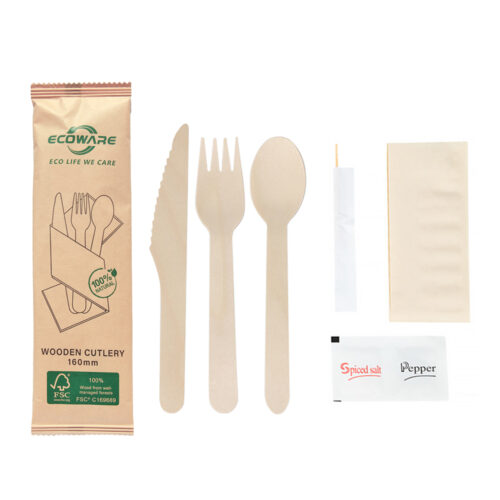
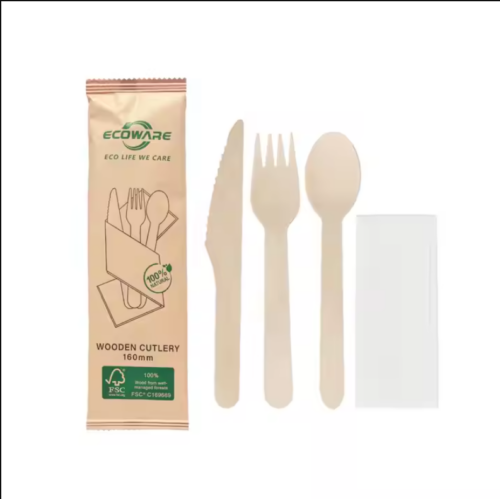
- Disposable wooden cutlery sets
By Ecoware Export Team. Drafted with AI assistance from the sources linked in each section and reviewed by the Ecoware Export Team; buyer accounts are paraphrased from the public discussions linked in the tables. Certificate-register links were checked on 30 September 2026. Updated October 2026.