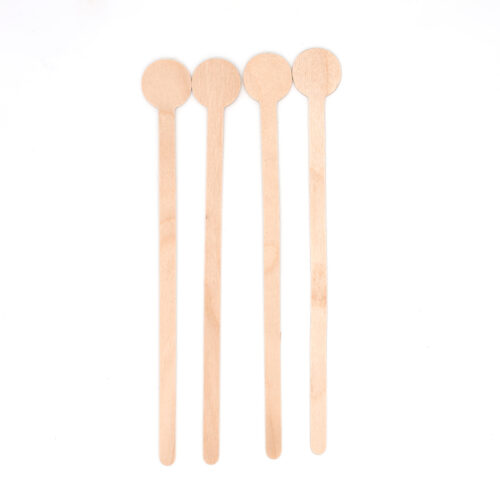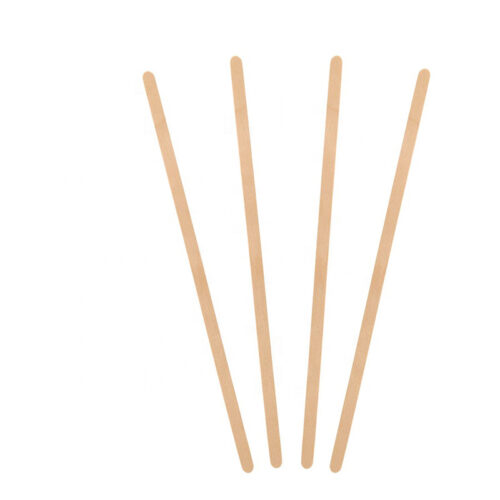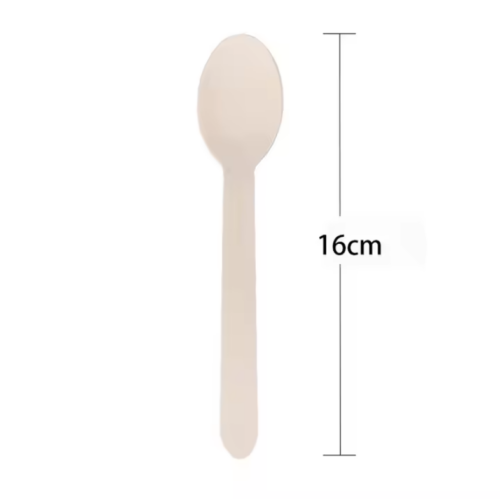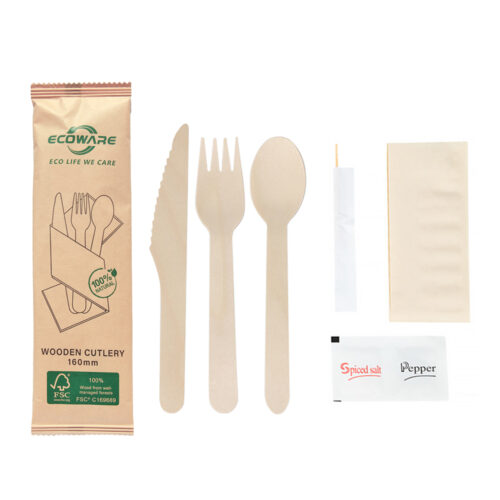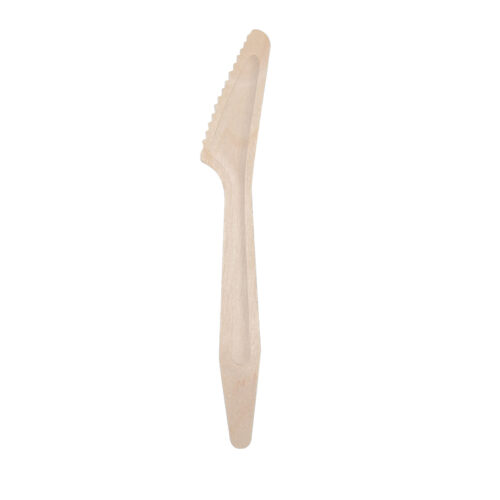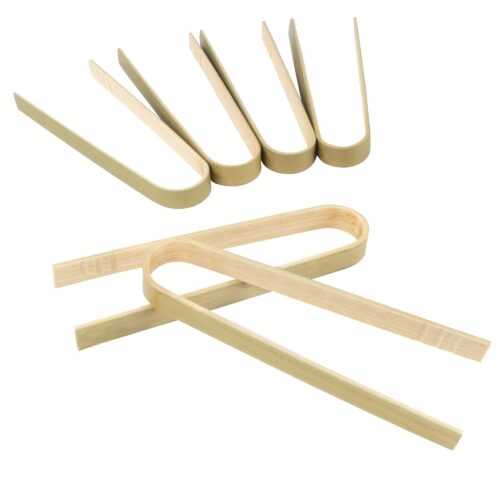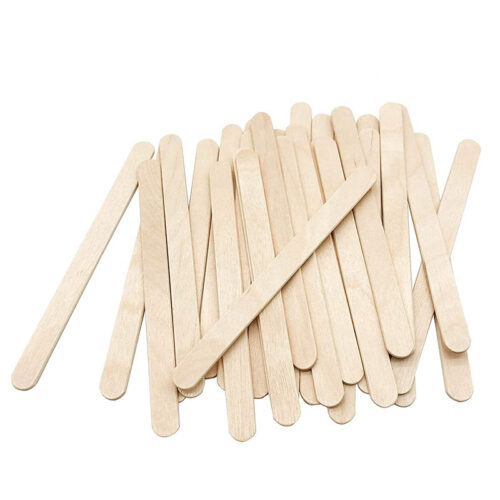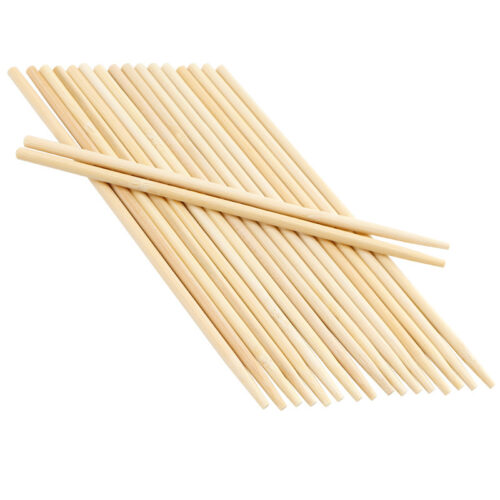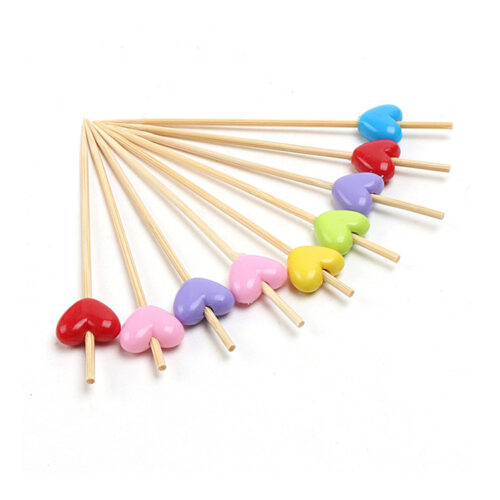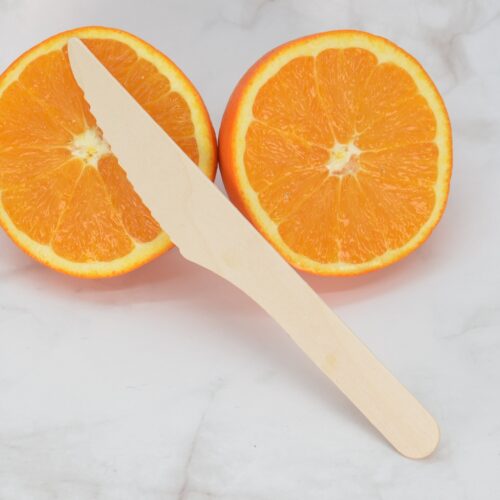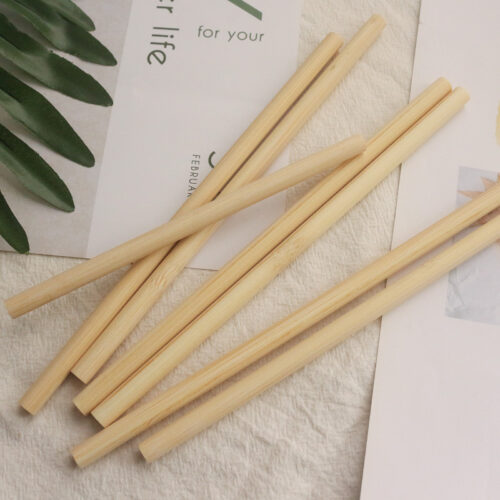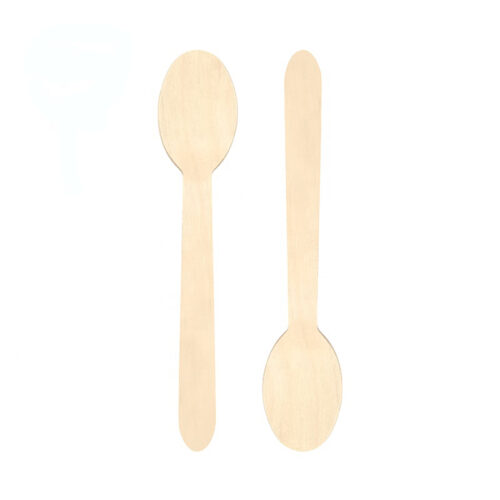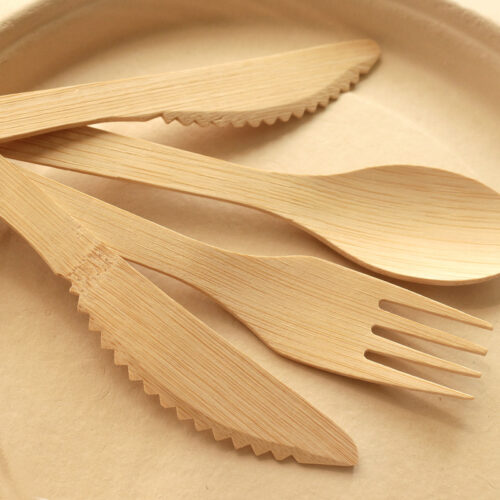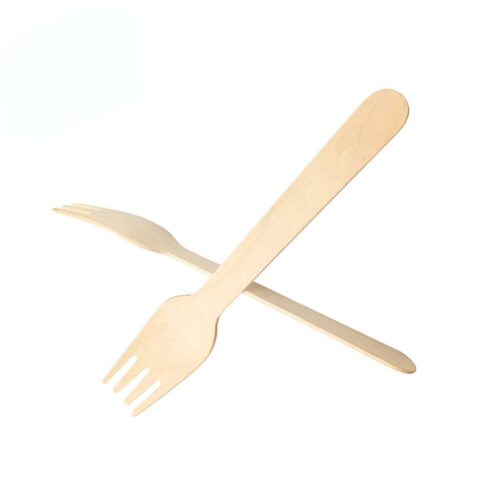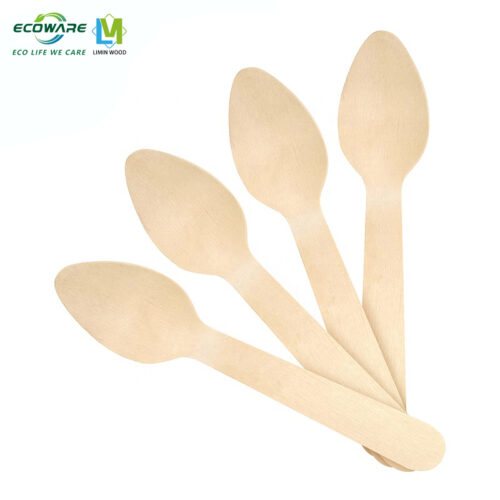
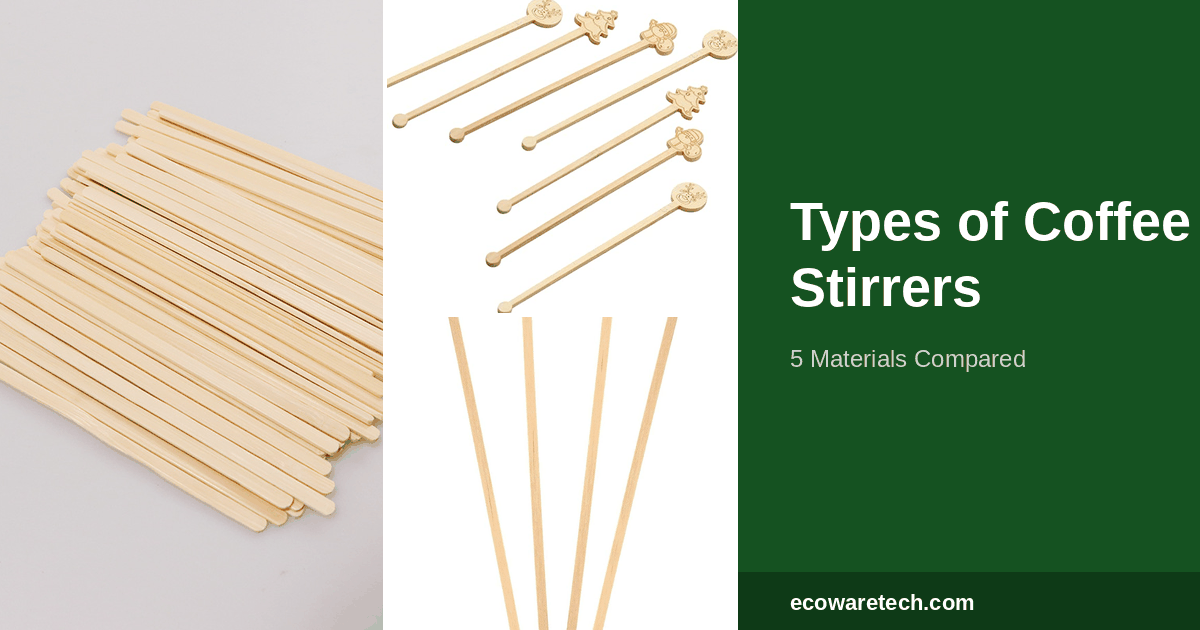
Coffee stirrers come in five materials buyers actually encounter: wood and bamboo for a natural, often FSC-certified look with good rigidity, plastic for the cheapest per-unit cost, metal for reusable, premium service, and paper for a fully biodegradable option that softens quickly in liquid. Within wood and bamboo, the two shapes that matter are flat-ended and round-ended, and the right length depends on your cup size, not just habit. This guide compares all five with real dimensions.
Quick Comparison: Coffee Stirrer Materials
| Material | Typical length | Wet/heat performance | Best for |
|---|---|---|---|
| Birch wood (FSC) | 90-190mm (Ecoware range) | Rigid, holds up well in hot liquid | FSC-certified natural look, cafes with paperwork requirements |
| Bamboo | 90-190mm (Ecoware range) | Rigid, slightly more flex than birch | Eco-conscious cafes, renewable-material positioning |
| Plastic | Approx. 127-190mm (5-7.5in) | Fully heat and wet resistant | Lowest per-unit cost, high-volume budget chains |
| Metal (stainless) | Reusable, standard bar-spoon lengths | Excellent, indefinitely reusable | Premium cafes, zero-waste and in-house service |
| Paper | Approx. 127-190mm (5-7.5in) | Softens and weakens when wet | Fully biodegradable positioning, light stirring only |
Birch and bamboo lengths are Ecoware’s own stocked sizes, confirmed against the product pages linked under Related Guides below. Plastic and paper lengths are typical market ranges from third-party sourcing guides, not Ecoware product specs, since Ecoware does not manufacture those two materials.
Birch Wood Stirrers
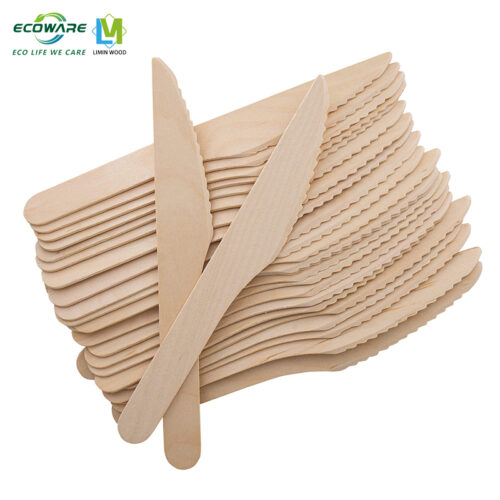
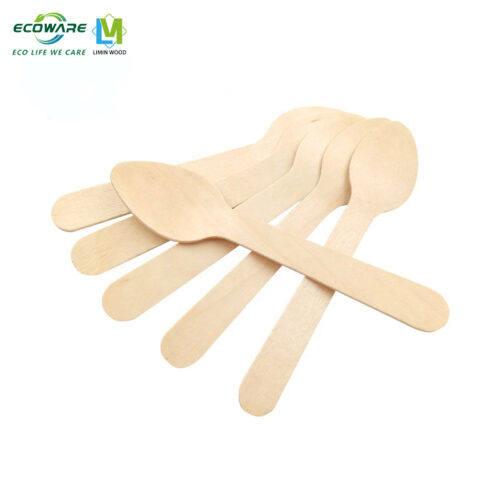
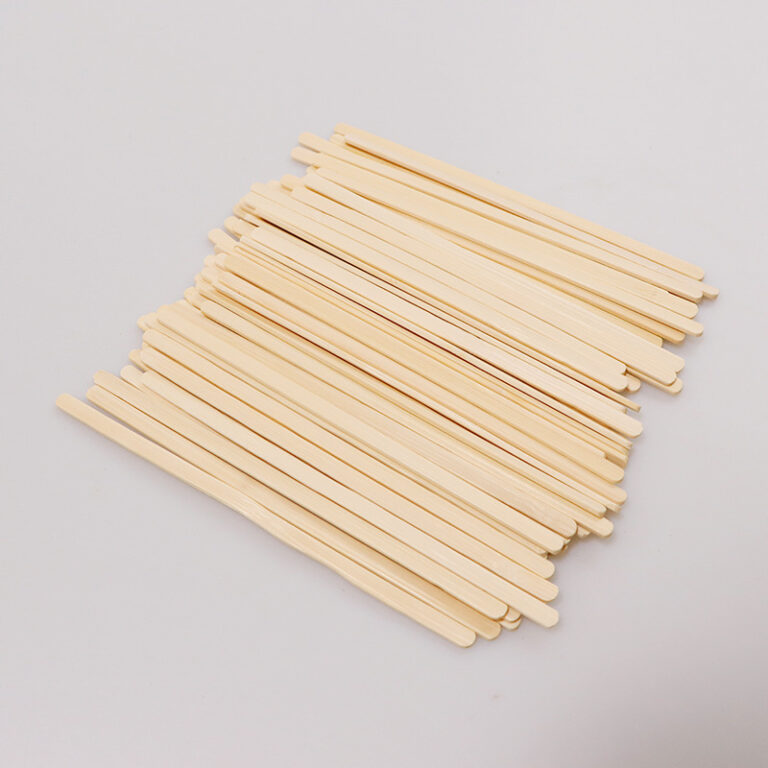
Ecoware’s birch coffee stirrers are FSC 100% certified and stocked in 90mm, 110mm, 140mm, 178mm and 190mm lengths, with custom lengths available on request. Birch holds its shape well in hot liquid and takes a clean, splinter-free finish when properly sanded and moisture-controlled at the factory, which matters because a poorly finished stirrer can shed fine wood fibers into the drink after a few stirs. Buyers who need FSC Chain-of-Custody paperwork for an import shipment typically default to this line.
Bamboo Stirrers
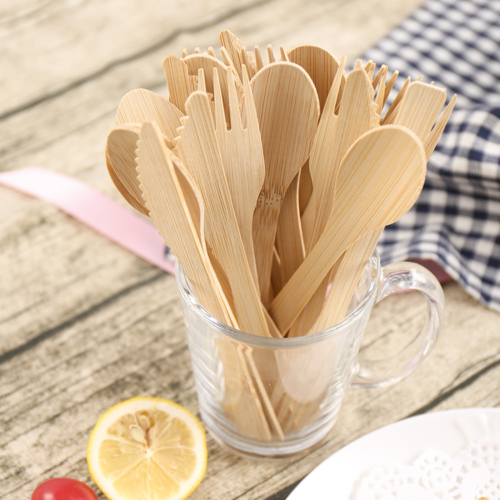
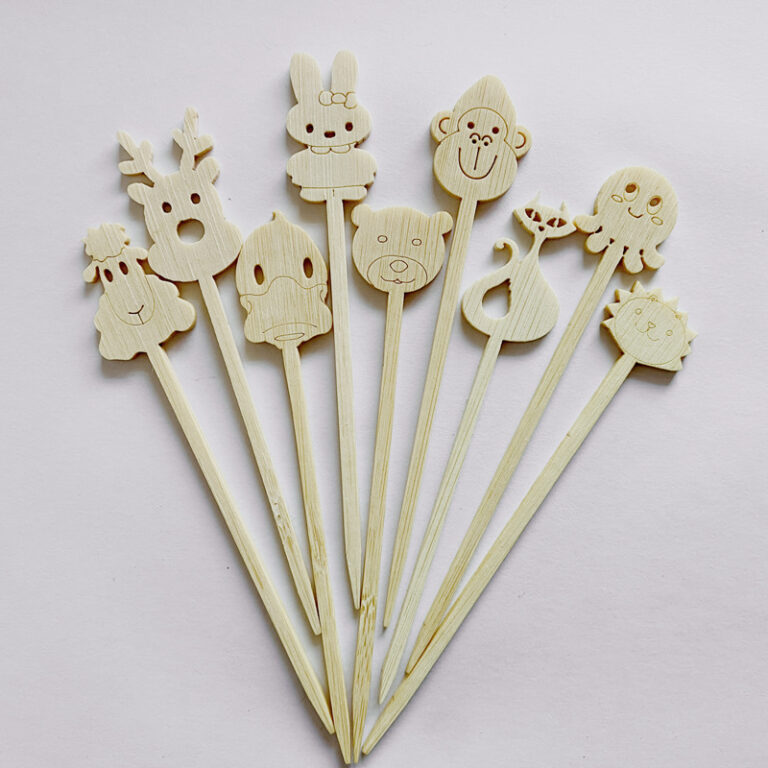
Bamboo stirrers are stocked in the same 90mm, 110mm, 140mm, 178mm and 190mm length range as Ecoware’s birch line, with a cross-section of about 5mm by 1.2mm for the round-ended style. Bamboo is a fast-renewing grass rather than a tree, which is the main reason cafes choose it over wood: the sustainability story is easier to make, even though the two materials perform similarly in the cup. Ecoware also lists a shaped bamboo stirrer on its product-category page for buyers wanting a custom profile beyond flat or round ends; the category listing does not publish a standalone spec sheet for that variant, so treat it as a custom-quote item rather than a stocked size.
Plastic Stirrers
Plastic stirrers are the cheapest option per unit and fully indifferent to heat and moisture, which is why fast-food and high-volume chains that have not moved away from plastic still default to them. Ecoware does not manufacture plastic stirrers; they are included here only so buyers comparing materials can see where wood and bamboo sit on cost and sustainability relative to the option they are most often replacing.
Metal (Stainless Steel) Stirrers
Reusable metal stirrers, typically stainless steel in a small spoon or swizzle-stick shape, cost more upfront but are meant to be washed and reused indefinitely rather than discarded, which is why they show up mostly in premium cafes and hotels running in-house service rather than takeaway. They sit outside Ecoware’s disposable tableware range entirely.
Paper Stirrers
Paper stirrers are fully biodegradable and marketed on that basis, but they soften and lose rigidity faster than wood or bamboo once they have been sitting in a hot drink, which limits them to light, brief stirring rather than repeated use in a single cup. Like plastic and metal, paper stirrers fall outside Ecoware’s own product range and are included here for buyer comparison only.
Flat-Ended vs Round-Ended Stirrers
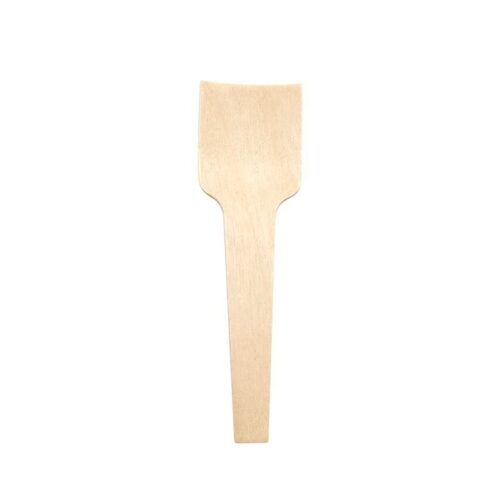
Within Ecoware’s own birch and bamboo lines, the shape choice is mostly flat-ended versus round-ended. A round-ended stirrer has a smooth, rounded head and is the more common default; a flat-ended stirrer widens into a small paddle, which some cafes prefer because it is easier to see at a glance whether sugar has fully dissolved, and it reads as a slightly more finished, branded look on the counter. Neither shape performs meaningfully better at the basic job of stirring; the choice is closer to a presentation and branding decision than a functional one.
Choosing Length by Cup Size
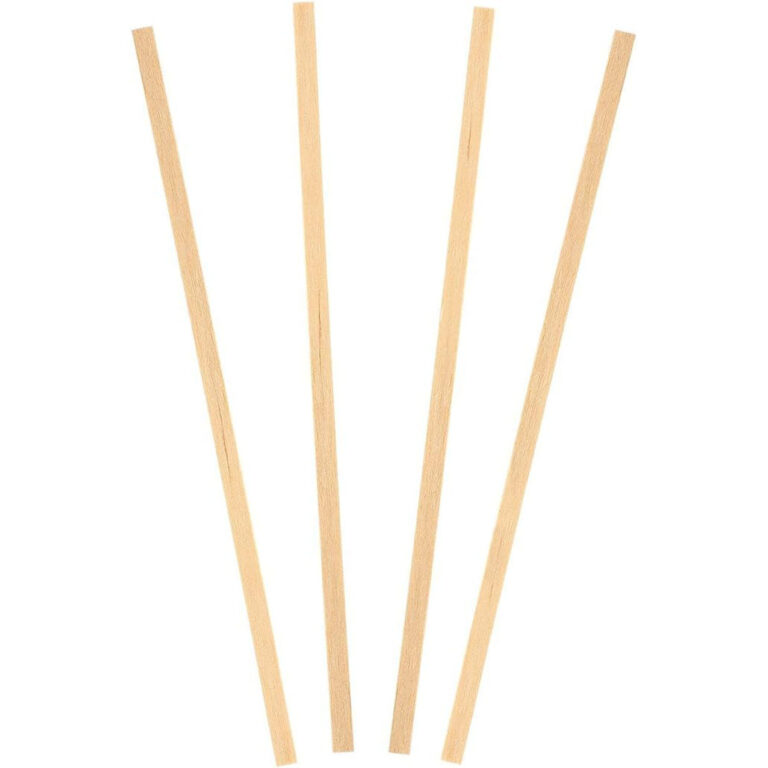
Stirrer length should match the cup, not just habit. Mengte Commodities recommends roughly 12.7 to 14.0cm for an 8oz cup, 17.8 to 19.1cm for a 12oz cup, and 19.1cm or longer for a 16oz cup, mainly so the drinker’s hand stays clear of a hot rim and, for iced drinks, so the stirrer reaches past the ice to the bottom. Mapped against Ecoware’s stocked sizes, that puts the 140mm size at the small end of the 8oz range, 178mm in the middle of the 12oz range, and 190mm as the practical minimum for a 16oz cup, with the shorter 90mm and 110mm sizes better suited to espresso and single-shot formats than to a full cup of coffee.
Why Some Stirrers Get Fuzzy After a Few Stirs
A stirrer that sheds fine wood fibers into the drink after only a couple of stirs is almost always a manufacturing quality issue rather than an inherent property of wood or bamboo. The two factors that matter most are sanding quality at the finishing stage and moisture content: wood that is under-sanded or left too wet is more prone to raising fibers once it absorbs hot liquid. This is a specification worth asking a supplier about directly, since it is not something you can judge from a product photo.
Frequently Asked Questions
What materials are coffee stirrers made from?
Wood (typically birch), bamboo, plastic, stainless steel and paper. Wood and bamboo are the most common disposable, eco-positioned options; plastic is the cheapest and most heat/wet resistant; metal is reusable; paper is fully biodegradable but softens fastest in liquid.
What is the difference between a flat-ended and round-ended coffee stirrer?
Mainly shape and presentation. A round-ended stirrer has a smooth rounded head and is the more common default. A flat-ended stirrer widens into a small paddle, which some cafes prefer for a more branded look and for checking at a glance whether sugar has dissolved. Both stir equally well.
What length coffee stirrer should I use for my cup size?
Roughly 12.7 to 14.0cm for an 8oz cup, 17.8 to 19.1cm for a 12oz cup, and 19.1cm or longer for a 16oz cup, so your hand stays clear of the hot rim and, for iced drinks, the stirrer reaches past the ice.
Why do some wooden or bamboo stirrers feel fuzzy or shed fibers?
It is usually a sanding and moisture-content issue at the factory rather than a property of the material itself. Under-sanded or too-wet stock is more likely to raise fibers once it absorbs a hot drink, so it is worth asking a supplier about their finishing and moisture-control process directly.
Are Ecoware’s coffee stirrers FSC certified?
Ecoware’s birch coffee stirrer line is FSC 100% certified. The bamboo line is sold on a renewable-material basis; bamboo is a fast-growing grass rather than a tree, so it does not carry the same forestry certification as the birch line.
Are wooden or bamboo coffee stirrers compostable?
Both are natural, uncoated wood or bamboo, which composts under normal conditions, unlike PLA/CPLA plastics. For real-world decomposition timelines and the certifications (BPI, EN 13432, ASTM D6400) that back an industrial- or home-compostable claim, see Ecoware’s guide on how long bamboo cutlery takes to decompose.
Related Guides in This Series
This page continues the Skewers pillar in Ecoware’s bamboo-pick and chopstick content, and links back to the site’s main tableware classification guide.
- Skewers: 9 Types Explained: the cluster pillar page, covering full-length grilling and serving skewers plus cocktail and fruit picks.
- Types of Chopsticks: the companion classification guide for chopsticks, including regional length and tip differences.
- Types of Toothpicks: 7 Styles Explained: the companion classification guide for toothpicks, including how they differ from cocktail picks.
- How Long Does Bamboo Cutlery Take to Decompose?: covers industrial vs home composting timelines and the BPI / EN 13432 / ASTM D6400 certifications behind a compostable claim.
- Round-Ended Bamboo Coffee Stirrers, Flat-Ended Bamboo Coffee Stirrers and FSC 100% Birchwood Coffee Stirrers.
About Ecoware
Ecoware Co., Ltd. sells disposable wooden and bamboo tableware made at its family factory in Shucheng, Anhui province, China (Shucheng Limin Wood Products Co., Ltd., established 2008). The company supplies FSC Chain-of-Custody certified birch and bamboo product lines alongside food-contact compliance documentation (FDA 21 CFR 176.170, EU 10/2011 and LFGB testing on request) for import buyers who need paperwork ready before a shipment clears customs.
The figures in this guide come from a mix of independently published data cited inline, Ecoware’s own product specifications published on ecowaretech.com, and standard-setting bodies. Where a number could not be independently verified, this guide says so rather than estimating one, and points you to where you can request the missing spec sheet directly from Ecoware.
Sourcing coffee stirrers at volume? Request a quote →