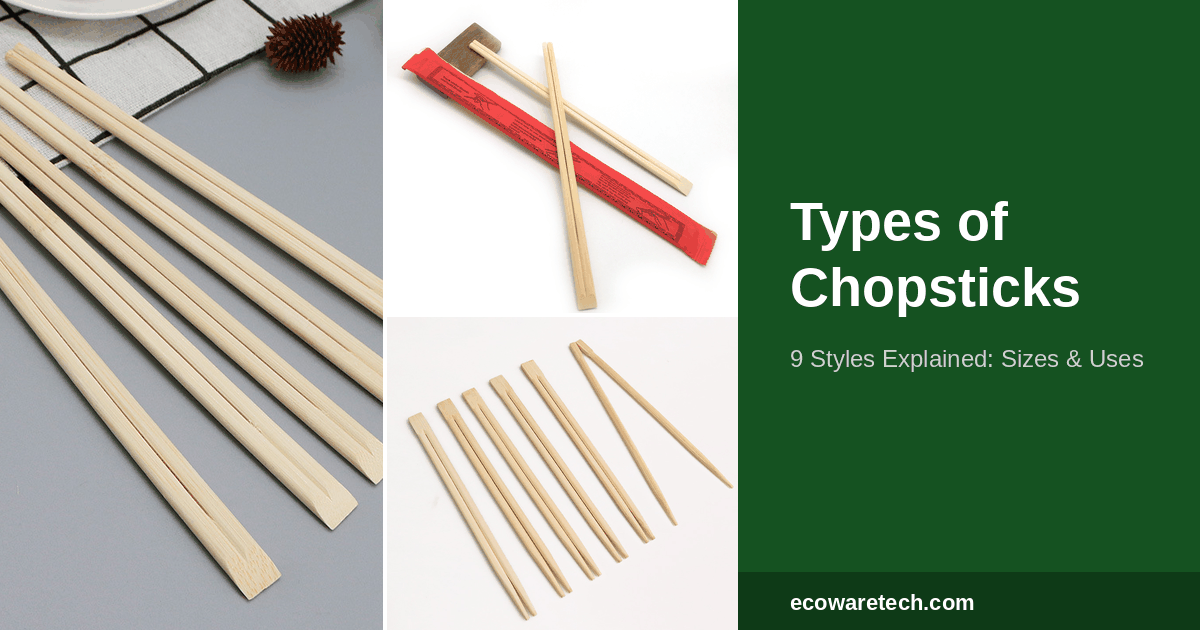
The main types of chopsticks divide along two lines: country of origin, and the cut of the stick itself. Chinese chopsticks run longest (24-27cm+) with a thicker, tapered tip built for communal serving from a shared pot. Japanese chopsticks are shorter (20-23cm) with a finer point suited to picking bones out of fish. Korean chopsticks are flat, often metal, with a broader tip. Vietnamese chopsticks sit close to the Chinese style. On the disposable side, tensoge, rikyu and genroku are named Japanese bamboo cuts you will see on supplier spec sheets. This guide covers all of it with real lengths and sourcing notes.
Quick Comparison: Types of Chopsticks by Country
| Style | Typical length | Tip shape | Typical material |
|---|---|---|---|
| Chinese | 24-27cm+ | Tapered, thicker/heavier | Wood, bamboo, plastic, melamine |
| Japanese | 20-23cm | Finer taper to a point | Wood, bamboo, lacquered wood |
| Korean | 23-25cm | Flat, broader tip | Traditionally metal, sometimes wood |
| Vietnamese | Similar to Chinese | Simple, functional taper | Wood or bamboo |
Source: Wasabi HQ, “Key Differences Between Chopsticks in Asia”. Individual products vary; a restaurant’s house chopsticks may not match the traditional regional norm exactly.
Chinese Chopsticks
Chinese chopsticks are the longest of the four regional styles, commonly 24-27cm or more, with a tip that tapers but stays comparatively thick and blunt rather than coming to a fine point. The extra length reflects a serving habit: at a shared table with communal dishes in the center, longer chopsticks reach further without a diner leaning far over the table. The blunter tip is less suited to picking small fish bones but works well for rice, noodles and reaching into a shared hot pot or wok.
Japanese Chopsticks
Japanese chopsticks run shorter, typically 20-23cm, and taper to a noticeably finer point than the Chinese style. Japan’s cuisine leans heavily on fish, and a fine point makes it easier to separate small bones and pick apart delicate pieces of sashimi or grilled fish without a thick, blunt tip getting in the way. Traditional Japanese chopsticks are also more often round or octagonal in cross-section and, for reusable sets, lacquered.
Korean Chopsticks
Korean chopsticks are flat rather than round, with a broader, thicker tip than either the Chinese or Japanese style, and are traditionally made of metal (stainless steel today, historically sometimes silver) rather than wood or bamboo. The flat metal design is often credited to Korean banchan culture, where diners handle a wide range of small side dishes, including some that are slippery or require more grip than a round wooden tip provides.
Vietnamese Chopsticks
Vietnamese chopsticks sit closest to the Chinese style: simple, functional, usually wood or bamboo, without the pronounced flat cross-section of Korean chopsticks or the fine taper of Japanese ones. Vietnamese dining shares the Chinese pattern of shared serving dishes at the center of the table, which favors a similar length and shape.
Tensoge
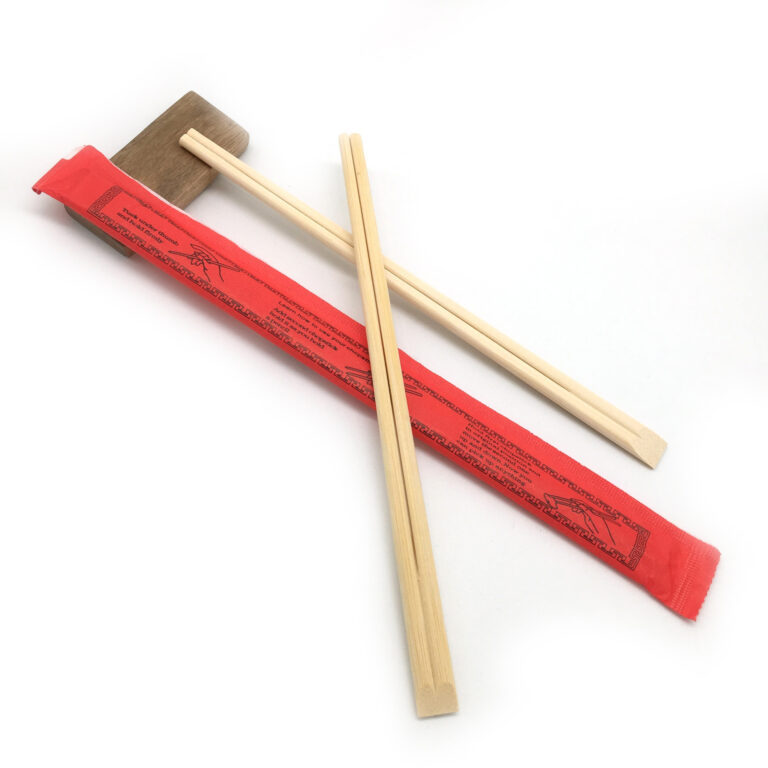
Tensoge (天削) is a specific, named style of Japanese disposable chopstick: a single flat length of bamboo that splits into two sticks (the standard waribashi format), with the top ends cut on a visible diagonal rather than square. That diagonal cut is the defining, recognizable feature, and it is commonly paired with a printed paper sleeve, which is why tensoge shows up so often in sushi restaurants, ramen shops and Japanese bento brands specifically. Source: Bamboozio, “How to Choose Bamboo Chopsticks”.
Rikyu
Rikyu-bashi takes its name from Sen no Rikyu, the historical tea master associated with Japanese tea ceremony, and the traditional form is tapered at both ends rather than just one. In the tea-ceremony context this is a ceremonial style rather than a disposable one. In commercial and disposable tableware, “rikyu-style” or double-tapered cuts borrow the name for a similar both-ends-pointed shape; this guide could not independently verify how standardized that commercial usage is across suppliers, so treat “rikyu” on a spec sheet as a shape description to confirm with your supplier rather than an industry-fixed standard the way tensoge is.
Genroku
Genroku is a real, commercially recognized name for disposable bamboo chopsticks, sold under that name by multiple manufacturers and retailers. This guide could not independently verify the exact cut or shape feature that defines “Genroku” as distinct from tensoge or round styles from the sources checked. If a spec sheet lists Genroku chopsticks, ask the supplier for a sample or a dimensioned drawing rather than assuming a specific cut.
Round and Carbonized Chopsticks
Round chopsticks are cylindrical along most of the body with a tapered tip, the shape most associated with Chinese restaurants, noodle shops and food courts. Carbonized chopsticks are not a separate shape but a finishing step: heat or steam treatment that turns the bamboo a warmer caramel-brown color, reduces internal moisture content, and is generally described as performing better in humid climates. Carbonizing can be applied to round or tensoge-cut sticks alike.
Twin Chopsticks
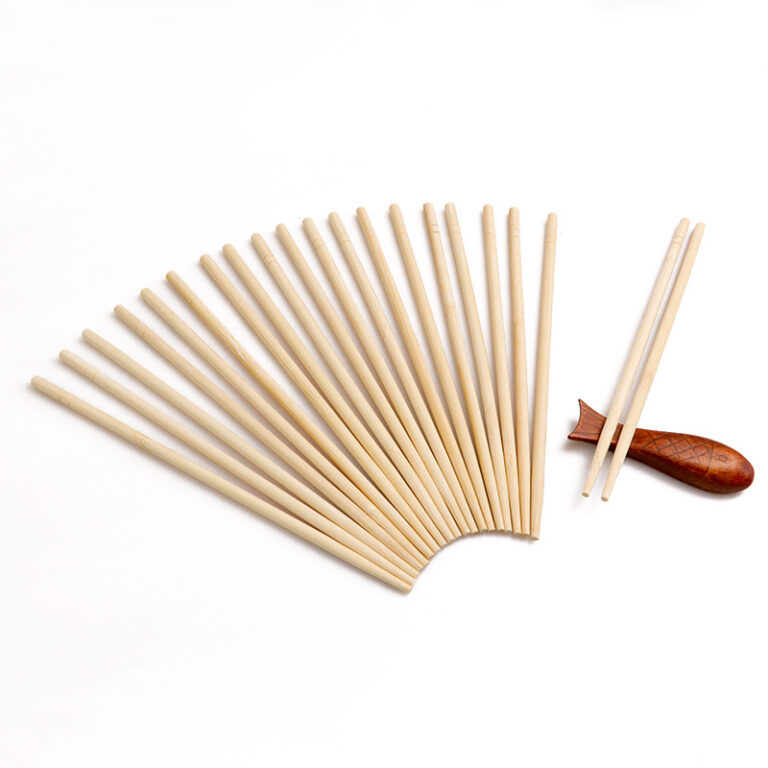
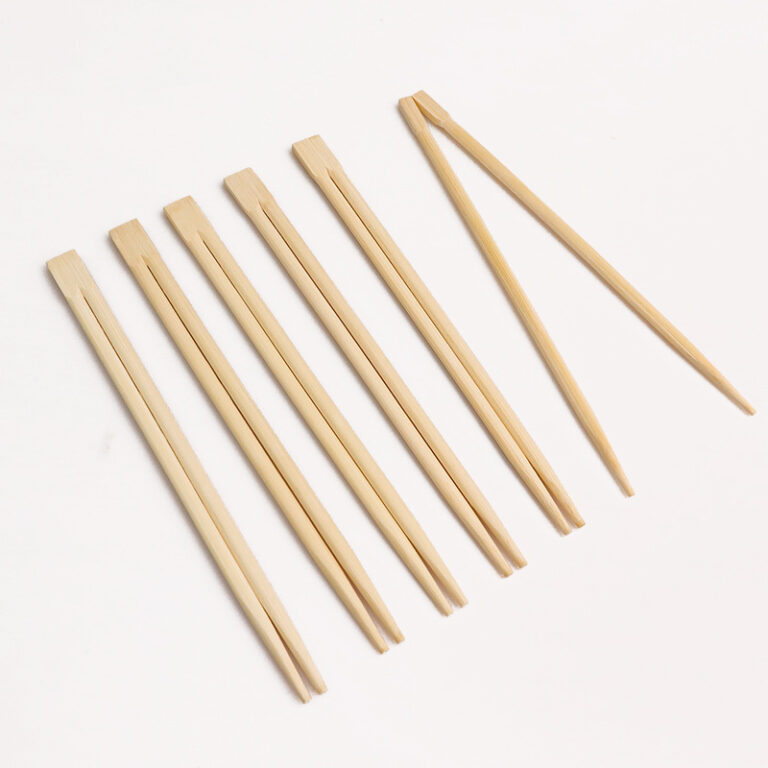
“Twin chopsticks” is the joined, not-yet-split pair familiar from any disposable waribashi: two sticks still connected at the top, snapped apart before use. That splitting motion is part of the format itself and, for many diners, doubles as a visible signal that the chopsticks are fresh out of the wrapper and haven’t been used. Ecoware sells this format directly, see Twins Bamboo Chopsticks.
Individually Sleeved vs Paper-Wrapped: Which Is More Hygienic?
An individually sleeved chopstick pair is fully sealed in its own wrapper, closed on all sides, so nothing touches the sticks between the factory and the diner’s hands. A paper-banded pair, by contrast, is held together with an open band or partial wrap rather than a sealed sleeve, which leaves more of the chopstick surface exposed during storage, transport and handling. For takeout and delivery specifically, where the chopsticks may sit in a bag for an extended period before anyone opens it, a full seal gives a more defensible hygiene claim than an open band, and it is worth specifying explicitly on a purchase order rather than assuming “wrapped” means fully sealed.
Frequently Asked Questions
What is the difference between Chinese and Japanese chopsticks?
Length and tip shape, mainly. Chinese chopsticks run 24-27cm or more with a thicker, tapered tip suited to communal serving. Japanese chopsticks are shorter, 20-23cm, with a finer point suited to picking apart fish.
What are tensoge chopsticks?
A named style of Japanese disposable bamboo chopstick: a single flat stick that splits into two, with the top ends cut on a visible diagonal. Commonly sold with a printed paper sleeve and associated with sushi and ramen restaurants.
What does “rikyu” mean for chopsticks?
Rikyu-bashi is named after the tea master Sen no Rikyu and traditionally refers to chopsticks tapered at both ends, used in tea-ceremony contexts. Some disposable-chopstick suppliers use “rikyu-style” for a similar double-tapered commercial cut; confirm the exact shape with your supplier.
What are the standard lengths for disposable chopsticks?
Common disposable lengths run from about 21cm up to 24cm, generally on the shorter, Japanese-influenced end of the regional range described above, since most disposable chopsticks in foodservice follow sushi, ramen and takeout conventions.
Is it more hygienic to use individually sleeved chopsticks than paper-wrapped ones?
A fully sealed individual sleeve protects the chopsticks from contact during storage and transport better than an open paper band does, which matters most for takeout and delivery orders that may sit closed for a while before being opened.
What are chopsticks made of?
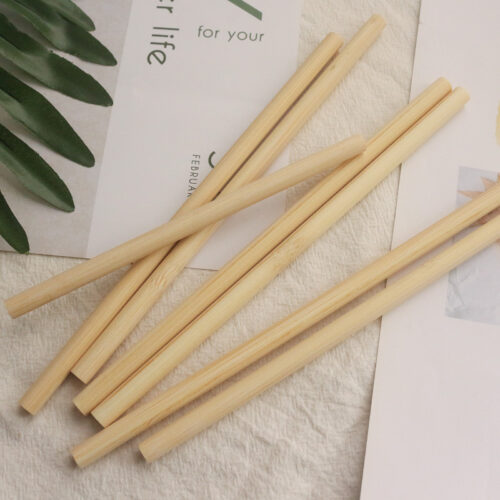
Most disposable chopsticks are bamboo or wood. Reusable chopsticks add lacquered wood, plastic, melamine, and, for the traditional Korean style, stainless steel.
Related Guides in This Series
This page follows the skewers pillar in Ecoware’s bamboo-pick and chopstick content, and links back to the site’s main tableware classification guide.
- Skewers: 9 Types Explained (Shapes, Sizes & Uses): the companion classification guide for bamboo skewers and picks, this cluster’s pillar page.
- Types of Toothpicks: 7 Styles Explained: the companion guide to Ecoware’s shorter bamboo picks, including how they differ from cocktail picks.
- Types of Coffee Stirrers: 5 Materials Compared: covers wood, bamboo, plastic, metal and paper stirrers, plus length by cup size.
- Types of Spoons: 18 Kinds Explained (Sizes & Uses): Ecoware’s main tableware classification pillar, covering the disposable spoon range.
- Types of Forks: 15 Kinds Explained (Sizes & Uses): the equivalent classification guide for disposable forks.
- Disposable Bamboo Chopsticks: the full bamboo chopstick range, including tensoge, round and twin formats.
- Disposable Wooden Chopsticks: the wooden equivalent range for takeout and foodservice.
- Tensoge Bamboo Chopsticks: the diagonal-cut Japanese style described above, with sleeve options.
About Ecoware
Ecoware Co., Ltd. sells disposable wooden and bamboo tableware made at its family factory in Shucheng, Anhui province, China (Shucheng Limin Wood Products Co., Ltd., established 2008). The company supplies FSC Chain-of-Custody certified birch and bamboo product lines alongside food-contact compliance documentation (FDA 21 CFR 176.170, EU 10/2011 and LFGB testing on request) for import buyers who need paperwork ready before a shipment clears customs.
The figures in this guide come from a mix of independently published data cited inline, Ecoware’s own product specifications published on ecowaretech.com, and standard-setting bodies. Where a number could not be independently verified, this guide says so rather than estimating one, and points you to where you can request the missing spec sheet directly from Ecoware.
Sourcing chopsticks at volume, or need a specific regional style? Request a quote →
Related Articles
- Embracing sustainability: Learn about the biodegradability of disposable wooden chopsticks
- Disposable Bamboo Chopsticks: The Sustainable Choice for Modern Dining
- World Cup Fan Zone Catering: A Plastic-Free Sourcing Guide
- Types of Forks: 15 Kinds Explained (Sizes & Uses)
- Browse all articles & products →
Products in this guide
See all Disposable Bamboo Chopsticks → Request free samples →