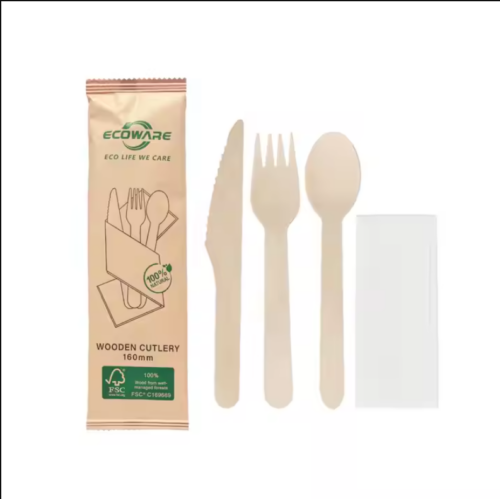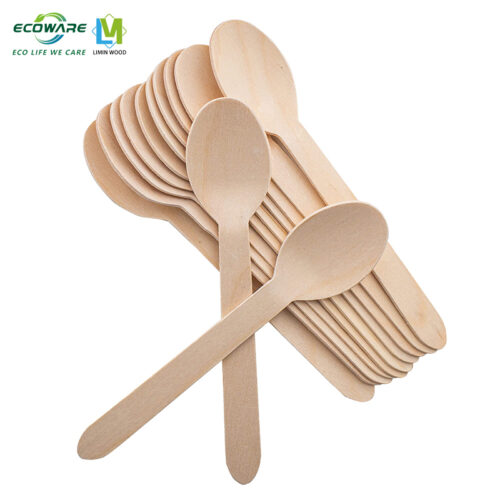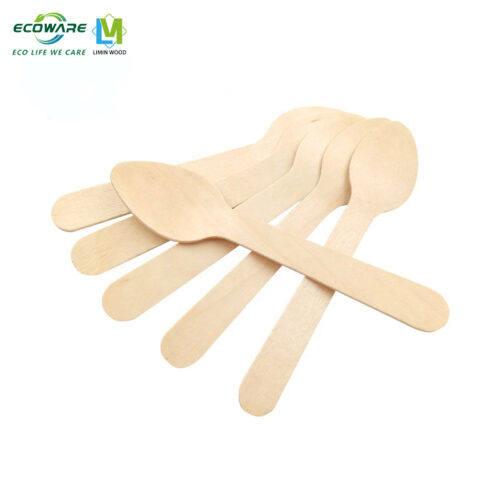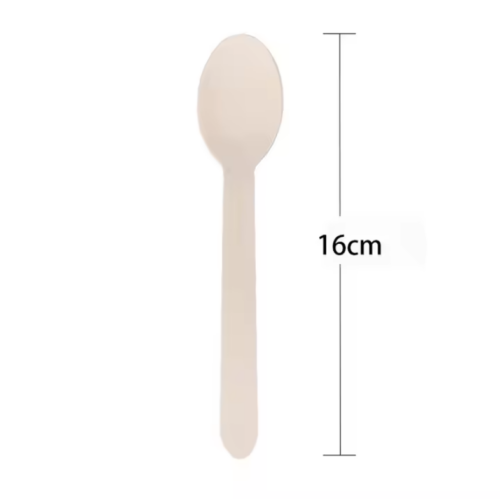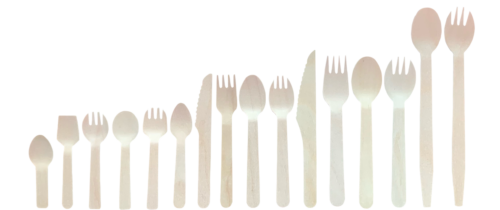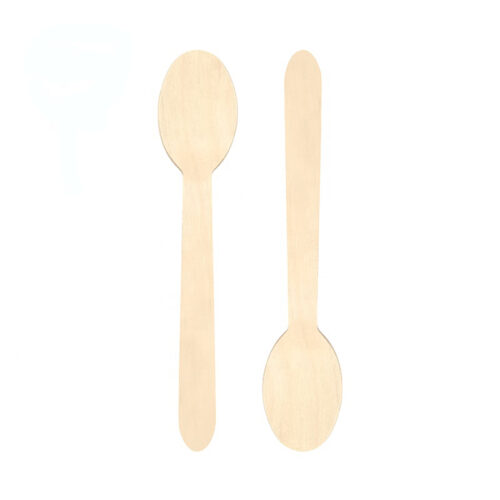
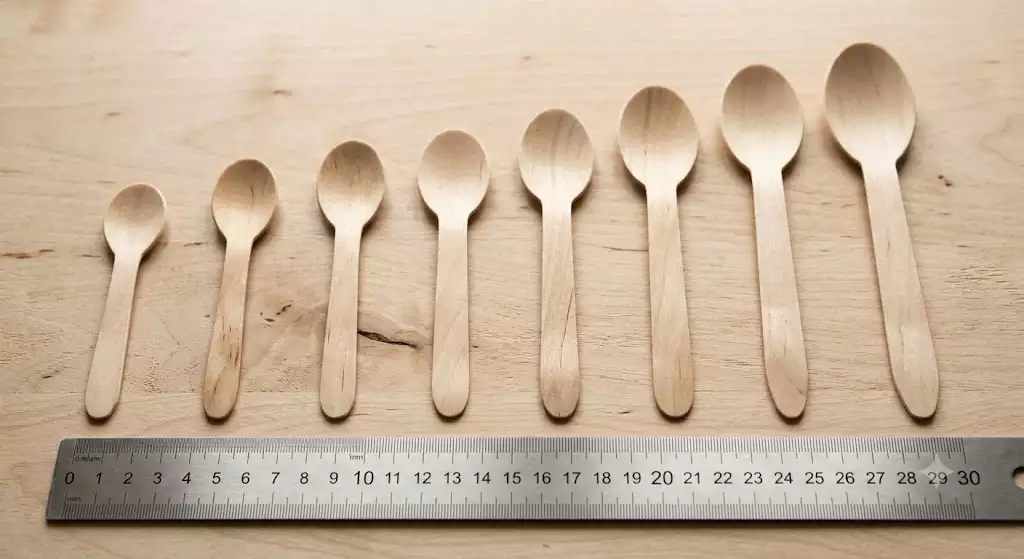
There are 18 spoon types in regular commercial and household use, and buyers usually lump them all into one bucket until a case of teaspoons shows up for a soup-service order. Each type is built around a different length, bowl shape, and capacity — lengths run from a 70 mm sample spoon to a 250 mm serving spoon, and capacities span roughly 2 ml to 45 ml. Below, every type is broken out with its standard length in millimeters, its bowl capacity in milliliters, the foods it’s built for, and typical case-pack counts for bulk ordering — including the exact sizes we manufacture ourselves.
→ Browse Ecoware’s Full Disposable Wooden Spoon Range
Spoon Comparison Chart
| # | Type | Length | Bowl Capacity | Best-For Foods | Typical Case Pack* |
|---|---|---|---|---|---|
| 1 | Teaspoon | 125–135 mm | ~5 ml (measure) | Tea/coffee stirring, small desserts, condiments | ~2,000 pcs/carton |
| 2 | Tablespoon | 178–190 mm | ~15 ml | Rice bowls, curries, pasta, side dishes | ~1,000 pcs/carton |
| 3 | Dessert Spoon | 175–180 mm | ~10–12 ml | Cake, pie, pudding, fruit salad | ~1,000 pcs/carton |
| 4 | Soup Spoon | 175–190 mm | ~20–25 ml | Broth, ramen, stew, cereal | ~1,000 pcs/carton |
| 5 | Ice Cream Spoon | 95–140 mm | ~12–15 ml | Scoop cups, cones, gelato tubs | ~3,000–5,000 pcs/carton |
| 6 | Ice Cream Spade | 120–140 mm | Wide, flat bowl | Hard-pack tubs, leveling large scoops | ~2,000 pcs/carton |
| 7 | Tasting Spoon | 85–100 mm | ~3–5 ml | Sample cups, food-truck tastings, demos | ~5,000 pcs/carton |
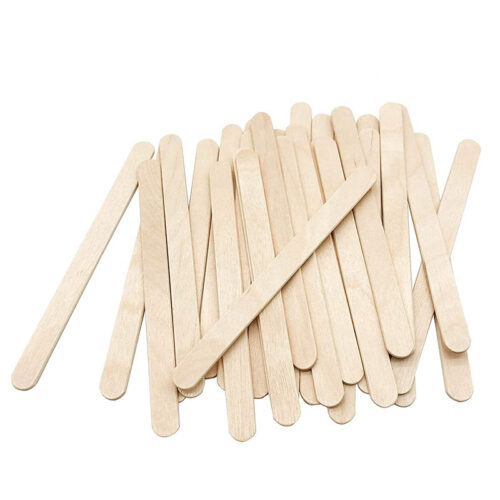
| 8 | Coffee Stirrer | 110–140 mm | n/a (flat paddle) | Hot and cold beverages | ~10,000 pcs/carton |
| 9 | Gelato Spoon | 90–110 mm | Short, broad bowl | Dense gelato, sorbet | ~3,000 pcs/carton |
| 10 | Yogurt Spoon | 120–140 mm | ~8–10 ml | Yogurt cups, parfaits | ~2,000–3,000 pcs/carton |
| 11 | Serving Spoon | 220–250 mm | ~35–45 ml | Buffet trays, catering pans | ~500 pcs/carton |
| 12 | Slotted Spoon | 220–250 mm | ~30 ml (drained) | Draining fruit, pickles, hot-pot ingredients | ~500 pcs/carton |
| 13 | Demitasse Spoon | 90–100 mm | ~3–5 ml | Espresso, sugar in small cups | ~5,000 pcs/carton |
| 14 | Bouillon Spoon | 150–165 mm | ~18–20 ml | Consommé, clear broths | ~1,000–2,000 pcs/carton |
| 15 | Baby Spoon | 100–110 mm | ~5 ml | Infant/toddler purees | ~2,000 pcs/carton |
| 16 | Spork | 140–160 mm | ~10–12 ml | Salads, noodles, travel/camping kits | ~1,000 pcs/carton |
| 17 | Souffle Spoon | 130–140 mm | ~8–10 ml | Ramekin desserts, crème brûlée | ~1,000–2,000 pcs/carton |
| 18 | Sample Spoon | 70–75 mm | ~2 ml | Trade-show samples, condiment tasting | ~5,000–10,000 pcs/carton |
*Case pack counts are representative ranges for disposable wooden spoons; exact master-carton quantities shift with wood gauge and whether pieces are bulk-packed or individually wrapped. Confirm the final count on your quote before ordering.
Need tighter tolerances than the ranges above — exact mm, gram weight per piece, and a downloadable spec sheet? See the full Spoon Sizes Chart, which breaks out every length from 110 mm to 190 mm with tolerance, weight, and MOQ for custom sizes.
What Defines a Spoon Type?
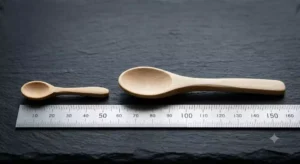
A spoon is defined by three variables that hold across cuisines and materials: bowl shape (round, oval, shallow, or slotted), bowl depth (how much volume it holds before food spills over the rim), and handle length relative to the bowl. Foodservice buyers usually add a fourth variable — heat tolerance of the material — because that decides whether a spoon survives a steam table or a 90-second reheat without softening. Miss any one of the three physical variables and the “wrong” spoon either underserves the portion or feels awkward in hand, which is why a single universal size rarely works across a whole menu.
1. Teaspoon
- Length: 125–135 mm
- Capacity: ~5 ml (standard measure)
- Best for: hot drinks, small desserts, condiments
- Case pack: ~2,000 pcs/carton
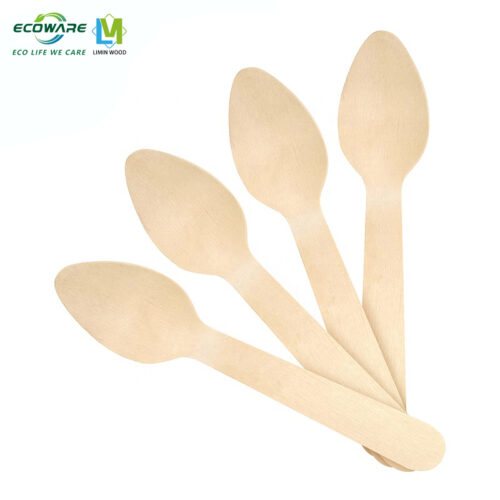
The teaspoon is the most common spoon in both homes and restaurants — used for stirring, portioning small amounts, and eating bite-sized desserts. As a measuring unit it’s fixed at 5 ml, but the physical eating spoon is shallower and slightly larger than the measuring version. Ecoware manufactures an FSC®-certified birchwood teaspoon in this exact size range.
Teaspoon vs. Dessert Spoon: the two are commonly confused because both handle sweet dishes. A teaspoon is smaller and more general-purpose; a dessert spoon has a wider, deeper bowl built specifically for plated desserts like cake or pudding.
2. Tablespoon
- Length: 178–190 mm
- Capacity: ~15 ml
- Best for: rice, curry, pasta, side dishes
- Case pack: ~1,000 pcs/carton
The tablespoon does double duty as an eating utensil and a cooking measurement (15 ml, abbreviated tbsp or T). In foodservice, the serving tablespoon is usually longer than the measuring-spoon version most recipe cards quote — don’t assume every “tablespoon” on a packing list holds exactly 15 ml; check the physical length first.
3. Dessert Spoon
- Length: 175–180 mm
- Capacity: ~10–12 ml
- Best for: cake, pie, pudding, fruit salad
- Case pack: ~1,000 pcs/carton
Sized between a teaspoon and a tablespoon, the dessert spoon’s oval, moderately deep bowl is built to cut through soft desserts and scoop without spilling. It’s close enough to tablespoon length that many operators standardize on one or the other rather than stocking both.
4. Soup Spoon
- Length: 175–190 mm
- Capacity: ~20–25 ml
- Best for: broth, ramen, stew, cereal
- Case pack: ~1,000 pcs/carton
The soup spoon has the deepest, roundest bowl on this list outside of a serving spoon, built to carry liquid to the mouth without spilling. Western versions are round-bowled; Asian soup spoons (used for broth-and-solids dishes like ramen or congee) tend to have a flatter bottom that rests on the table without tipping.
5. Ice Cream Spoon
- Length: 95–140 mm
- Capacity: ~12–15 ml
- Best for: scoop cups, cones, gelato tubs
- Case pack: ~3,000–5,000 pcs/carton
Ice cream spoons run shorter and stubbier than a teaspoon, with a slightly reinforced bowl edge for scraping frozen product off the sides of a cup. Ecoware’s own line includes a 95 mm mini wooden ice cream spoon sold paper-wrapped in bulk, plus round-edge and round-head versions for different scoop styles.
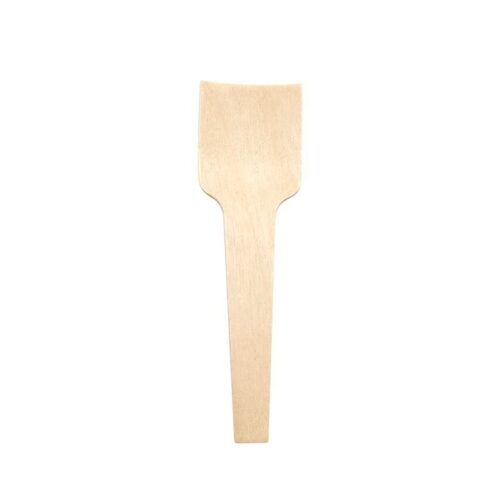
6. Ice Cream Spade
- Length: 120–140 mm
- Capacity: wide, flat bowl
- Best for: hard-pack tubs, leveling large scoops
- Case pack: ~2,000 pcs/carton
The ice cream spade trades depth for surface area — a broad, flat paddle-shaped bowl designed to push into hard-pack tubs and level a scoop rather than cup liquid. It’s a distinct SKU in Ecoware’s catalog: an FSC® 100% certified birchwood ice cream spade.
Ice Cream Spoon vs. Gelato Spoon vs. Ice Cream Spade
These three get mixed up constantly because they all touch frozen desserts, but the bowl geometry answers a different mechanical problem in each case:
- Ice cream spoon — a general-purpose, moderately deep bowl for standard-temperature scooped ice cream in cups or cones.
- Gelato spoon — a short, broad, flat paddle built for gelato’s denser, less-aerated texture, which resists a standard round bowl.
- Ice cream spade — the widest, flattest of the three, meant for pushing through rock-hard frozen product and leveling a scoop rather than holding liquid.
If your product comes out of a freezer below about −15°C, the spade or gelato shape will outperform a standard ice cream spoon, which tends to bend at the neck against hard-pack resistance.
7. Tasting Spoon
- Length: 85–100 mm
- Capacity: ~3–5 ml
- Best for: sample cups, food-truck tastings, product demos
- Case pack: ~5,000 pcs/carton
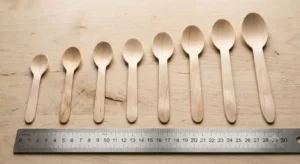
Built for a single bite, not a full portion. Tasting spoons are shorter than a demitasse spoon with a shallow bowl that discourages overloading — useful for controlling portion cost at trade-show booths and grocery sampling stations.
8. Coffee Stirrer
- Length: 110–140 mm
- Capacity: n/a (flat paddle, no real bowl)
- Best for: hot and cold beverages
- Case pack: ~10,000 pcs/carton
Technically not a spoon at all — a flat paddle with no scooping capacity, used purely to dissolve sugar or cream. Because it has no bowl to fill, it packs at far higher density per carton than any true spoon on this list. Ecoware makes a birchwood coffee stirrer and a round-end, hot-stamped custom-logo version for cafés that want branded stirrers.
9. Gelato Spoon
- Length: 90–110 mm
- Capacity: short, broad bowl
- Best for: dense gelato, sorbet
- Case pack: ~3,000 pcs/carton
Shorter and broader than a standard ice cream spoon (see the comparison under Ice Cream Spade above), built to apply more leverage against gelato’s lower air content without snapping.
10. Yogurt Spoon
- Length: 120–140 mm
- Capacity: ~8–10 ml
- Best for: yogurt cups, parfaits
- Case pack: ~2,000–3,000 pcs/carton
A narrower, longer bowl than a dessert spoon, sized to reach the bottom of a tall yogurt or parfait cup without the handle disappearing inside. The narrow profile also suits layered drinks like boba or trifle cups.
11. Serving Spoon
- Length: 220–250 mm
- Capacity: ~35–45 ml
- Best for: buffet trays, catering pans
- Case pack: ~500 pcs/carton
The longest spoon on this list, built to reach across a deep catering pan without the user’s hand touching hot food. Because the bowl is large, cartons hold far fewer pieces than mini spoon SKUs — factor this into freight math (see Bulk Case Packaging below).
12. Slotted Spoon
- Length: 220–250 mm
- Capacity: ~30 ml (drained)
- Best for: draining fruit, pickles, hot-pot ingredients
- Case pack: ~500 pcs/carton
Same footprint as a serving spoon, but with drainage holes cut into the bowl so liquid passes through while solids stay put — used for pulling ingredients out of syrup, brine, or a hot-pot broth without carrying the liquid along.
13. Demitasse Spoon
- Length: 90–100 mm
- Capacity: ~3–5 ml
- Best for: espresso, sugar in small cups
- Case pack: ~5,000 pcs/carton
The smallest true spoon shape (excluding the flat coffee stirrer), matched to the small volume of a demitasse (espresso) cup. Nearly identical in size to a tasting spoon, but with a rounder bowl meant for stirring rather than single-bite scooping.
14. Bouillon Spoon
- Length: 150–165 mm
- Capacity: ~18–20 ml
- Best for: consommé, clear broths
- Case pack: ~1,000–2,000 pcs/carton
A round, shallower bowl than a standard soup spoon, designed for thin, clear broths rather than chunky stews — the shallower profile reduces spill risk when a liquid has no solids to slow it down. This size sits close to Ecoware’s own 160 mm wooden spoon, which also works as a general-purpose full-size catering spoon.
15. Baby Spoon
- Length: 100–110 mm
- Capacity: ~5 ml
- Best for: infant and toddler purees
- Case pack: ~2,000 pcs/carton
Short-handled with a shallow bowl and deliberately rounded edges — the priority is a gentle profile over a large payload. This length range overlaps with Ecoware’s 110 mm spoon SKU.
16. Spork
- Length: 140–160 mm
- Capacity: ~10–12 ml
- Best for: salads, noodles, travel and camping kits
- Case pack: ~1,000 pcs/carton
A hybrid bowl-and-tines design that lets one utensil handle both cutting/spearing and scooping, which is why it shows up most often in takeout salad kits, camping sets, and combo cutlery packs where minimizing the number of separate pieces matters.
17. Souffle Spoon
- Length: 130–140 mm
- Capacity: ~8–10 ml
- Best for: ramekin desserts, crème brûlée
- Case pack: ~1,000–2,000 pcs/carton
A narrow, elongated bowl built to scrape along the curved sides of a small ramekin — a standard dessert spoon is often too wide to reach into the corners of a souffle dish cleanly.
18. Sample Spoon
- Length: 70–75 mm
- Capacity: ~2 ml
- Best for: trade-show samples, condiment tasting, single-bite appetizers
- Case pack: ~5,000–10,000 pcs/carton
The shortest spoon on this list — this is exactly the 75 mm mini spoon and FSC®-certified mini spoon we manufacture at our Shucheng County factory. Its tiny bowl is sized for a single bite, not a portion, which is why it packs the highest piece count per carton of any type on this list.
Materials Compared: Wood vs. CPLA vs. Plastic
| Property | Wood (Birch/Poplar) | CPLA | Standard Plastic (PS/PP) |
|---|---|---|---|
| Heat resistance | Stable well past boiling; doesn’t soften with hot soup or coffee | Rated to roughly 85–90°C; can soften above that | PS softens near boiling-point liquids; PP holds slightly higher but thin PP flatware still flexes |
| Mouthfeel | Neutral, slight natural-grain texture | Smooth, plastic-like feel | Smooth, can feel slick or “cheap” |
| Compostability | Home- and industrial-compostable; breaks down in months | Compostable only in industrial facilities, not backyard-safe | PP is not compostable; PS is rarely recycled |
| Best use | General foodservice, hot and cold, desserts | Hot soup or coffee service where a firmer bowl is preferred over wood | Cold desserts, low-cost single-use where heat isn’t a factor |
| Where it doesn’t work | Very oily fried batters can leave the wood grain feeling gritty after roughly 10 minutes of continuous oil contact | Needs an industrial composting facility — won’t break down in a home compost bin | Can pick up odor or a plastic aftertaste in hot, oil-based dishes |
Q4 answer in short: wood wins on heat stability and compostability but isn’t the right call for long, oily contact; CPLA is the better pick when you need a firmer bowl specifically for hot liquid service but must accept industrial-only composting; standard plastic is the weakest performer on both heat and end-of-life, and mainly makes sense for cold, low-cost, short-contact use.
Comparing raw wood species rather than finished materials? See Best Wood for Cooking Utensils for density, splinter rate, and bending-strength data on birch, poplar, beech, maple, and bamboo. Comparing whole disposable-material categories instead of just wood? See Wooden vs. Bamboo Cutlery for how the two materials compare on biodegradability, compostability and everyday durability.
Matching Spoon Size to Food
| Food / Service Type | Recommended Spoon(s) |
|---|---|
| Hot soup, broth | Soup Spoon or Bouillon Spoon |
| Rice, curry, pasta, mains | Tablespoon |
| Cake, pudding, fruit salad | Dessert Spoon or Souffle Spoon |
| Ice cream / gelato / frozen yogurt | Ice Cream Spoon, Gelato Spoon, or Ice Cream Spade (by hardness) |
| Yogurt cups, parfaits, boba | Yogurt Spoon |
| Coffee, tea | Coffee Stirrer or Demitasse Spoon |
| Food samples, tastings | Tasting Spoon or Sample Spoon |
| Buffet trays, catering pans | Serving Spoon or Slotted Spoon |
| Infant / toddler food | Baby Spoon |
| Grab-and-go meal kits | Spork |
Bulk Case Packaging
Case-pack counts scale almost entirely with bowl size, not with order value — which is why two orders of the same dollar amount can need wildly different container space. A 75 mm sample spoon typically ships 5,000–10,000 pieces per carton; a 250 mm serving spoon ships closer to 500 pieces per carton, a roughly 10–20x difference in cartons for the same piece count. When you’re comparing freight quotes, always ask for the pieces-per-carton and cartons-per-CBM figures for your specific size and packaging style (bulk-packed vs. individually paper-wrapped), since wrapped versions — like our 95 mm paper-wrapped mini ice cream spoon — pack fewer pieces per carton than bulk-loose versions of the same length. Request a quote with your target volume and we’ll confirm the exact carton spec.
Common Mistakes
- Ordering one universal spoon size for the whole menu. A 75 mm sample spoon holds about 2 ml; a serving spoon holds 35–45 ml. That’s over a 20x volume gap that no single SKU can bridge across breakfast, dessert, and catering service at once.
- Assuming “tablespoon” always means 15 ml. Foodservice serving tablespoons commonly run 178–190 mm — longer than the 15 ml measuring spoon most spec sheets quote, so the physical piece can hold more than the textbook number.
- Serving consommé with a standard soup spoon. A soup spoon’s 175–190 mm bowl is deeper than a bouillon spoon’s 150–165 mm bowl; thin, clear broth sloshes over the rim of the deeper shape before it reaches the mouth.
- Ordering by piece count instead of by carton. Mini spoons (5,000–10,000 pcs/carton) and serving spoons (500 pcs/carton) differ by 10–20x in cartons needed for the same order size — get the carton math wrong and your freight quote will be wrong too.
- Assuming every disposable material handles the same temperature. CPLA is rated to roughly 85–90°C while standard PS plastic can start softening near boiling-water temperatures. Check the materials table above before specifying a spoon for hot soup or coffee service.
Terms Glossary
- Bowl — the scoop-shaped head of the spoon that holds food.
- Handle (Shank) — the shaft connecting the bowl to the tip.
- Tine — the pronged section on a spork that adds fork function.
- Gauge / Thickness — the wood or plastic thickness, which affects rigidity and heat tolerance.
- Case Pack / Master Carton — the outer shipping box containing multiple inner packs.
- Inner Pack — a smaller retail-ready bag or box inside a master carton.
- MOQ — Minimum Order Quantity a supplier will accept per SKU.
- FOB / CIF / DDP — international shipping terms defining who pays freight and duties at each stage.
- FSC Certification — Forest Stewardship Council certification confirming the wood comes from responsibly managed forests.
- BSCI — Business Social Compliance Initiative, an ethical and labor-practice audit standard.
- LFGB — a German food-contact safety regulation used across the EU for migration testing.
- Compostable — breaks down into natural elements in a composting environment, home or industrial.
- Biodegradable — breaks down naturally over time without requiring a specific composting environment.
- CPLA — Crystallized Polylactic Acid, a heat-treated bioplastic used for hot-food disposable ware.
- Birchwood — a light-colored hardwood commonly used for disposable cutlery for its strength-to-weight ratio.
- Poplar — a softer, faster-growing wood also used in disposable tableware.
- Foodservice Grade — tableware manufactured and tested for direct food contact in commercial settings.
- OEM / Private Label — custom-branded manufacturing under a buyer’s own brand name.
- Heat Deflection Point — the temperature at which a material begins to soften or lose its shape.
- Names for Spoons — the industry shorthand for the 18 spoon shapes above; also called spoon types or spoon shapes depending on the source.
FAQs
How big is a tablespoon?
A standard measuring tablespoon holds 15 ml (about 0.5 fl oz). Foodservice serving tablespoons are usually a little longer than the measuring version — typically 178–190 mm — with a bowl that can hold slightly more once you count a heaped portion.
What counts as a “medium size spoon”?
In foodservice sizing, “medium” usually means a dessert spoon or bouillon spoon: bigger than a teaspoon (125–135 mm) but shorter than a full tablespoon or soup spoon (175–190 mm), typically landing around 150–175 mm.
What are the different kinds of spoons called?
Names split by role: everyday/eating (teaspoon, tablespoon, dessert spoon), soup and broth (soup spoon, bouillon spoon), frozen dessert (ice cream spoon, ice cream spade, gelato spoon), catering (serving spoon, slotted spoon), and specialty (demitasse, baby spoon, spork, tasting spoon, sample spoon, souffle spoon, yogurt spoon, coffee stirrer).
What’s the difference between an ice cream spoon, a gelato spoon, and an ice cream spade?
It comes down to bowl shape versus product hardness: ice cream spoons are moderately deep and general-purpose; gelato spoons are short, broad, and flat for denser product; ice cream spades are the widest and flattest, built to push through rock-hard tubs and level a scoop rather than hold liquid. See the full comparison above.
Is wood or CPLA better for hot soup service?
Wood handles heat well and doesn’t soften, but isn’t ideal for very oily, long-contact dishes. CPLA is purpose-built for hot liquid service (rated to roughly 85–90°C) but requires industrial composting rather than a home compost bin. See the materials table for the full trade-off.
How many disposable spoons come in a case for bulk catering orders?
It depends entirely on spoon length: mini and sample spoons typically run 5,000–10,000 pieces per carton, standard-length spoons run around 1,000–2,000, and full-size serving or slotted spoons drop to roughly 500 per carton. Request a quote for exact figures on your chosen size and packaging style.
Are these wooden spoons food-safe for the US and EU markets?
Ecoware’s wooden tableware is manufactured from FSC-certified birchwood and tested for food-contact migration under EU SGS/LFGB standards, in a facility that also holds ISO 9001 and BSCI certification. If you need FDA-specific documentation for a US import, our team can supply current compliance paperwork with your quote.
Can I get custom lengths or a branded logo on any of these spoon types?
Yes — several SKUs, including the coffee stirrer, are already offered with hot-stamped custom logos, and most spoon lengths can be adjusted for OEM/private-label orders. Browse the full spoon range or contact us to discuss a custom size.
Related Guides in This Series
This page is the hub for Ecoware’s wooden tableware size and material guides. The rest of the series:
- Spoon Sizes Chart — every spoon length from 110–190 mm with exact tolerance, weight, and case-pack numbers, plus a downloadable spec sheet.
- Types of Forks — the fork equivalent of this guide: 15 fork types by prong count and use, including salad-fork-vs-dinner-fork sizing.
- Best Wood for Cooking Utensils — birch, poplar, beech, maple, and bamboo compared on density, splinter rate, and bending strength.
- Wooden vs. Bamboo Cutlery — how wood and bamboo cutlery compare on material, biodegradability and compostability.
- Skewers: 9 Types Explained: the bamboo skewer shapes, from paddle and knotted picks to teppo and flat kebab sticks.
- Types of Chopsticks: 9 Styles Explained: tensoge, rikyu and the rest, with the length and taper differences that matter for service.
- Types of Toothpicks: 7 Styles Explained: plain, frill, knotted and cocktail picks, with the sizes each style is stocked in.
- Types of Coffee Stirrers: 5 Materials Compared: birch, bamboo, paper, PLA and plastic stirrers compared on cost, feel and disposal.
About Ecoware
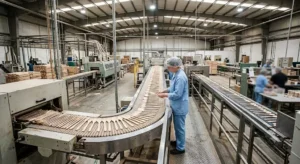
Ecoware Co., Ltd. sells disposable wood and bamboo tableware made at its family factory, Shucheng Limin Wood Products Co., Ltd., which has run the full line from raw logs to finished, packaged product since 2008. Our factory has exported to 50+ countries, including the United States, Canada, Mexico and Spain. The factory holds ISO 9001, BSCI, and FSC certification, with products tested for food-contact migration under EU SGS/LFGB standards.
In 2024, a music festival in Germany replaced all plastic utensils with wooden ones for 50,000 meals, using 100,000 forks and spoons supplied by Ecoware. Post-event waste audits showed a 60% drop in non-compostable trash, and the festival’s greener image was linked to a 15% rise in attendance. Read more about our service cases or browse the disposable wooden spoon range to request samples for your own event or menu.