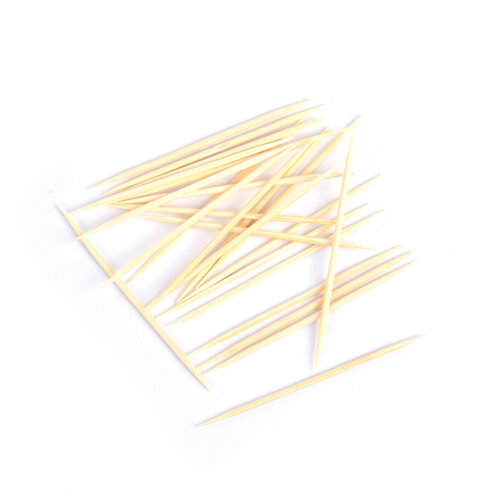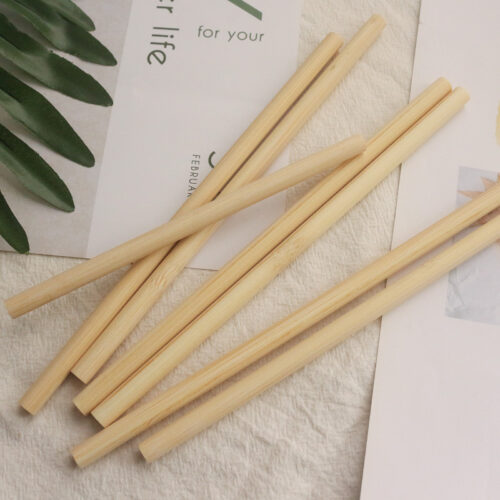
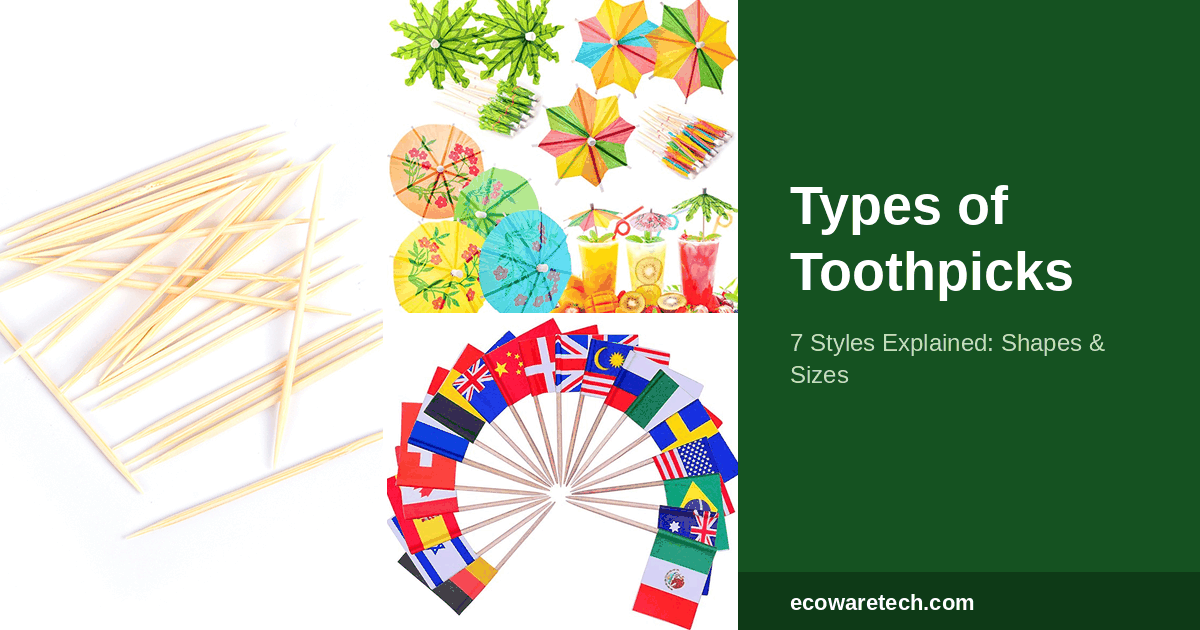
A toothpick is a short pointed stick, usually wood or bamboo, sized for cleaning between teeth or spearing a single bite of food. Standard picks run about 65mm long, far shorter than a skewer or cocktail pick. Round toothpicks are the classic double-pointed bar pick, flat toothpicks resist rolling off a table, grooved picks snap into their own little stand, and frilled and parasol picks are built for drink and appetizer presentation. This guide covers the 7 shapes buyers actually source, with real lengths, diameters and the reason each one exists.
Quick Comparison: Toothpick Shapes at a Glance
| Shape | Cross-section | Typical length | Main job |
|---|---|---|---|
| Round, double-pointed | Round, approx. 2.0mm | 65mm (2.5in) | General dining, bar and restaurant use |
| Flat, single-pointed | Flat, approx. 1.0mm thick | 65mm (2.5in) | Grips food, resists rolling off a flat surface |
| Square-shaft | Square or square-center | Approx. 65mm | Extra rigidity, less prone to splitting |
| Grooved (notched) | Round, approx. 2.0mm | Approx. 65mm | Snaps into a small stand to keep the tip off the table |
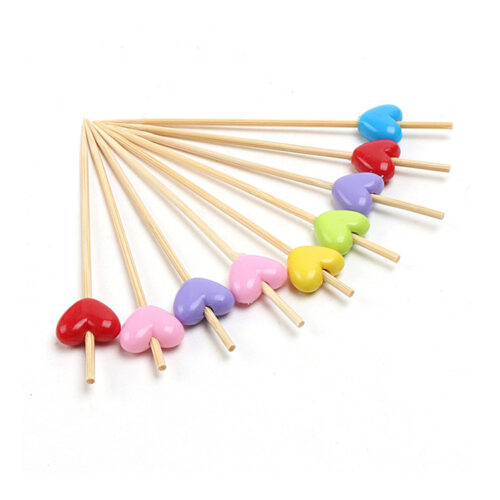
| Cellophane-frilled | Round, decorated end | Approx. 65mm | Bar garnish presentation |
| Parasol or flag decorated | Round, decorated end | Varies by decoration | Cocktail and tropical-themed garnish |
| Child-safe, blunt-tip | Round, rounded tip | Shorter than standard | Safer handling for children |
Diameters are sourced from third-party toothpick manufacturing references; Ecoware’s own toothpick product pages do not publish a standalone spec sheet with exact diameters. Confirm exact tolerances with your Ecoware contact for a purchase order.
Toothpicks vs cocktail picks and fruit picks
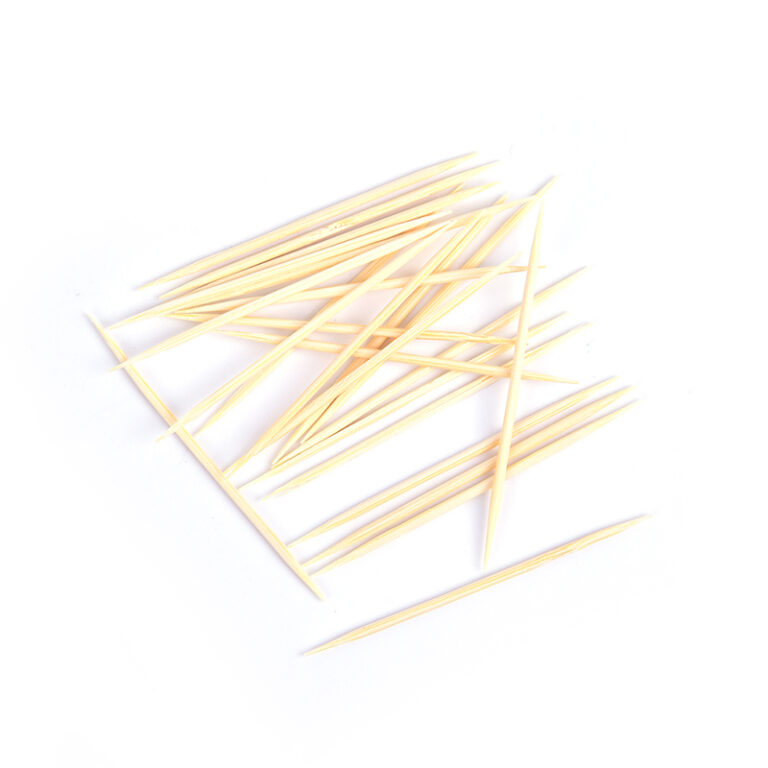
A standard toothpick and a cocktail pick look similar but solve different problems. The industry-standard toothpick is about 65mm long, built for a single bite or for dental use after a meal. Cocktail picks and fruit picks run noticeably longer, about 70 to 120mm, because they need to carry a full olive, cheese cube or fruit chunk out of a glass or off a platter. Ecoware’s cocktail and fruit pick range is covered in the Skewers guide rather than repeated here, since the two products are typically sourced and packed together with the rest of the pick and skewer range.
Round, Double-Pointed Toothpick
The round toothpick is the shape most people picture: a plain cylindrical stick, roughly 2.0mm in diameter, tapered to a point at both ends. Because both ends are usable, it is the standard bar and restaurant pick, cheap to produce and comfortable to hold from either direction. Its round profile is also its only real drawback: on a flat surface it can roll, which matters more for packaging and display than for eating.
Flat, Single-Pointed Toothpick
A flat toothpick trades the round cross-section for a thin, flat one, typically around 1.0mm thick, with one tapered point and one flat or rounded handle end. The flat profile will not roll off a counter or tray the way a round pick does, and the wider face gives slightly more grip when spearing food, which is why many dental-hygiene-focused and food-service picks use this shape rather than the round bar-style pick.
Square-Shaft Toothpick
Some picks keep a square or square-in-the-middle shaft rather than a round or flat one, tapering to a round point at each end. The extra material in the corners of a square shaft makes the pick more rigid and less likely to split lengthwise when it is used to hold a sandwich or club-style snack together, which is why this shape shows up most often on sandwich picks and heavier-duty catering picks rather than plain bar toothpicks.
Grooved (Notched) Toothpick
A grooved toothpick, sometimes called a Japanese-style toothpick, has a small notch cut near one end. Gear Patrol explains the mechanism: you snap the end off at the notch, and the small piece left behind becomes a stand that props the pointed tip up off the table or plate, so the part that was in someone’s mouth never touches the dining surface again once it is set down between uses. It is a hygiene detail rather than a different core shape, built into an otherwise standard round pick.
Cellophane-Frilled Toothpick
A frilled pick is a standard round toothpick finished with a small burst of colored cellophane fringe wrapped around one end. The fringe has no functional job; it exists purely so a bartender or caterer can identify a garnish pick at a glance and make a plain olive or cheese cube look presentation-ready. Ecoware can apply comparable decorative finishing to its bamboo pick range on request.
Parasol or Flag-Decorated Toothpick
A parasol pick pairs a round toothpick with a small paper umbrella, sometimes combined with a printed flag, mounted at the blunt end. These are built for tropical or festive drink and appetizer service rather than everyday dining. Ecoware’s own flag and umbrella decorated toothpicks are a bamboo version of this shape, sold in bulk pack sizes for bars, events and themed catering.

Child-Safe, Blunt-Tip Toothpick
Safety-focused picks round or blunt off both tips instead of leaving a sharp point, and are often produced shorter than the 65mm standard to suit smaller hands. They are aimed at settings where a sharp double-pointed pick is a real hazard, such as children’s food service or classroom craft use, rather than at bars or fine dining.
Frequently Asked Questions
What are the main types of toothpicks?
Round double-pointed, flat single-pointed, square-shaft, grooved (notched), cellophane-frilled, parasol or flag-decorated, and child-safe blunt-tip picks. Round and flat cover most everyday dining and dental use; the rest are decorative or safety-focused variants of those two base shapes.
What is a grooved toothpick for?
A grooved, or Japanese-style, toothpick has a notch cut near one end. Snap the end off at the notch and the small piece left behind stands the pick up on its point, keeping the part that touched your mouth off the table between uses.
What is the difference between a toothpick and a cocktail pick?
Mainly length. A standard toothpick is about 65mm, sized for a single bite or dental use. A cocktail pick or fruit pick runs about 70 to 120mm, long enough to carry a full olive, cheese cube or fruit chunk out of a glass or off a platter.
Are flat or round toothpicks better?
Neither is strictly better; they suit different jobs. Round, double-pointed picks are the standard bar and restaurant choice because both ends are usable. Flat picks resist rolling off a counter and give a slightly wider grip on the food, which is why many dental-focused picks use the flat profile.
What is the standard toothpick length?
About 65mm (2.5 inches) for a general-purpose round or flat pick. Specialty picks vary: club and sandwich picks run longer, around 100mm, and child-safe picks are typically shorter than the 65mm standard.
What are Ecoware’s toothpicks made of?
Bamboo. Ecoware’s toothpick line includes plain bamboo toothpicks and flag and umbrella decorated toothpicks for bar and event use, both produced at the company’s own facility with the same food-contact documentation used across its tableware range.
Do bamboo toothpicks need soaking like bamboo skewers do?
No. Soaking before use applies to skewers and picks that go over direct heat on a grill, where dry bamboo can char or catch fire. Toothpicks are not used over heat, so no soaking step is needed.
Related Guides in This Series
This page continues the Skewers pillar in Ecoware’s bamboo-pick and chopstick content, and links back to the site’s main tableware classification guide.
- Skewers: 9 Types Explained: the cluster pillar page, covering full-length grilling and serving skewers plus cocktail and fruit picks.
- Types of Chopsticks: the companion classification guide for chopsticks, including regional length and tip differences.
- Types of Coffee Stirrers: 5 Materials Compared: covers wood, bamboo, plastic, metal and paper stirrers, plus flat vs round ends and length by cup size.
- Types of Spoons: 18 Kinds Explained: Ecoware’s main tableware classification pillar, covering the disposable spoon range.
- Bamboo Toothpicks and Flag Umbrella Decorated Toothpicks: the product range for the shapes described above.
About Ecoware
Ecoware Co., Ltd. sells disposable wooden and bamboo tableware made at its family factory in Shucheng, Anhui province, China (Shucheng Limin Wood Products Co., Ltd., established 2008). The company supplies FSC Chain-of-Custody certified birch and bamboo product lines alongside food-contact compliance documentation (FDA 21 CFR 176.170, EU 10/2011 and LFGB testing on request) for import buyers who need paperwork ready before a shipment clears customs.
The figures in this guide come from a mix of independently published data cited inline, Ecoware’s own product specifications published on ecowaretech.com, and standard-setting bodies. Where a number could not be independently verified, this guide says so rather than estimating one, and points you to where you can request the missing spec sheet directly from Ecoware.
Sourcing toothpicks at volume? Request a quote →